

Today we are driving the Snaefellsnes Peninsula, which includes several stops, and we’ll see one of the most iconic landmarks in Iceland. Seeing the whole peninsula in a day requires a lot of driving so we will drive most of it, spend the night, then finish the peninsula and make our way to Reykjavik tomorrow.
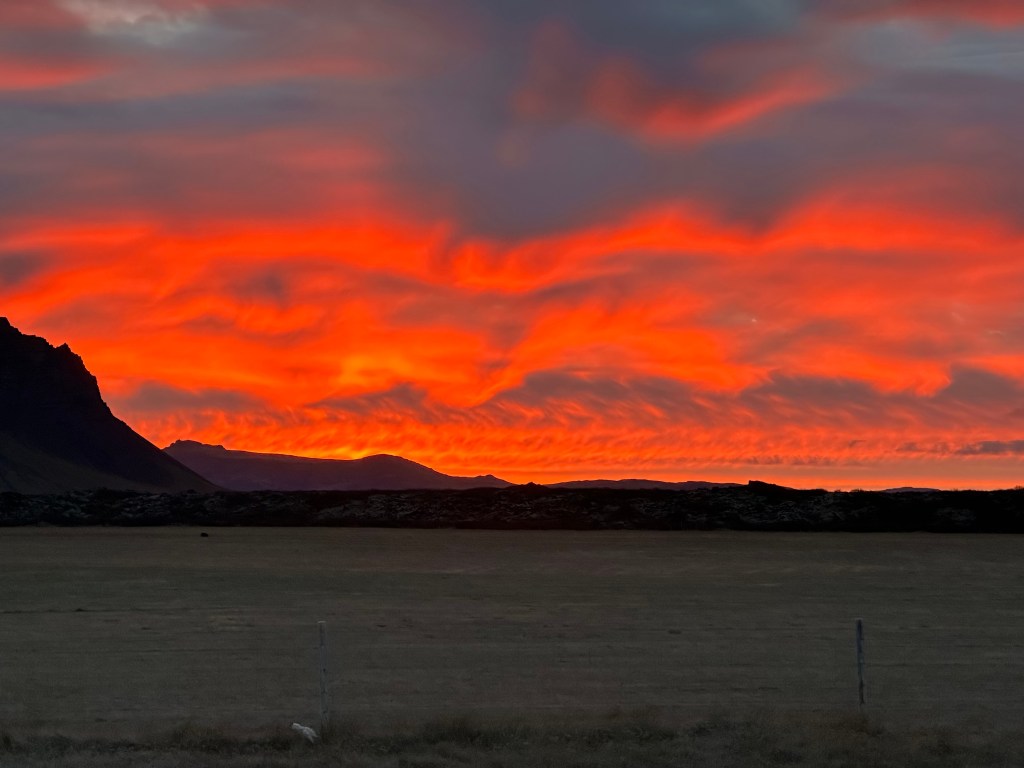
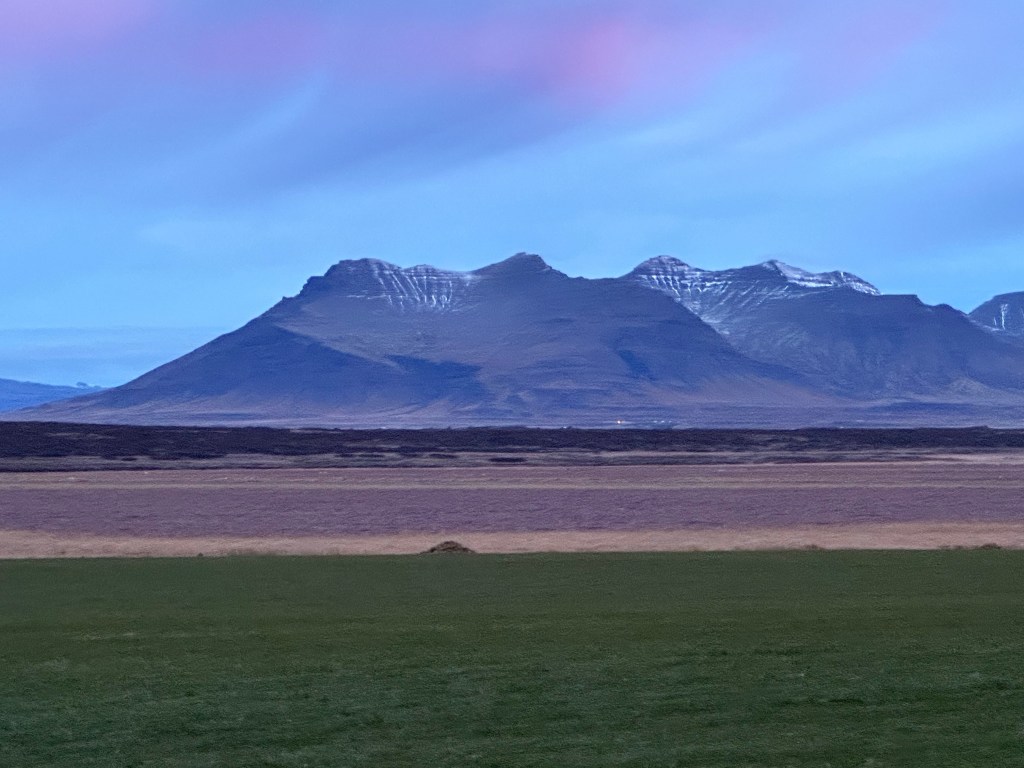
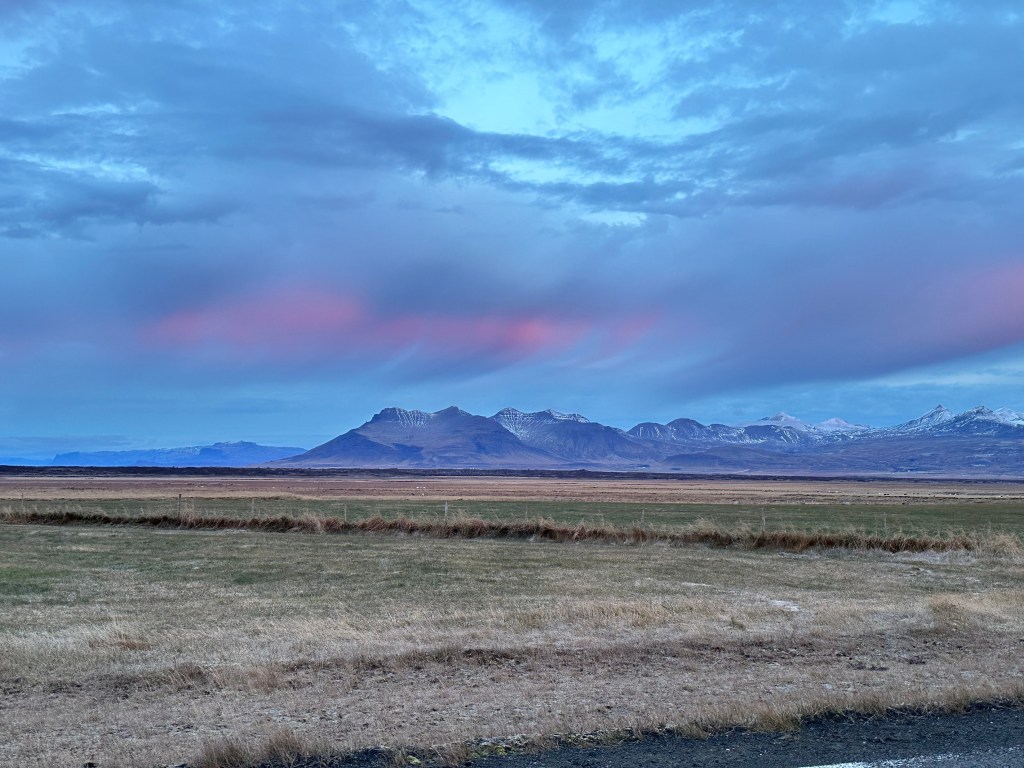
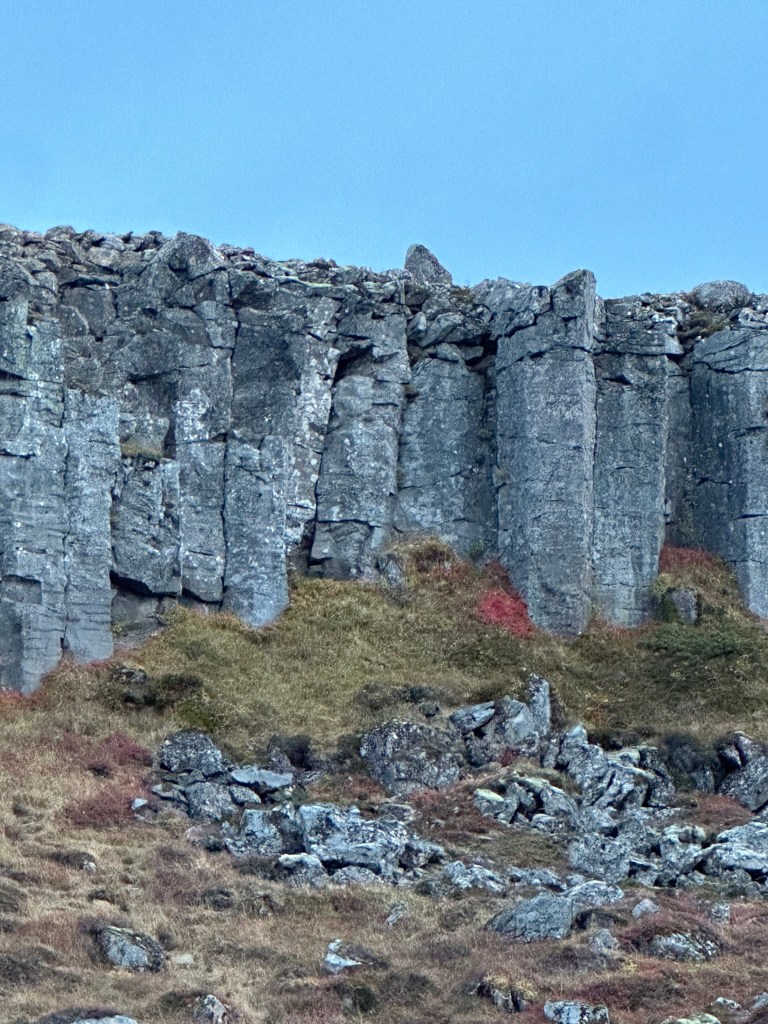
We got an early start driving from Borgarnes and were rewarded with some amazing sunrise views over the flat terrain. Our first stop of the day was Gerduberg Basalt Cliffs which are Iceland’s longest chain of basalt cliffs. The cliffs are a volcanic formation of interlocking hexagonal pillars. The cliffs stand out sharply amongst the otherwise flat terrain and are a reminder of Iceland’s tectonic and geothermally active areas. While you may be able to hike up the cliffs for a better view, you must be surefooted and have sturdy shoes.


Vataleid Road offers scenic driving in route to our next stop. Depending on the time of year, there may be food trucks and cafes available but don’t rely on them. Plan ahead and pack snacks and drinks in the car. While driving, watch for streams and waterfalls along the road on the ascent and take in the otherworldly lava-rock terrain on the descent. Follow the turn off to drive through the Berserkjahraun Lava Fields. Volcanic eruptions formed the lava fields around 4,000 years ago and it is a lunar-like landscape with yellow lichen spreading over the surfaces of the lava rock.
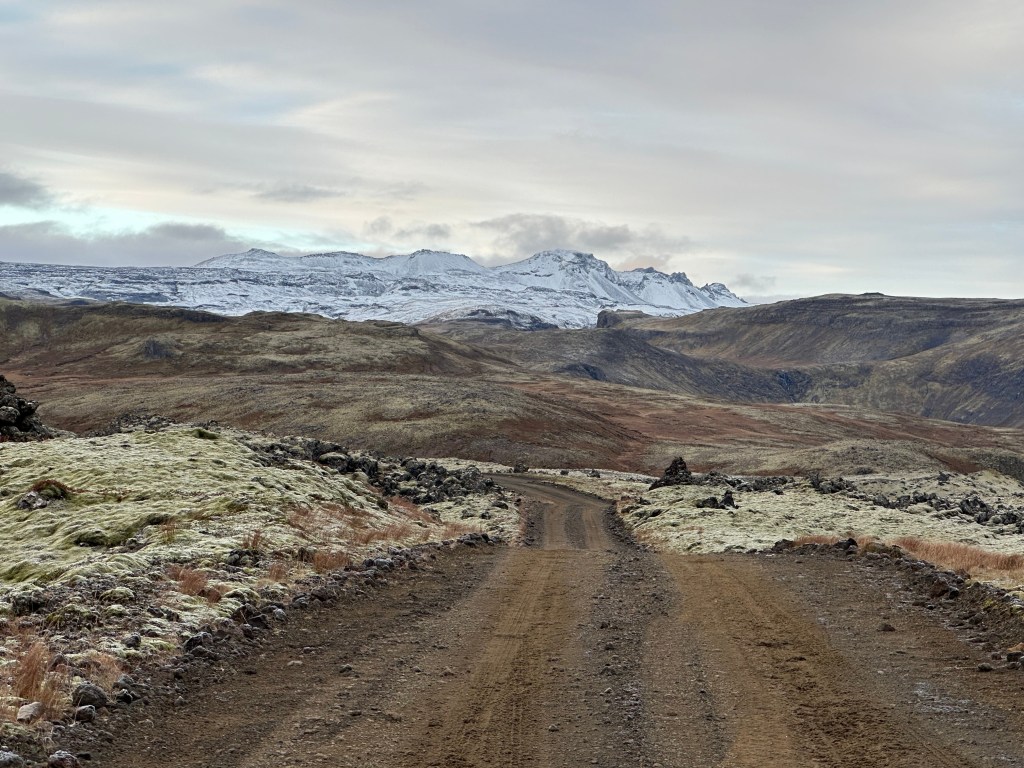
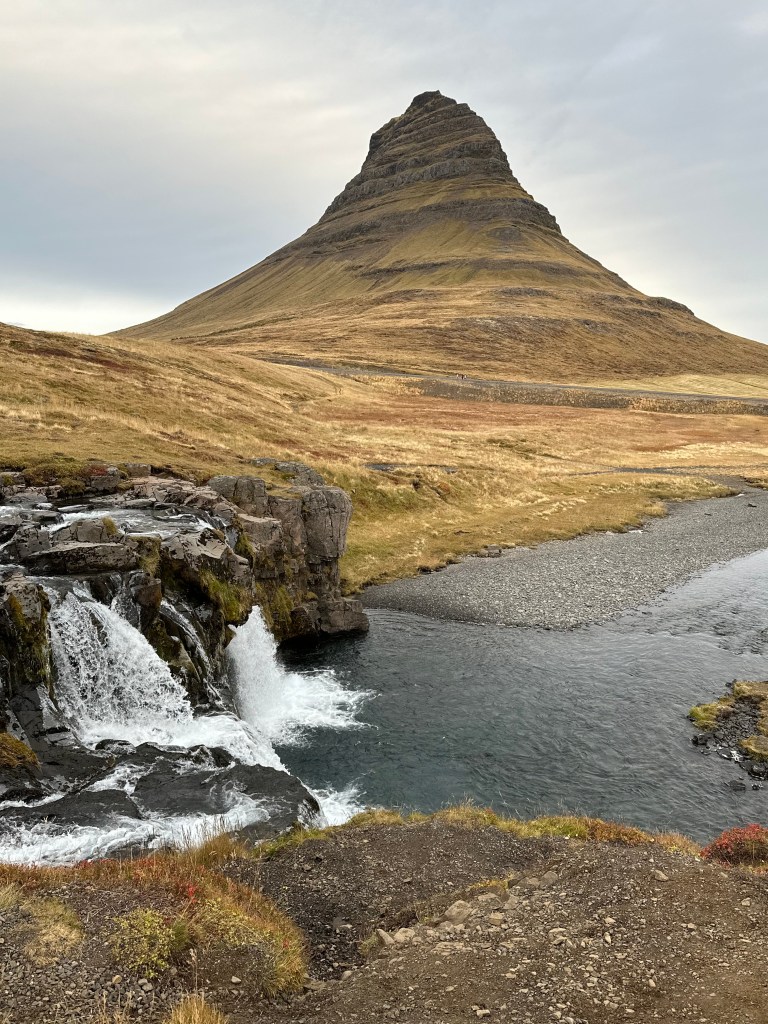
Continue along highway 54 taking in the coastal scenery and towns. Soon enough, Iceland’s most iconic landmark will come into view. Together, Kirkjufell and Kirkjufellsfoss waterfall form one of the most famous Icelandic landmarks. Kirkjufells is the pointy mountain that graces the cover of Icelandic travel books, postcards, and the Hollywood big screen. (It also reminds me of an elf’s hat because of the shape and curve.) Kirkjufells is only about 1250 feet tall but is undeniably iconic. Park in the pay lot and follow along the gravel path (walking away from Kirkjufells) for an easy and short 5 minute walk to Kirkjufellsfoss. This is your opportunity to snap your own version of the iconic photo of Kirkjufellsfoss in the foreground and Kirkjufells looming in the background. You don’t need much time at this stop but it is worthwhile.


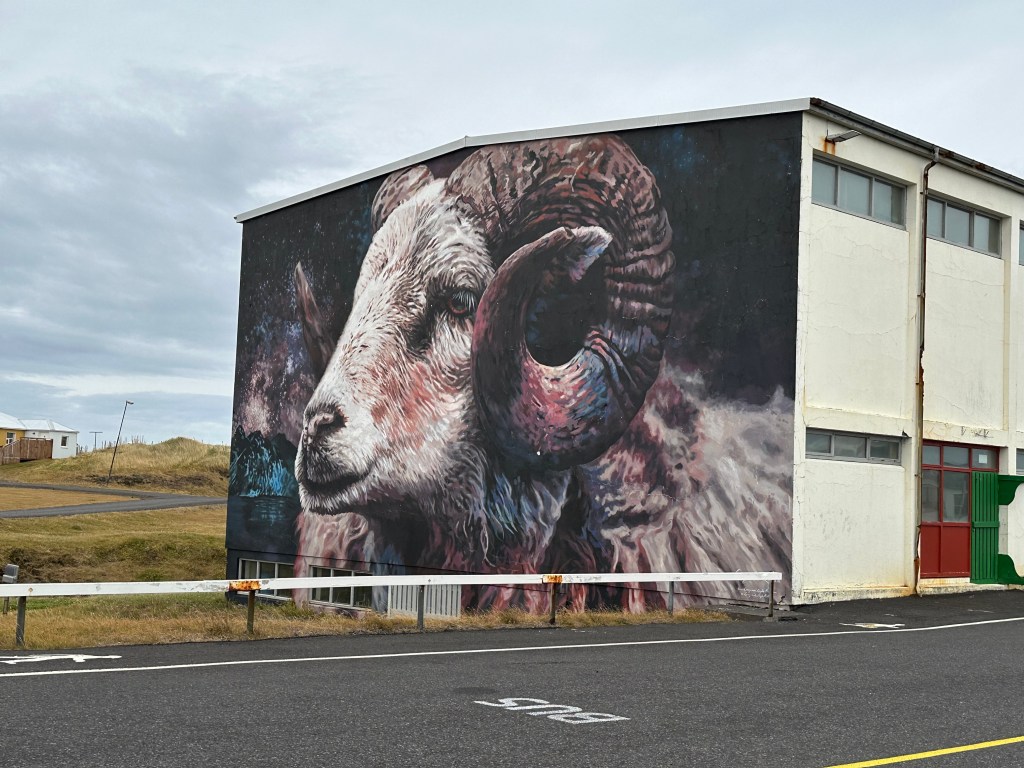
After Kirkjufells, continue due west along highway 54. Hellisandur is a coastal town that is worth a drive through for the street art murals. Hellisandur also offers an opportunity to refuel the car and there is a restaurant, though it’s only open in high travel season.
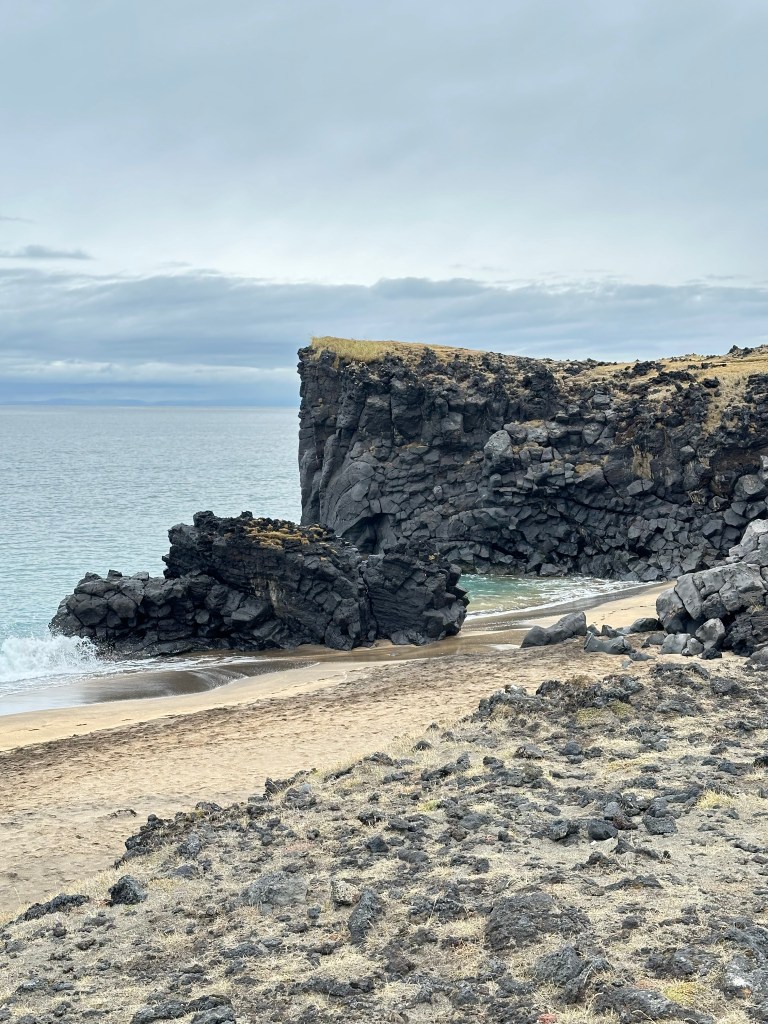
Iceland is famous for its black sand beaches but it is home to one beach with yellow sand. Skardsvik Beach’s yellow sand is dramatically framed by the chunky black lava rock and blue ocean water. A stroll along the beach, a picnic, or simply sitting and listening to the gentle crash of the water is enjoyable. Jump in for a swim, if you dare, and do so at your own risk (cold and no lifeguards on duty).
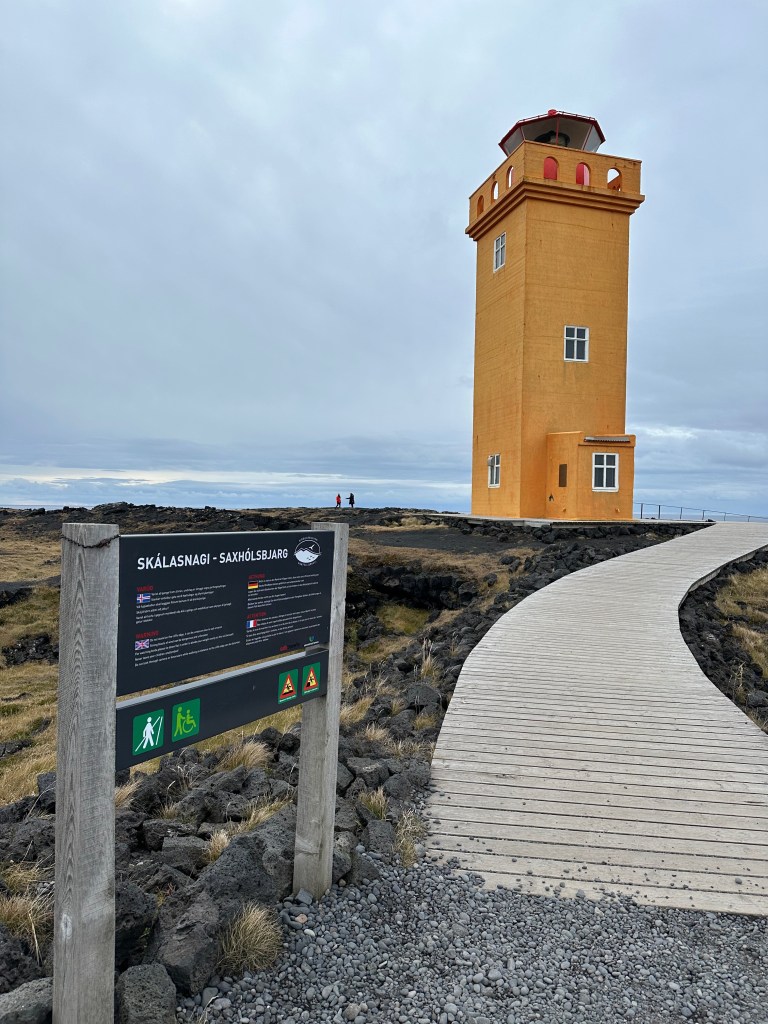
Continue driving along the rough gravel road to reach the Skalasnagi Lighthouse. It is a fairly long drive to reach the lighthouse and you can’t enter it but the views are worth the detour. The lighthouse itself is not the most picturesque as it is a simple orange square concrete column. In the rugged, and oftentimes brutal climate, non-functional adornments are practically nonexistent. There are signs around the base of the lighthouse which given a very short history in English as well as signs highlighting some of the local wildlife. Have a walk, watch for wildlife, and take in the views before continuing on with the drive.

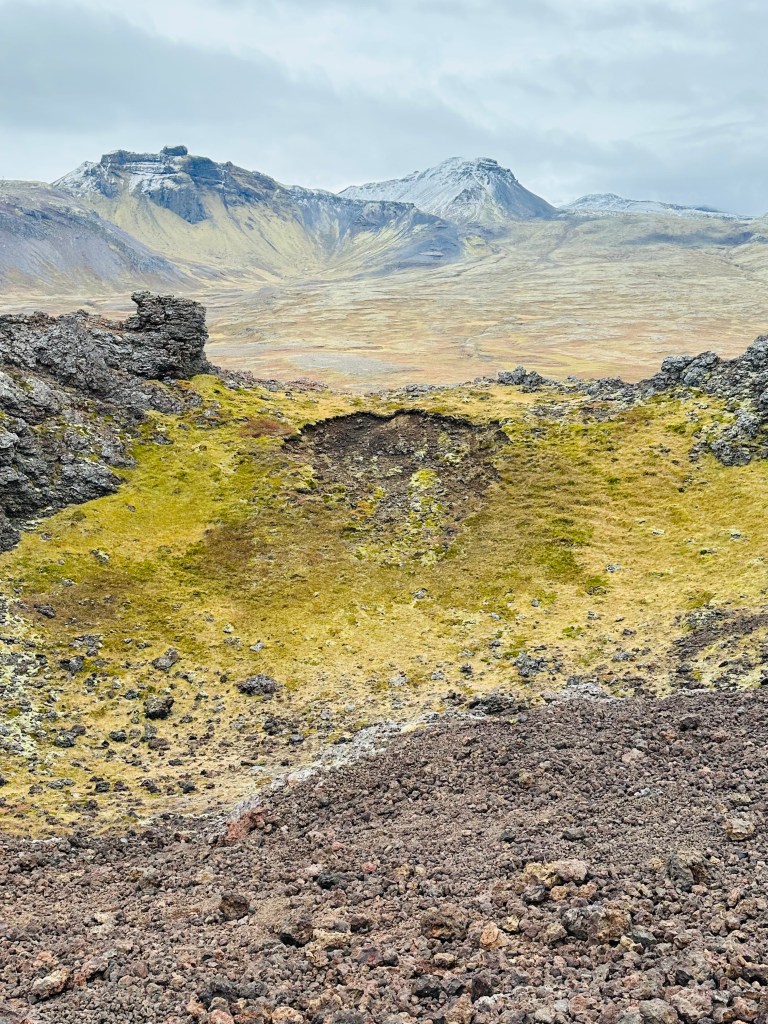
Saxholl Crater is another stop along highway 54 on the Snaefellsnes Peninsula. The jagged red crater is one of Iceland’s tempting and (relatively) easy climbs. Permanent stairs help you climb more than 350 feet to the summit; stopping for a breather, or two, appreciate the flat terrain below. Once at the summit, you can peer into the crater and take in more sweeping views of the peninsula. The hike back to the car park is easy but don’t do what I did and trip … thankfully, I caught myself but rolling down those stairs will definitely break a few bones.
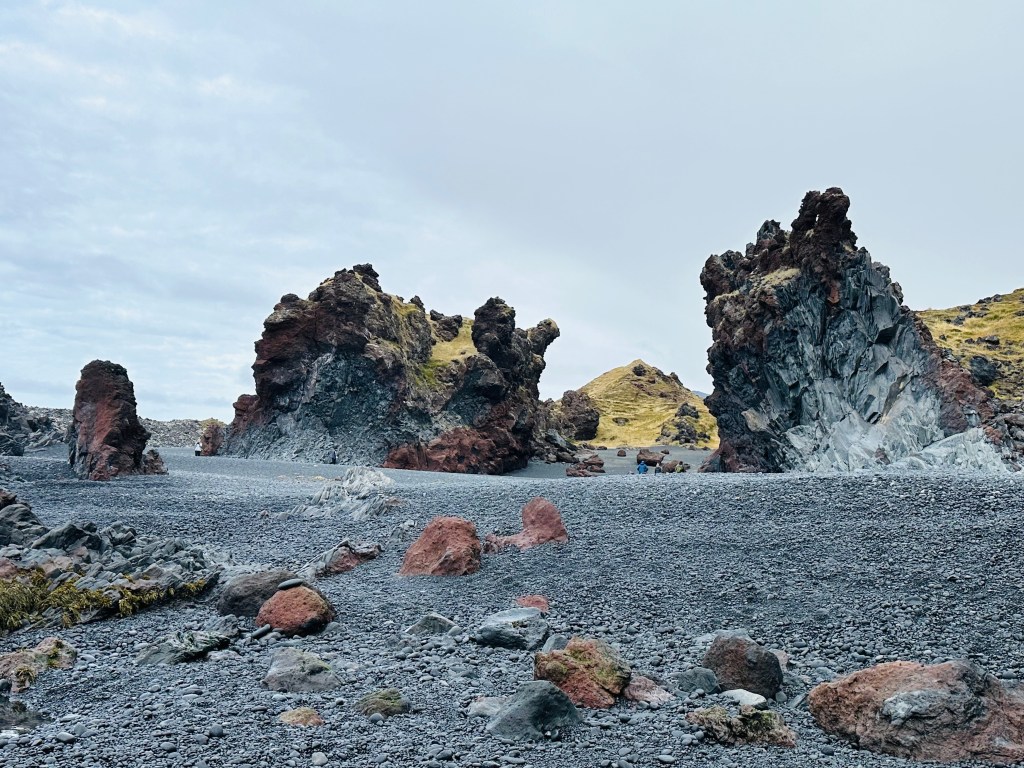
A short drive onward brings you to Djupalonssandur Black Sand Beach in the Snaefellsjokull National Park. Djupalonssandur offers the opportunity to stroll along one of Iceland’s black sand beaches. Once home to a thriving fishing station, the area is now entirely uninhabited. Follow signs from the parking lot to the beach, walk through the canyon of gnarled lava rock towers to the beach, about a 10 minute walk. The beach is full of small black lava “pearls”, pieces of lava rock worn smooth by the water. Interestingly, these black lava “pearls” are protected by the Icelandic government so don’t pick them up to take home. Chunks of the British trawlerEpine washed ashore after the vessel became shipwreck in March of 1948. Wlaking along the beach is beautiful but stay well back from the surf. This beach, like many in Iceland, is known for the strong tide and dangerous sneaker waves.
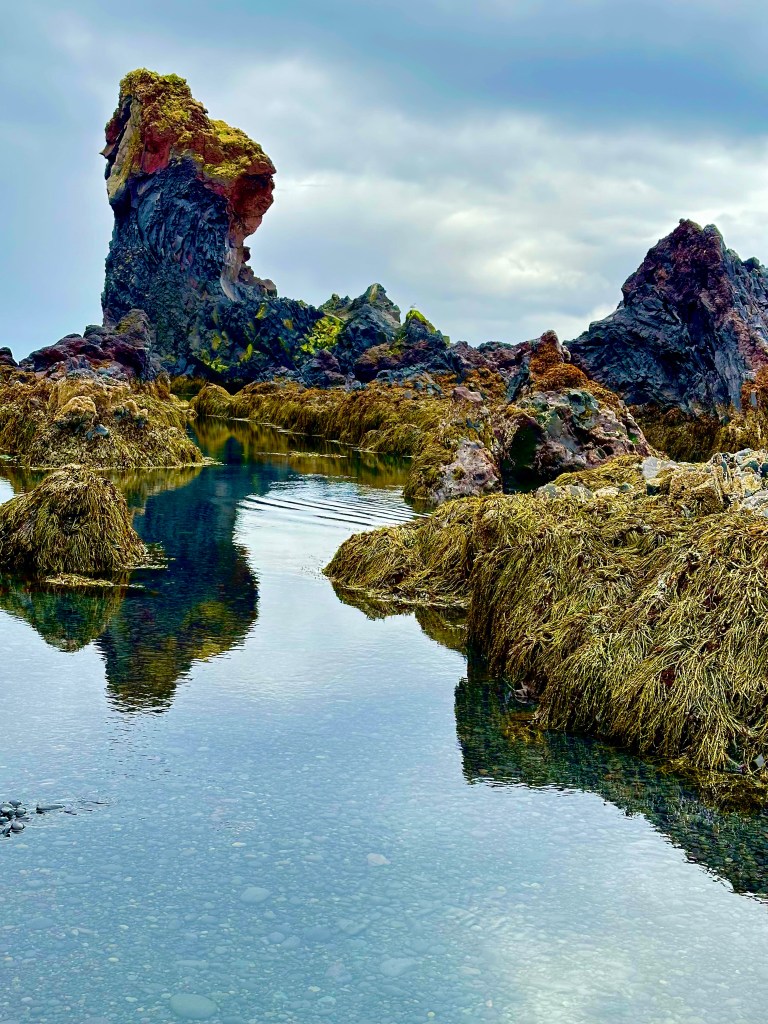
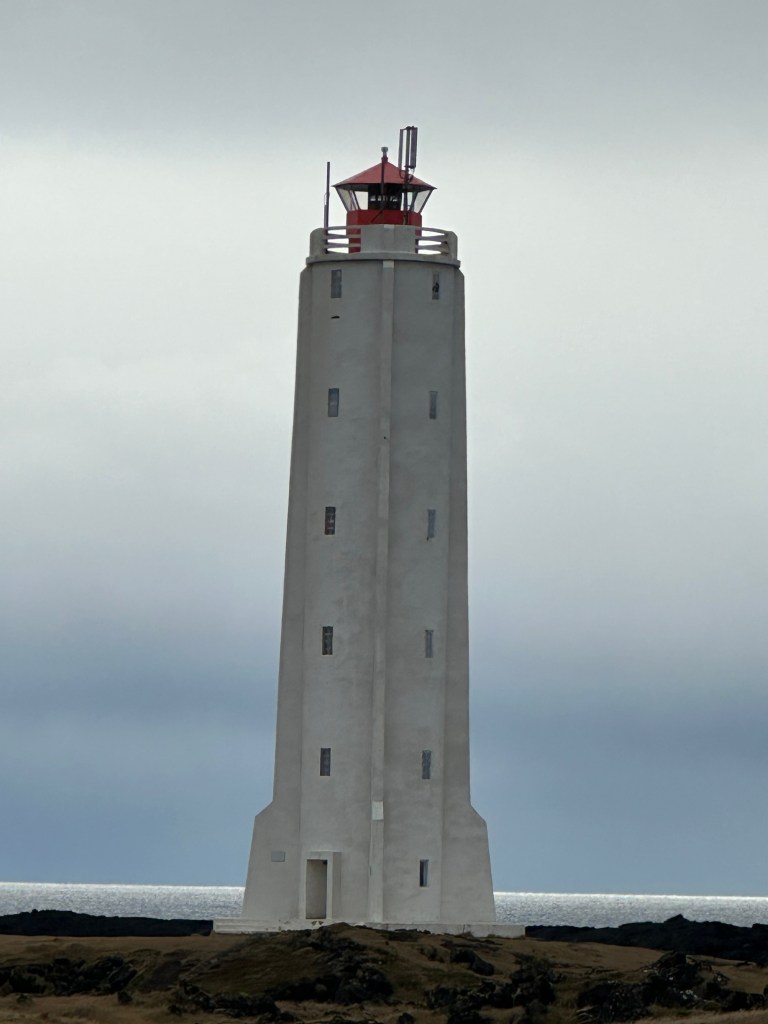
After a nice beach walk, we still had several daylight hours so we stopped at Malarrif Lighthouse. There is a national park visitor center with WCs and a small exhibit on the park’s geology. You can hike about a mile to reach the rock formations of Londrangar or you can stop in the visitor center, snap some pictures of the lighthouse, and continue on. This is an area where it is possible to see arctic foxes in the lava field and whales and seals in the ocean, but, as with all animal sightings, it is not guaranteed and the wind can be challenging.
In another small seafront community, one building has brought a level of fame. The Budir black church was completed in 1850 and is a favorite photo opp. The small church sits on a hill with a cemetery nearby. There isn’t much else close by and you can’t enter the church. So, why is Budir’s black church such a favorite photo stop? Is it because the church captures the desolation of Iceland? Is it the novelty of a place of worship being painted black?

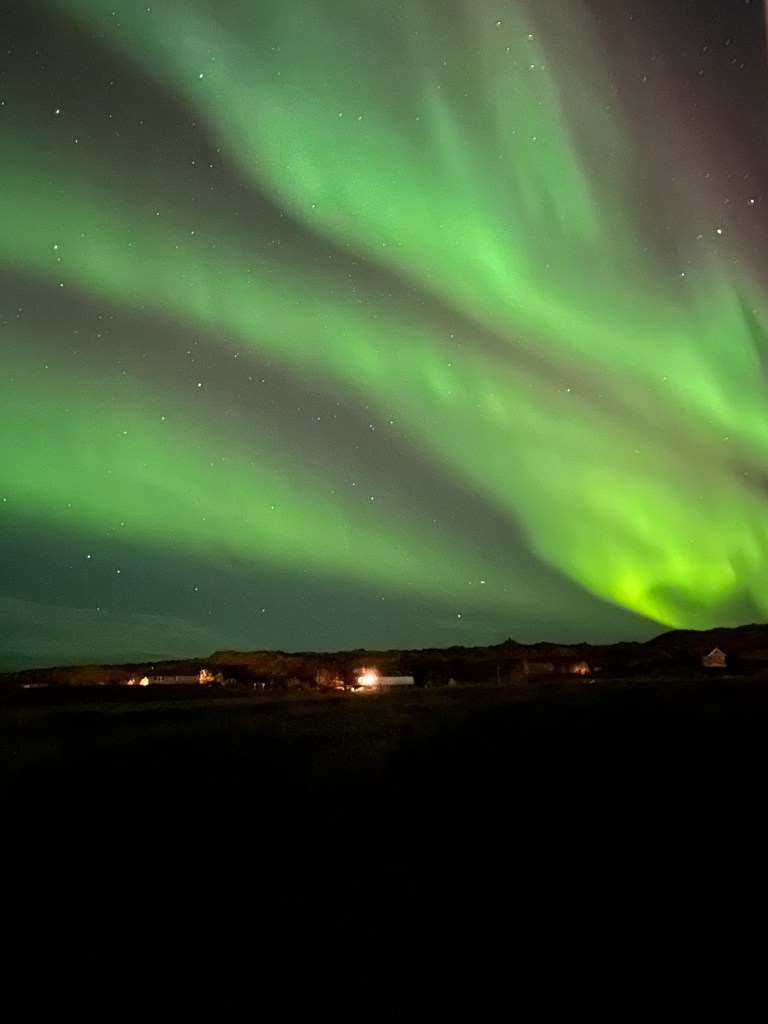
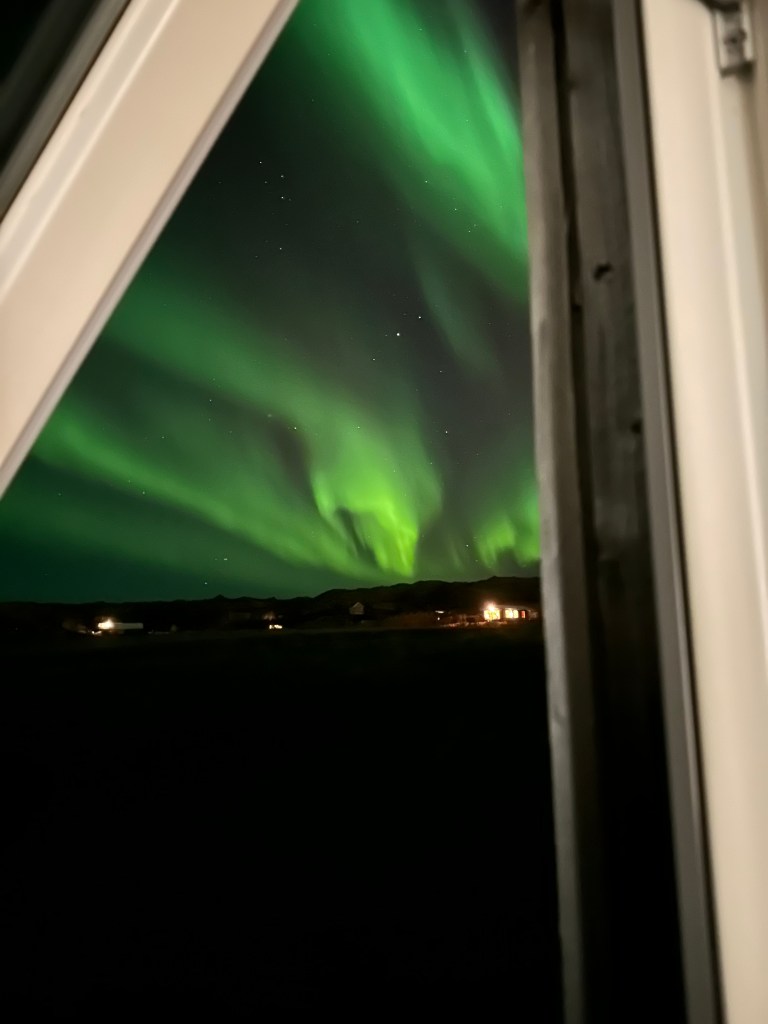
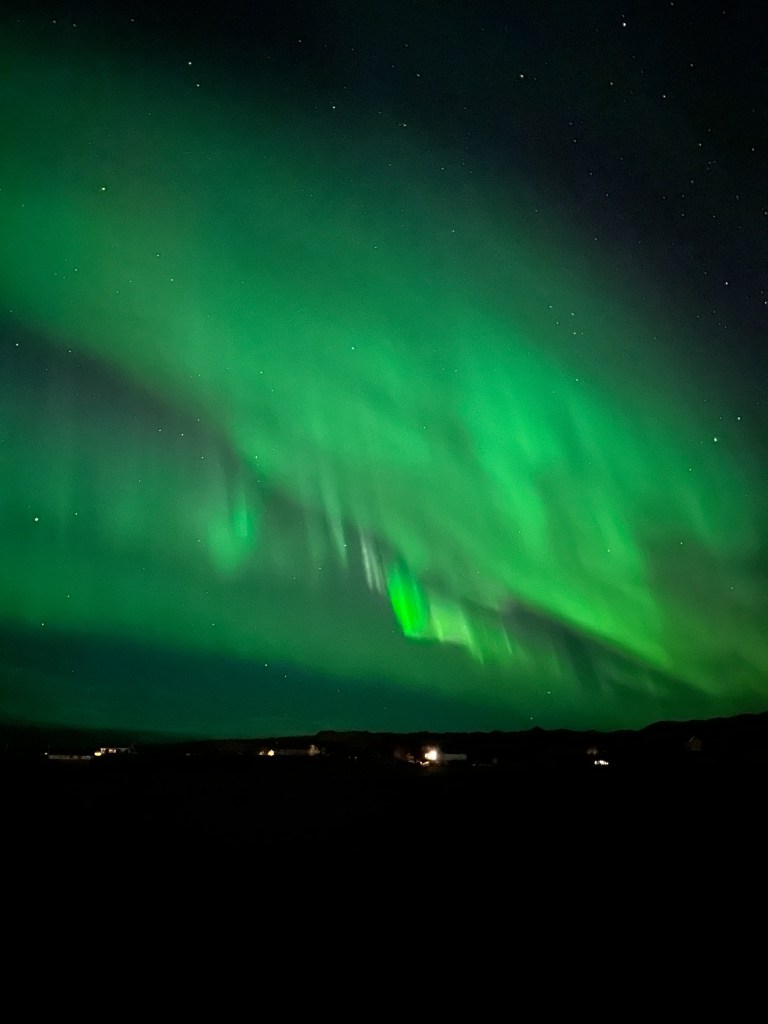
After a full day of sightseeing, we made our way to our hotel for the night. Arnarstapi Hotel is on the peninsula in a small community with a restaurant on site and a couple others within easy walking distance. The rooms are clean and comfortable, and they offer some of my favorite Northern Lights viewing opportunities! This was the one hotel stay where I could just look out the window and clearly see the Northern Lights without layering on clothes and going outside. The combination of opening windows and minimal light pollution made this a breeze. Since most all Icelandic hotel rooms are fitted with blackout curtains, I could brace my elbows on the window frame and stand between the window and the curtains to capture pictures of the dancing sky.

 Travel with Fleming