
Today we leave behind the ice in favor of understanding more about the geothermal activity of Iceland. We have planned multiple, fairly evenly spaced stops, along the 150 mile loop known as the Golden Circle. The Golden Circle can also be done as a day trip from Reykjavik, particularly in summer months when daylight hours are longer. As we are starting in Hveragerdi, our route follows a different order than a day trip itinerary from Reykjavik.
Kerid Crater is right next to highway 35 but you have to pay a small entry fee to climb the hill to see the actual crater. The crater is a volcanic cone from an eruption about 6,500 years ago. The volcanic cone collapsed and filled with water, creating a crate lake. Walk around the rim of the crater to take in the red walls, green vegetation, and aquamarine water. Stairs take you down about 150 feet to the surface of the lake. The crater can be seen in a quick glance but walking around the rim only takes about 30 minutes and is a good stretch before continuing on to the next stop.


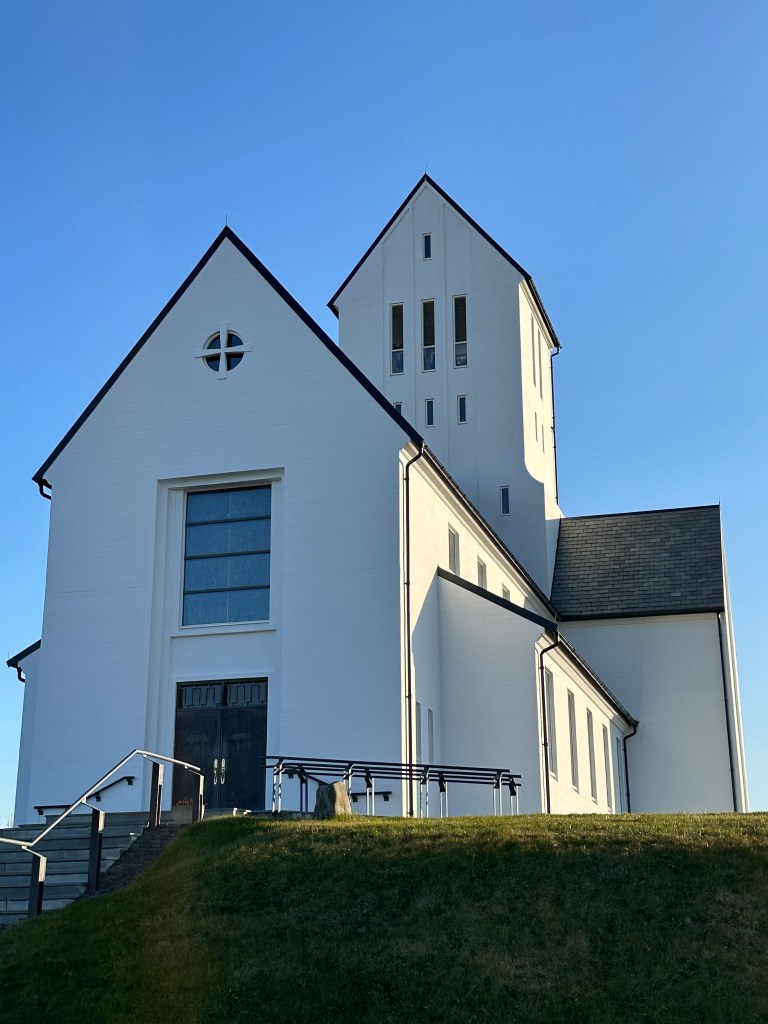
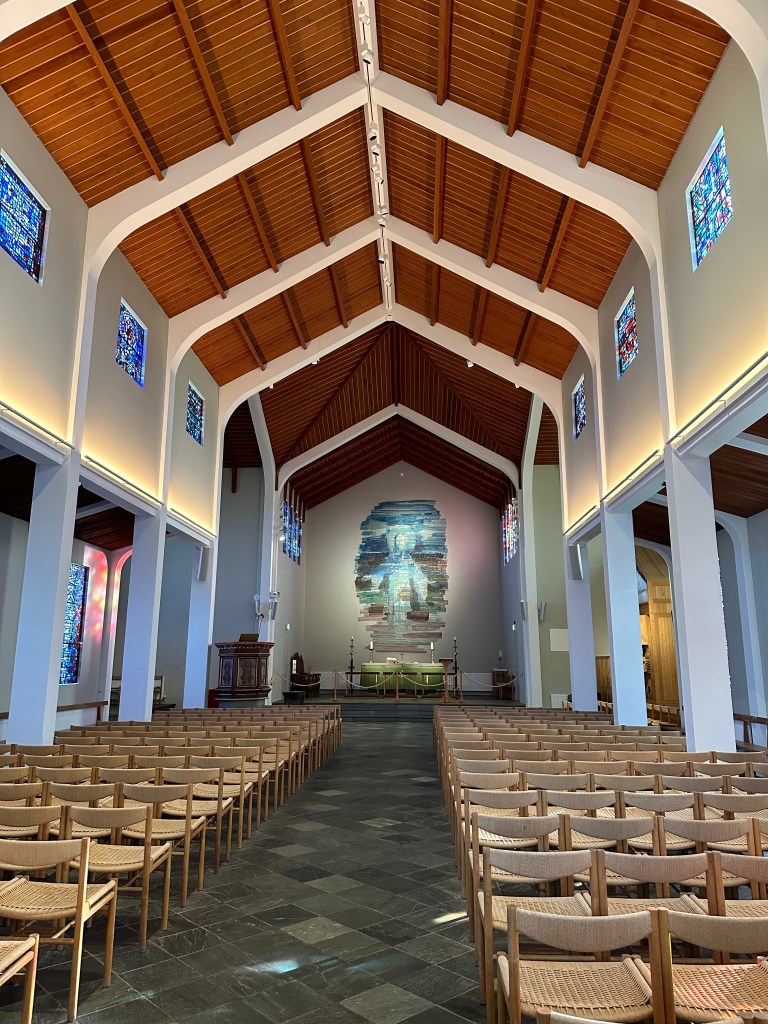
Skalholt Church was once the seat of the bishop of southern Iceland. The church you see today was built in the 1960s and is a lowkey stop that can be skipped if tight on time. Farmland surrounds the church and, in medieval times, this would have been an area of dense population and power. With virtually no tourists stopping here, it is a quiet stop. The simple church features locally designed stained-glass windows and a list of previous bishops on the wall. The crypt below the church features a small exhibit of historical and archaeological artifacts.
Iceland sits on top of the fault line formed by two tectonic plates. The North American and Eurasian plates constantly push, pull, and rub against one another; thus creating considerable geothermal activity. One town is making particular use of this tectonic activity and has become known for the greenhouses employed year-round to supply fresh vegetables for the country.
Greenhouse growing has been in practice at Fridheimar since 1946 with the current owners living here since 1995. Tomatoes are grown all year in the 11,000 square meters of electrically lit greenhouses at Fridheimar. The farm produces approximately 700 tons of tomatoes annually, accounting for roughly 39% of Iceland’s total tomato market. Despite the particularly dark, cold, and long winters, tomatoes are harvested every day! Iceland’s abundantly rich natural resources help make daily harvest of fresh greenhouse grown tomatoes a possibility.
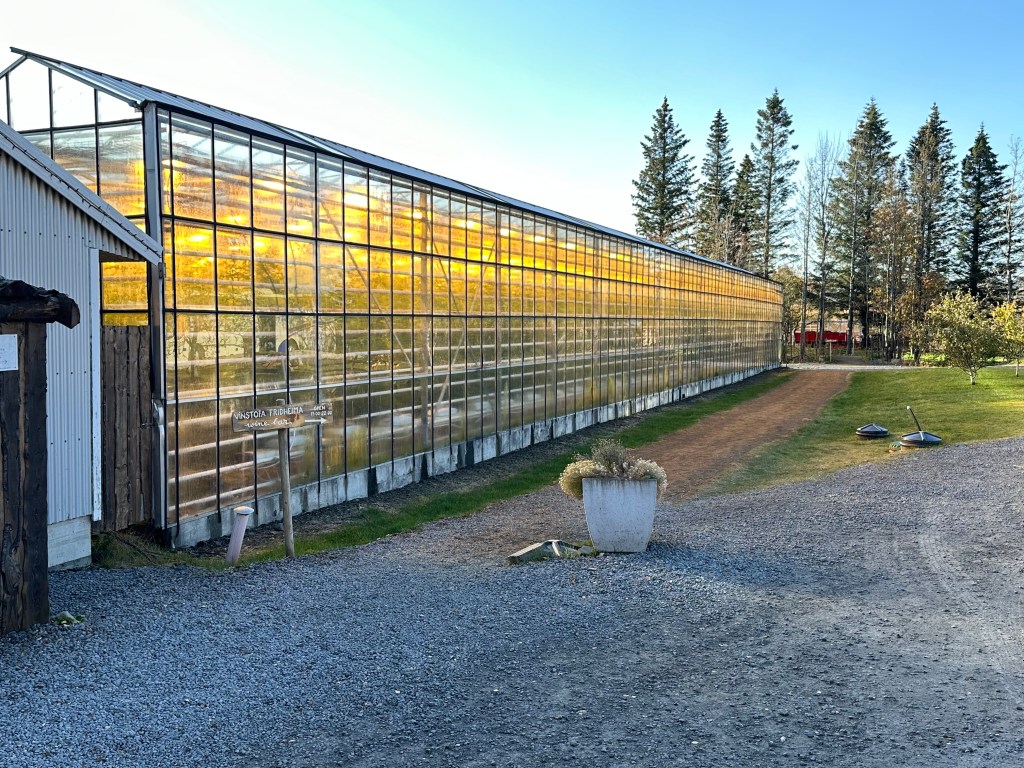
Hot water, plentiful beneath the ground due to geothermic activity, is used to heat the greenhouses while cold water, sourced from the same source as home drinking water, provide irrigation for the plants. Powering a greenhouse requires considerable electricity and Iceland’s ‘green electricity’ is generated by hydroelectric and geothermal power stations which support the grow lights in the greenhouses. These lights ensure year round production. Pumice from volcanic turf is used as a growing media and makes it simpler to control moisture and fertilization compared to growing in topsoil. Reykholt is arguably the town best know for this man-made fertility with greenhouses here growing a variety of produce including strawberries, cucumbers, peppers, herbs, and tomatoes.

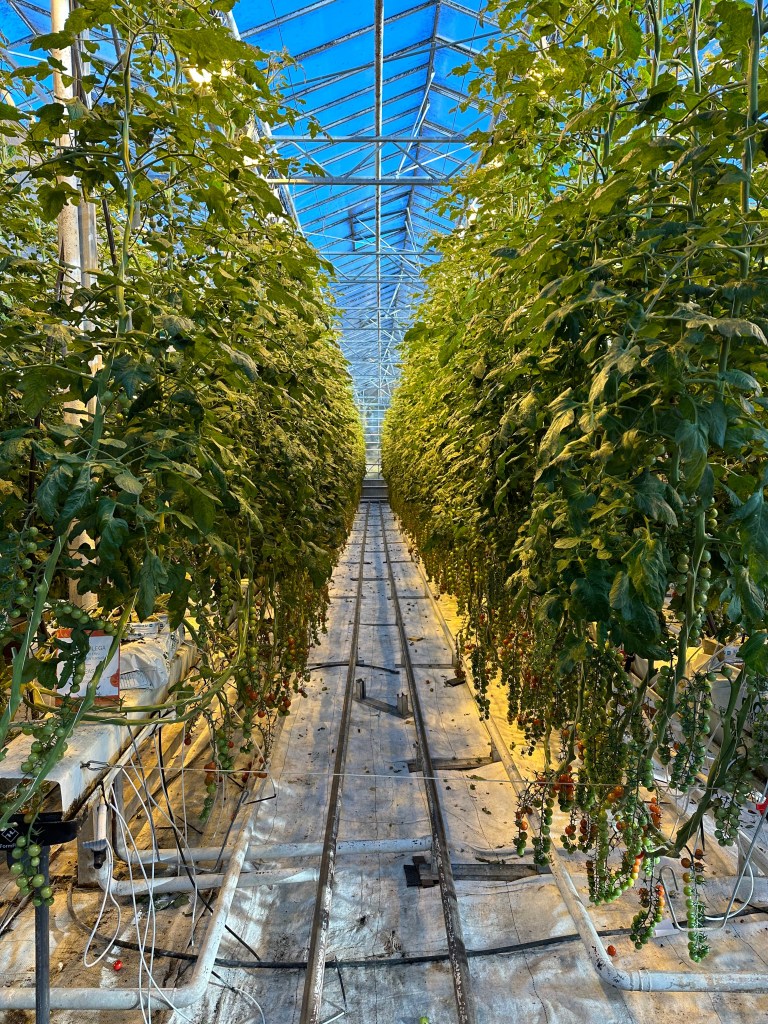
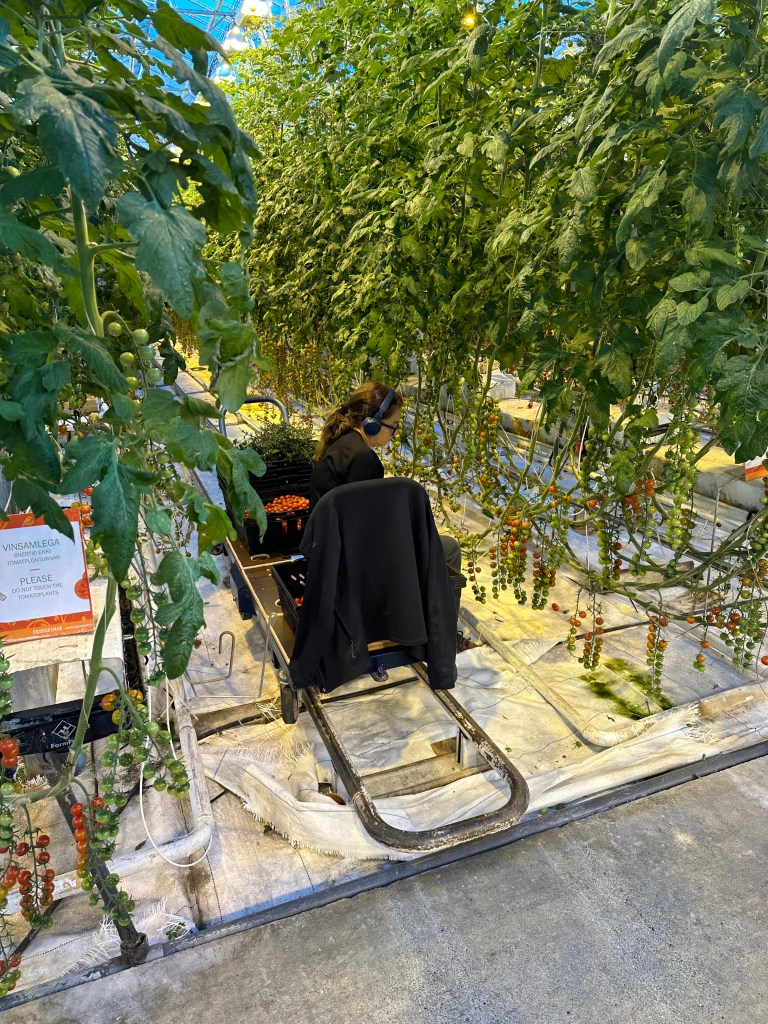
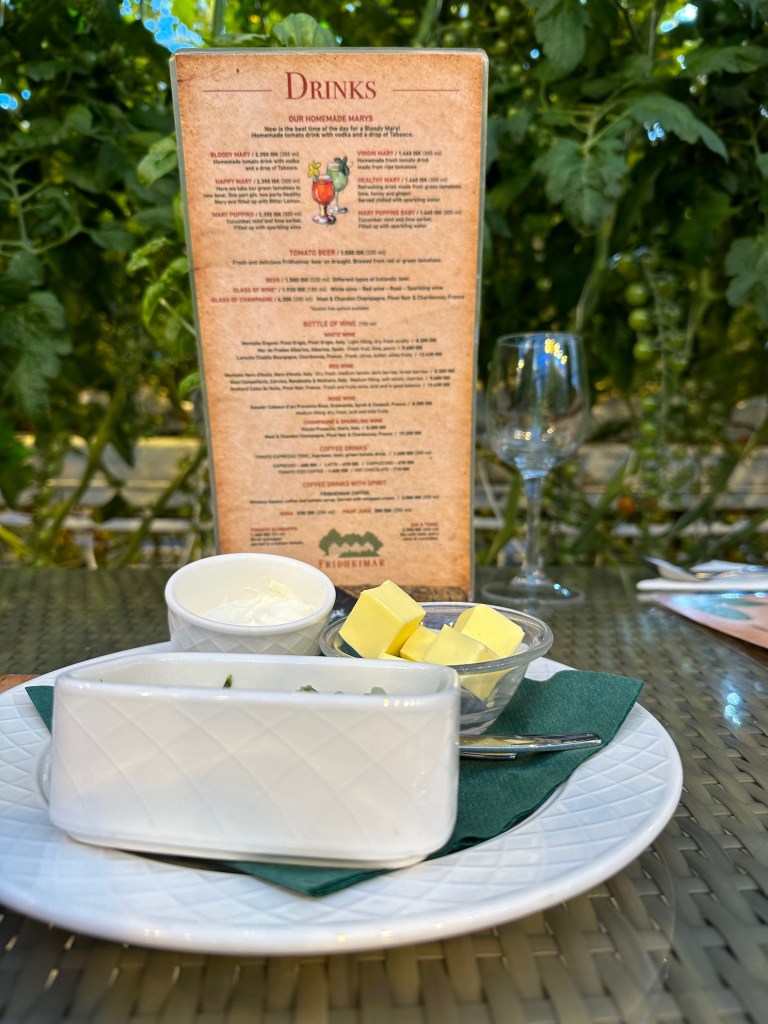
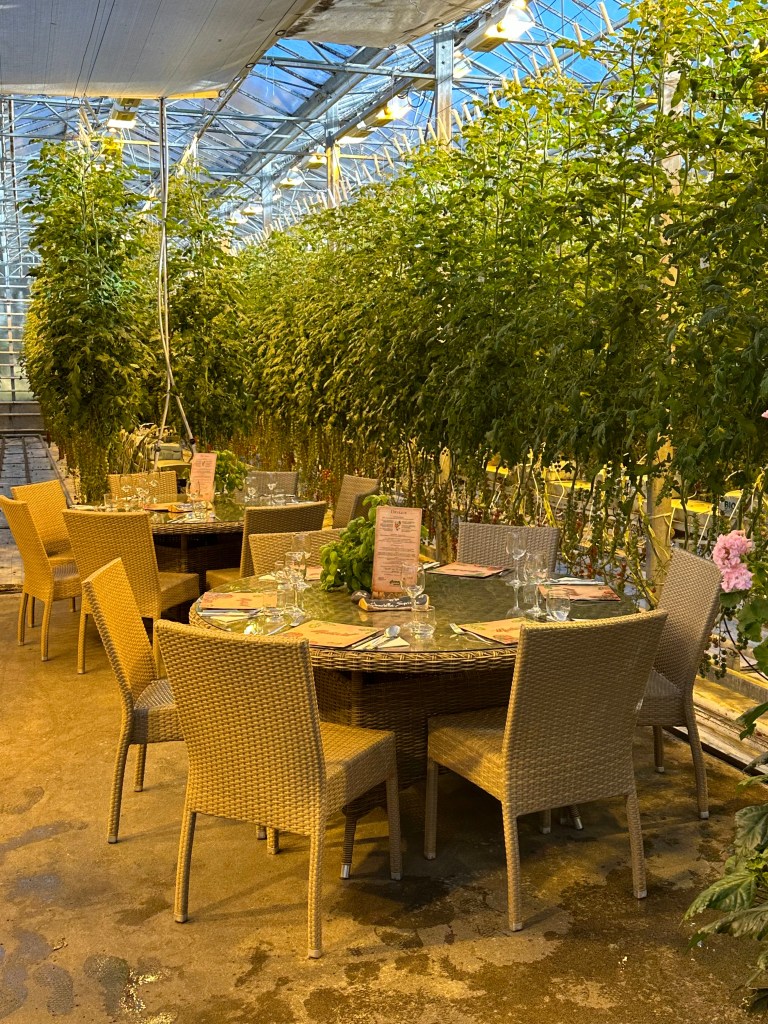
Advance reservations are strongly recommended for Fridheimar Tomato Farm Restaurant. You’ll dine right in the greenhouse, surrounded by the vines that produced the star of the menu: tomatoes. The pot of fresh basil on every table is a wonderful compliment to the tomato soup which I highly recommend. Other menu items include salad, fresh pasta with tomato sauce, tomato ice cream, Bloody Mary, and Tomato Beer. After enjoying a satisfying, fresh, and delicious meal, wander around the greenhouses to learn more about how Fridheimar grows tomatoes and other fresh produce year round. Keep an eye out for flowers, lettuce, basil, and other herbs also grown in the greenhouses.

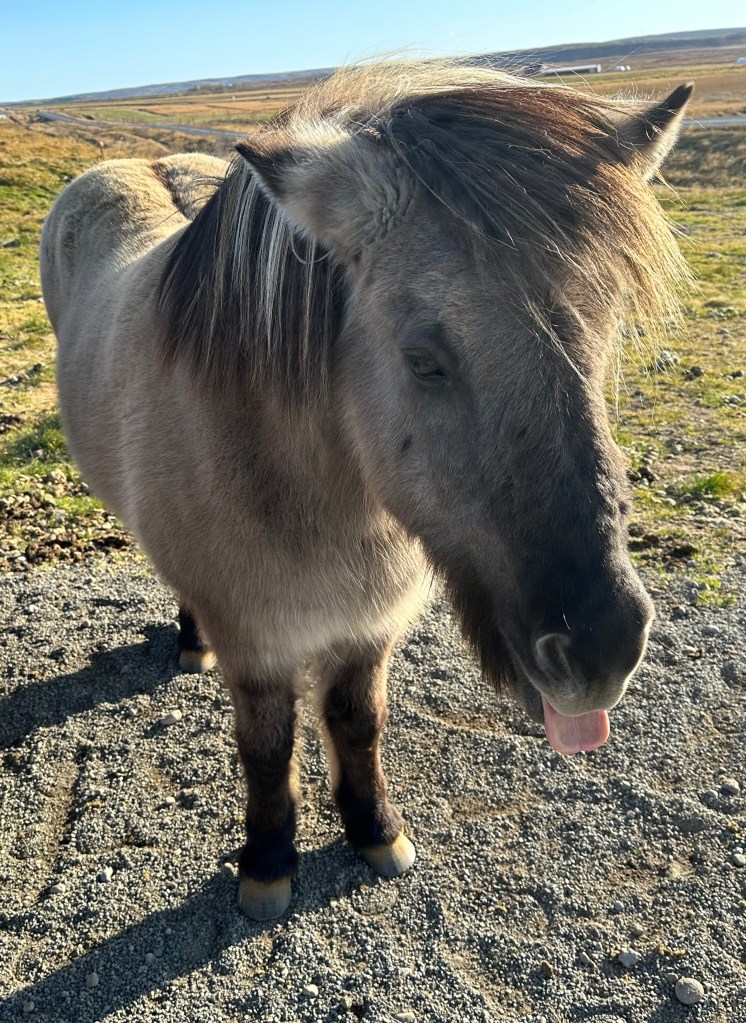
Continuing the Golden Circle drive, I got distracted before we reached our next planned stop because who can resist the opportunity to meet an Icelandic pony at a roadside pen?! Disclaimer: this was a small petting zoo-like set up and I did not randomly pull over to touch someone’s animals random feed. There is a quarter machine to purchase food and the ponies know the drill. They come right up to the fence to get nibbles and pets. The ponies are shorter in stature than most American horses and a lot hardier. Their coat is super thick and helps keep them warm in the brutal winter months. They also have their own personalities and some of them are less happy about the petting and way more interested in the nibbles! After getting my daily dose of Icelandic pony, we made our way onward.
For the next two stops on our tour of the Golden Circle, take a quick look at the parking lot to decide which order to visit. You actually drive by the Geysir Geothermal Field to get to Gullfoss but, both are regular tour bus destinations and you have to backtrack anyway. The Geysir parking lot was full when we drove by so we opted to visit Gullfoss first.
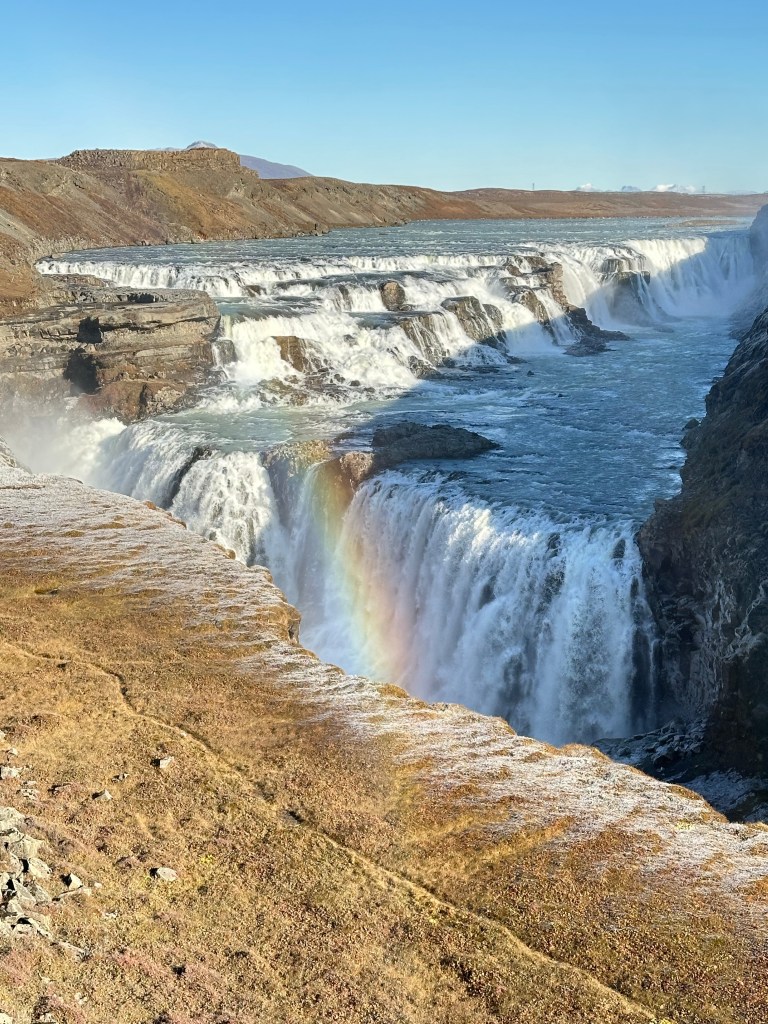
Gullfoss Waterfall sites on the glacial Hvita river which drains Iceland’s interior. The thundering waterfall has two stages: the first a rocky upper cascade with a short drop of about 35 feet, and the second a plummeting drop 70 foot into a narrow gorge. Cold wind blows down the valley and the spray from the falls can soak you if you get close. In winter, some viewing areas are closed for safety as there is often a layer of ice anywhere the spray lands. There are two viewing areas to consider. While the lower one may have a better view, it is also closed in winter for safety. Parking is free and the upper parking lot offers WCs, a café, and a large gift shop. Keep an eye out for some very cheeky souvenirs, if that is your cup of tea.
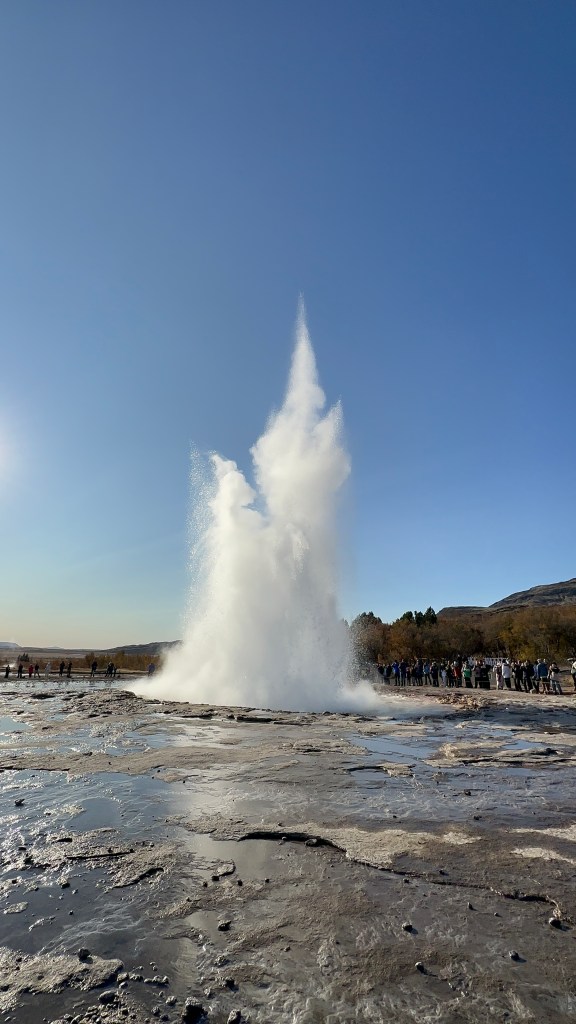
The visitors center and parking lot are on the opposite side of the road to Geysir Geothermal Field. Find a parking spot and walk across the road to the free-to-access geothermal field. While the original Geysir geyser is no longer very active, the geothermal field around it still bubbles and steams. One particularly predictable geyser, Strokkur, erupts in dramatic fashion every 5-10 minutes. Spend 20-30 minutes here watching Strokkur erupt a few times, each time shooting boiling water about 50 feet in the air. A dome-shaped bubble appears a second before the eruption and is a good cue to start videoing. You can get fairly close to Strokkur but should always be mindful that you are standing in an active geothermal field and take appropriate safety precautions. Take advantage of the WCs and peruse the café and gift shop before continuing on.
Pingvellir is an area that could be the better part of a day on its own. Full of history and natural drama, this national park offers several activities. Visitors can walk along the gorge created by separating tectonic plates, stand where the original Icelanders made important decisions, or snorkel the frigid waters of the Silfra Fissure (the flooded part of the gorge between tectonic plates). We opted for some scenic driving before continuing on to our lodging for the night.
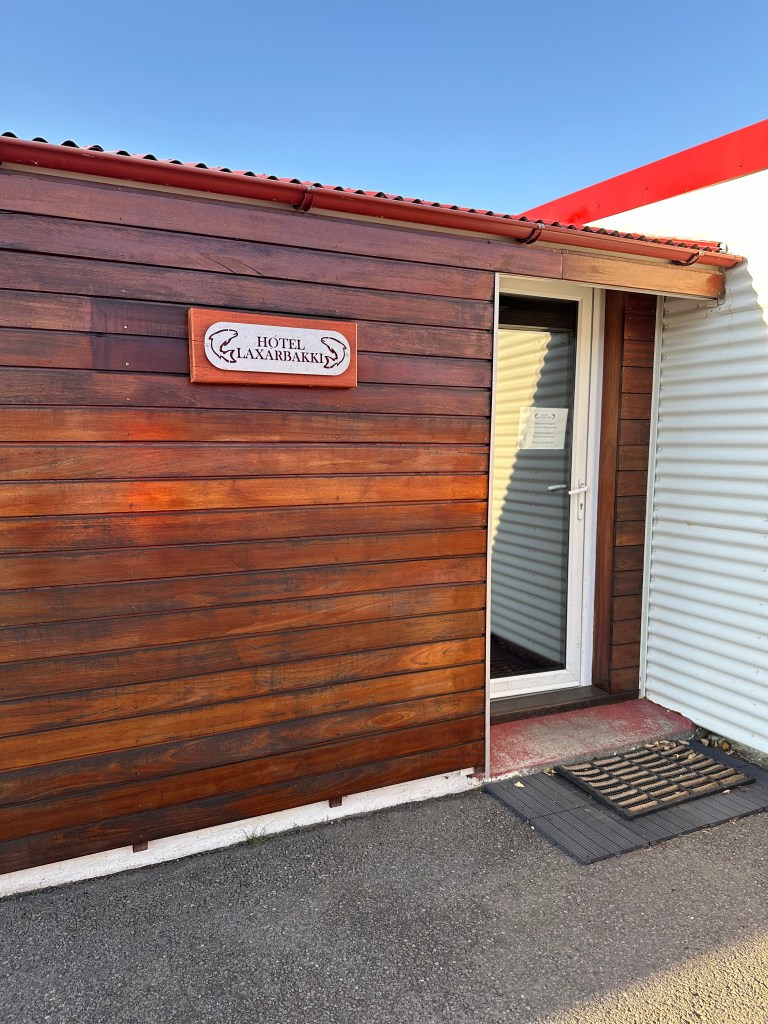
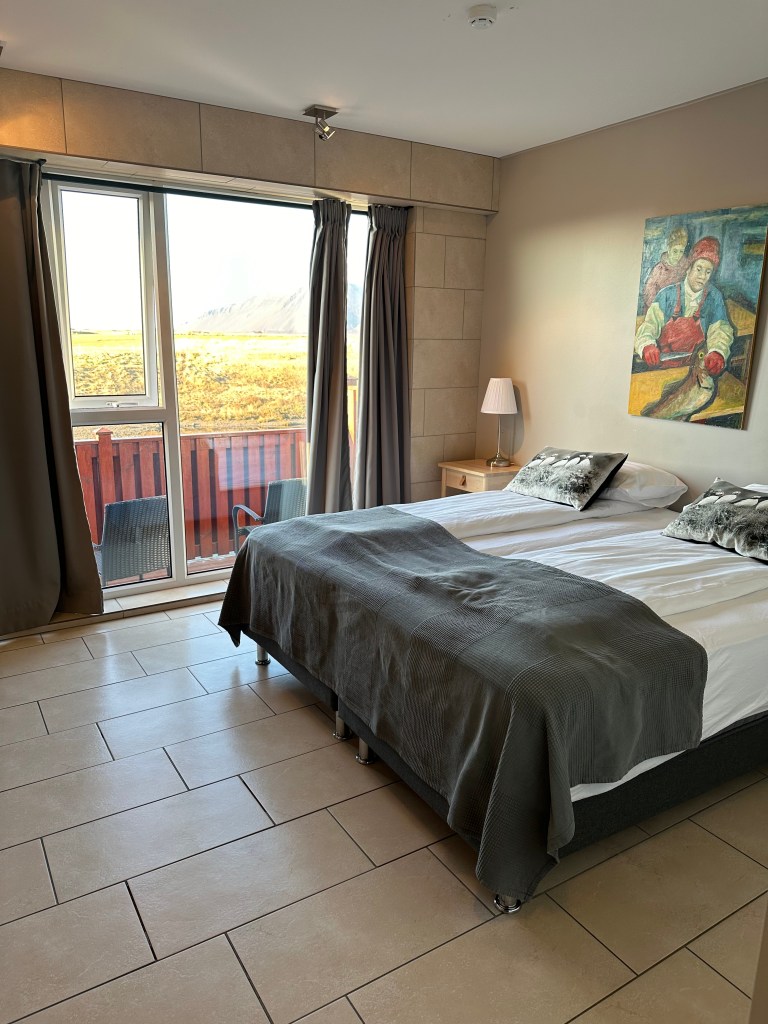
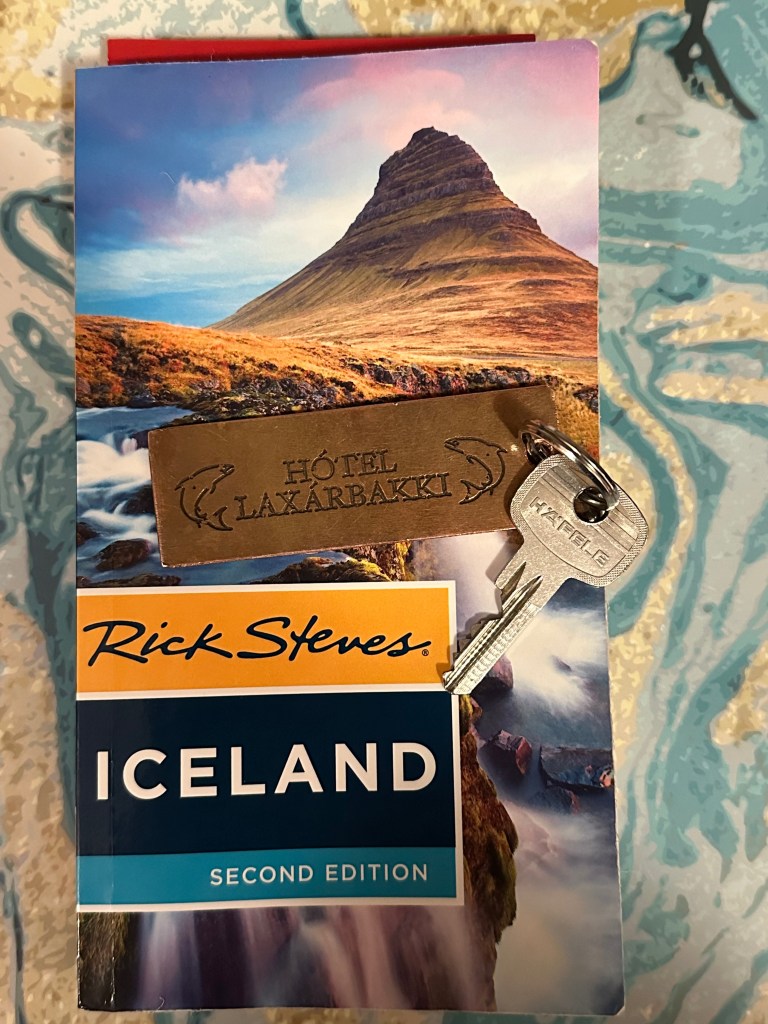
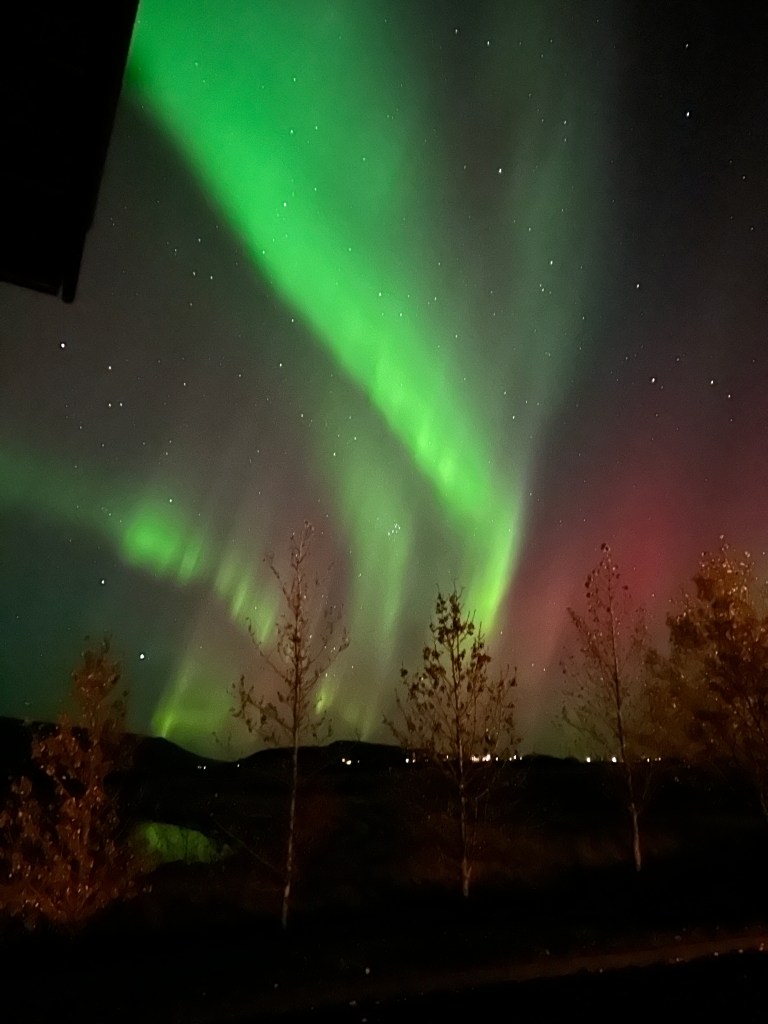
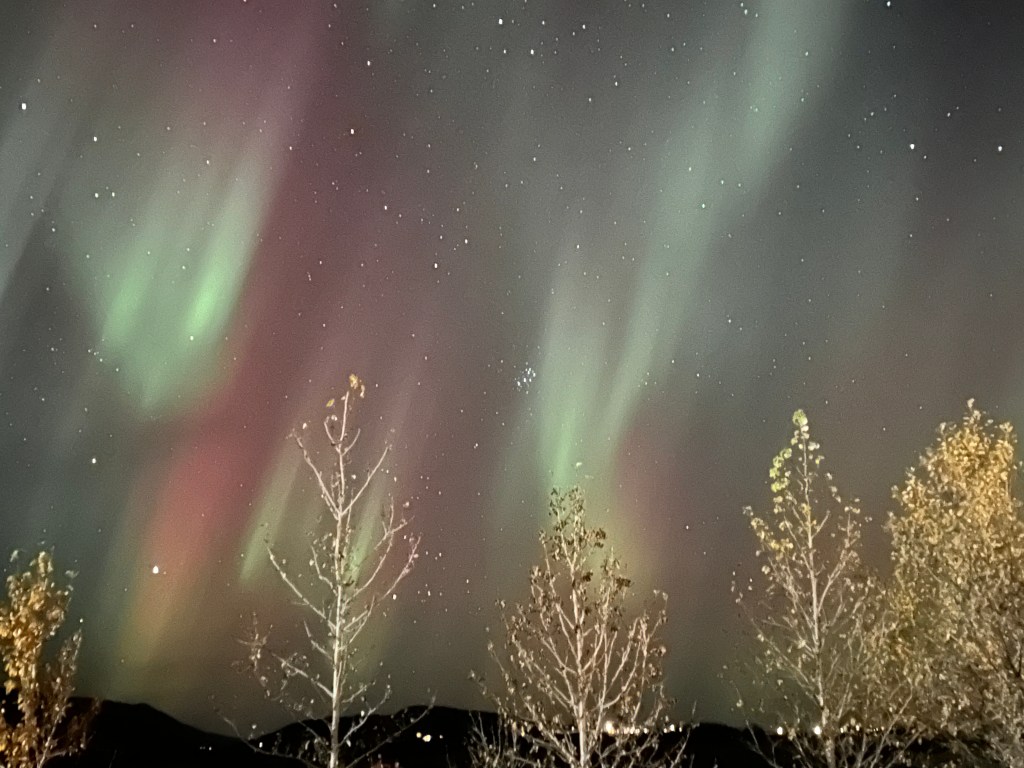
Hotel Laxarbakki is clean, conveniently located, and reasonably priced. There is a restaurant on-site and the rooms are equipped with a small furnished kitchen, complete with stove, oven, and microwave. There is also a washer and dryer if guests want to take advantage of the opportunity to launder items. The hotel has a hot tub and sauna which are amazing locations for viewing the Northern Lights, if you dare brave the cold when exiting! If you don’t want to partake in the hot tub or sauna, the fence around them offers protection from the wind and a place to steady your camera while watching the Northern Lights.

 Travel with Fleming