

I am incredibly excited for the next few days! When my friends and I started planning this trip in earnest, he asked what my “non-negotiables” were and I promptly replied 1) spending quality time with them, 2) visiting Petra, and 3) visiting Jerusalem, Israel. We have successfully completed two of those non-negotiables (plus many more fantastic adventures!) and, today, we will complete the third. There is an unexplainable and intense draw to visit Jerusalem. This is not a religious pilgrimage for me though I feel an odd mixture of anxiousness and excitement as we set off for the border.
My friends are overseas diplomats so my experience crossing the land border with them was different from the average border crossing. Personally, I would not recommend making this crossing by land and, if you absolutely must, only attempt with experienced travel companions. It is not dangerous but it is confusing. The order is not linear and you will bounce back and forth between counters. It is further complicated if you are driving a vehicle due to insurance and, as I understand it, you cannot take rental vehicles across the border so that adds another layer of complexity. The lines at the King Hussein Bridge, also know as Allenby Bridge, can be excessively long though you can purchase a VIP option which expedites the process. Expect vehicles and luggage to be inspected and/or scanned, much like TSA at the airport. Upon entry into Israel, you will be given a small piece of paper with your photo printed on it; keep this with your passport and do not lose it. Israel provides this form rather than a passport stamp as some countries will not permit entry if your passport contains an Israeli stamp. All in all it took about three hours from the time we left Amman until we arrived in Jerusalem, including drive time and time spent at the border.
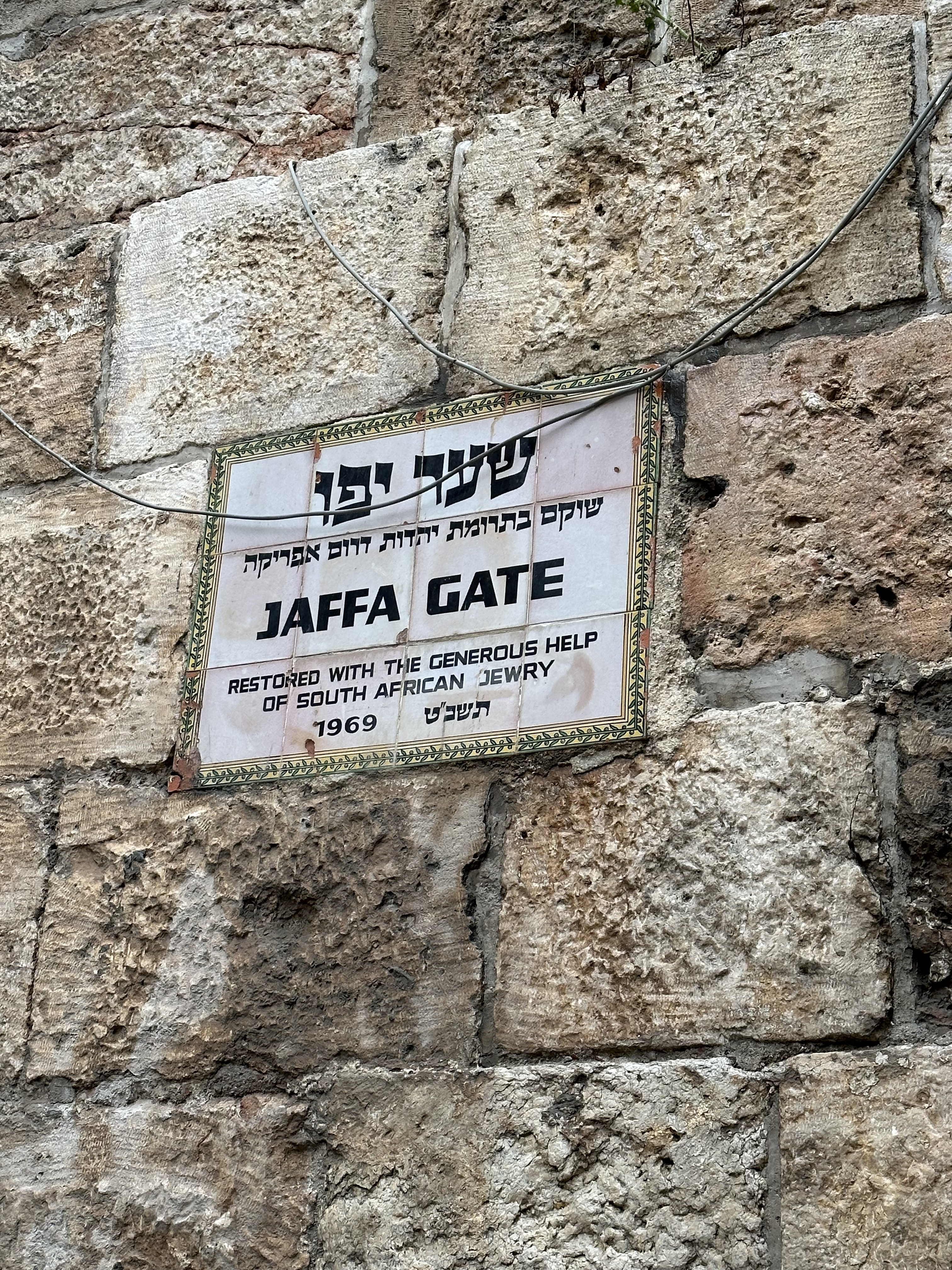
Though I would not describe myself as religious, I grew up learning about Jerusalem and Jaffa Gate in Sunday school and in world history classes. These places seemed unreal to me, almost like they were part of a fairy tale … until today. Arriving in Jerusalem is a surreal experience. The Old City is surrounded by a massive stone wall, originally with six gates. Today, four major entry points surround the Old City which remains divided into quarters. Jaffa Gate leads directly into the Christian and Armenian Quarters, Damascus Gate leads into the Muslim Quarter, Lions’ Gate leads to the start of the Via Dolorosa (the route Jesus is believed to have carried his cross), and Dung Gate leads into the Jewish Quarter. Though many modern amenities can easily be found inside the wall (including vehicles), life continues much as it has for centuries. Jerusalem is a walking city with many pedestrian only streets. Uneven steps and cobblestone streets mean comfortable shoes are a must.
A drizzling rain persists as we enter the city on foot through Jaffa Gate. Once inside the walls of the Old City, we make our way to our first tour at the Tower of David. The citadel, also referred to as the Tower of David, was built as a palace of Herod the Great and was later used by the Romans and Crusaders. Now a mixture of original ruins, reconstructed areas, and modern displays of artifacts, the citadel is a worthwhile first stop when you arrive in Jerusalem. There is a model of what it would have looked like during the height of it’s glory and breathtaking 360-degree views of Jerusalem which deserve at least a few moments of appreciation regardless of the weather.
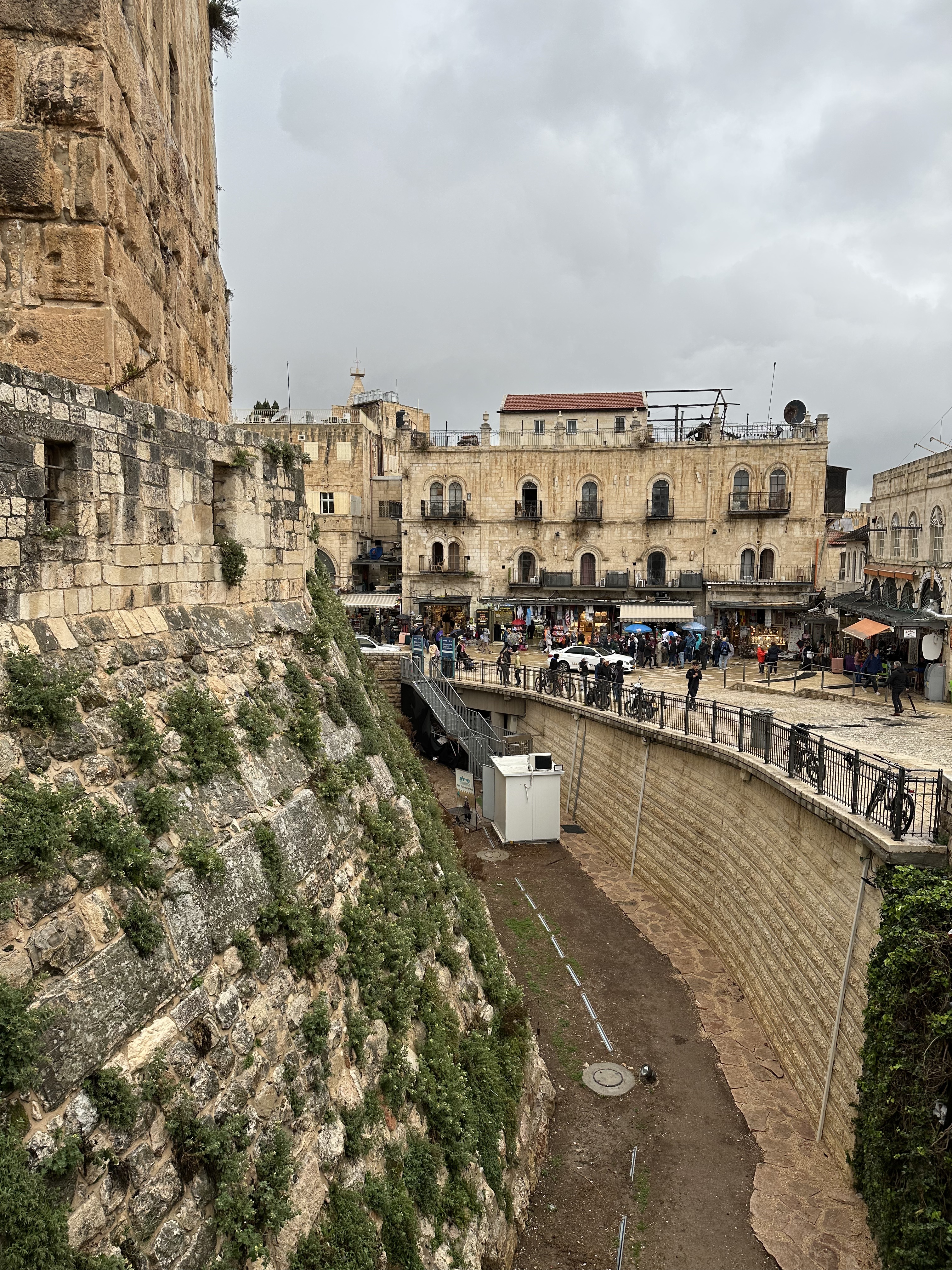


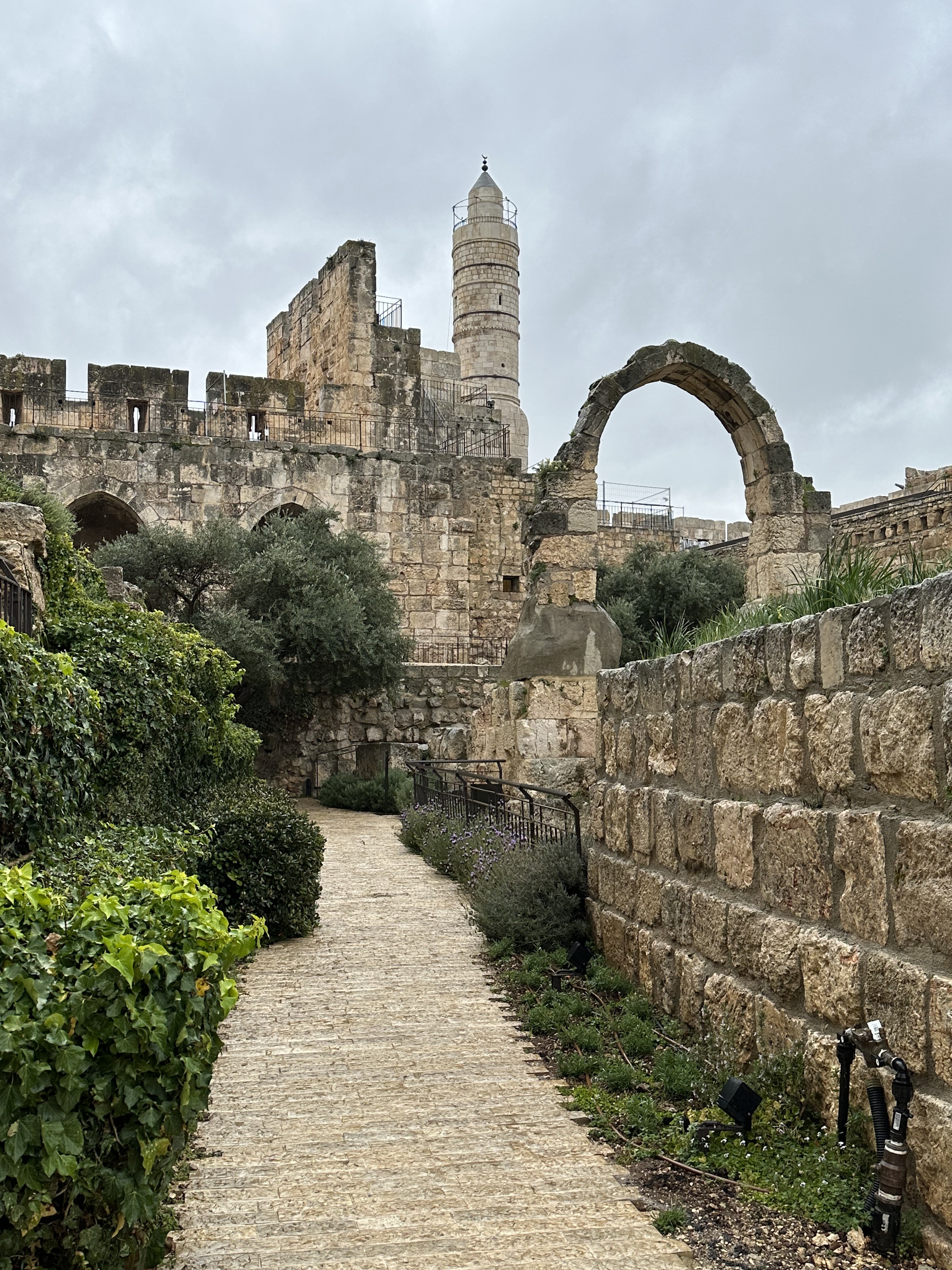
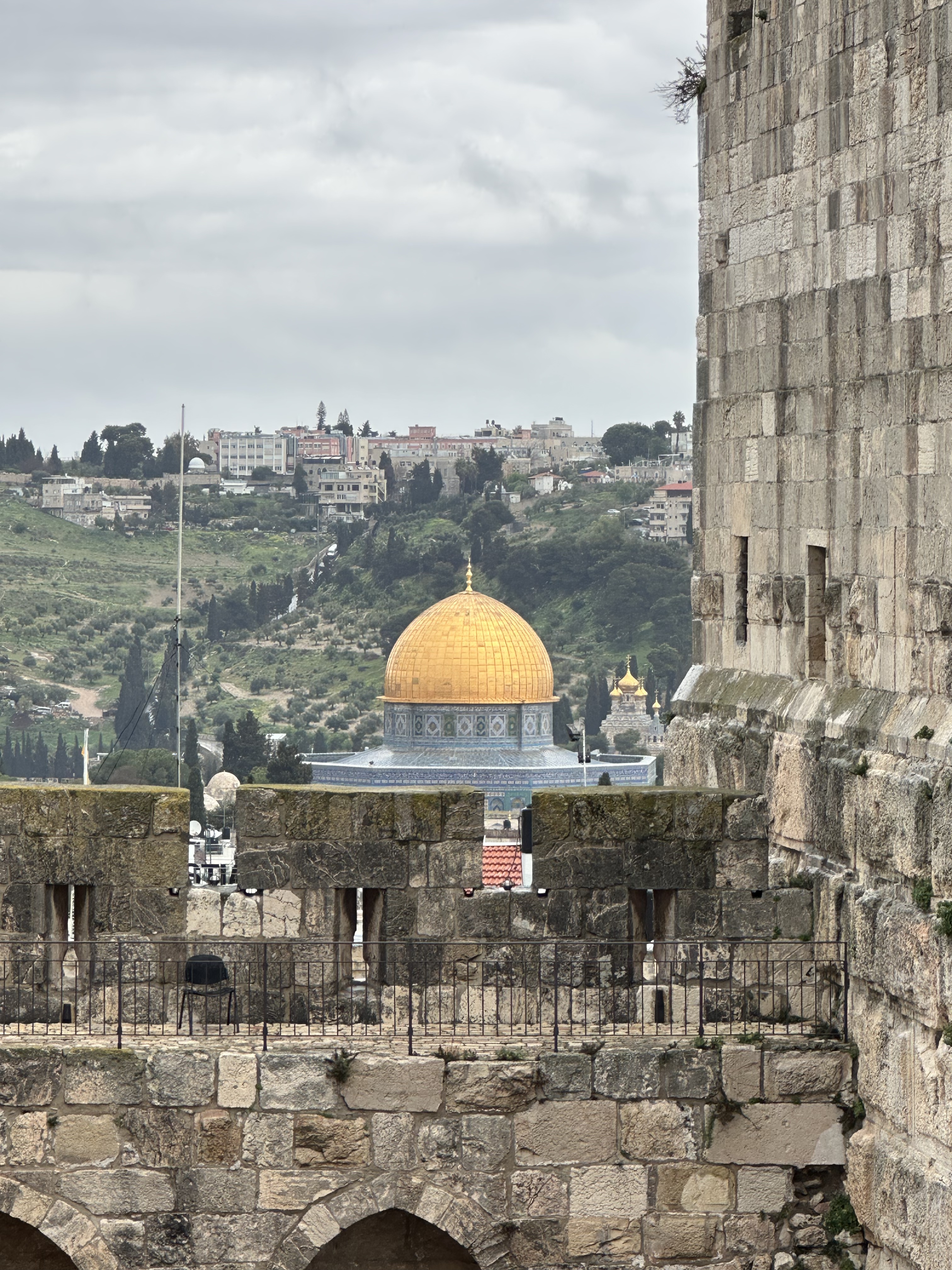

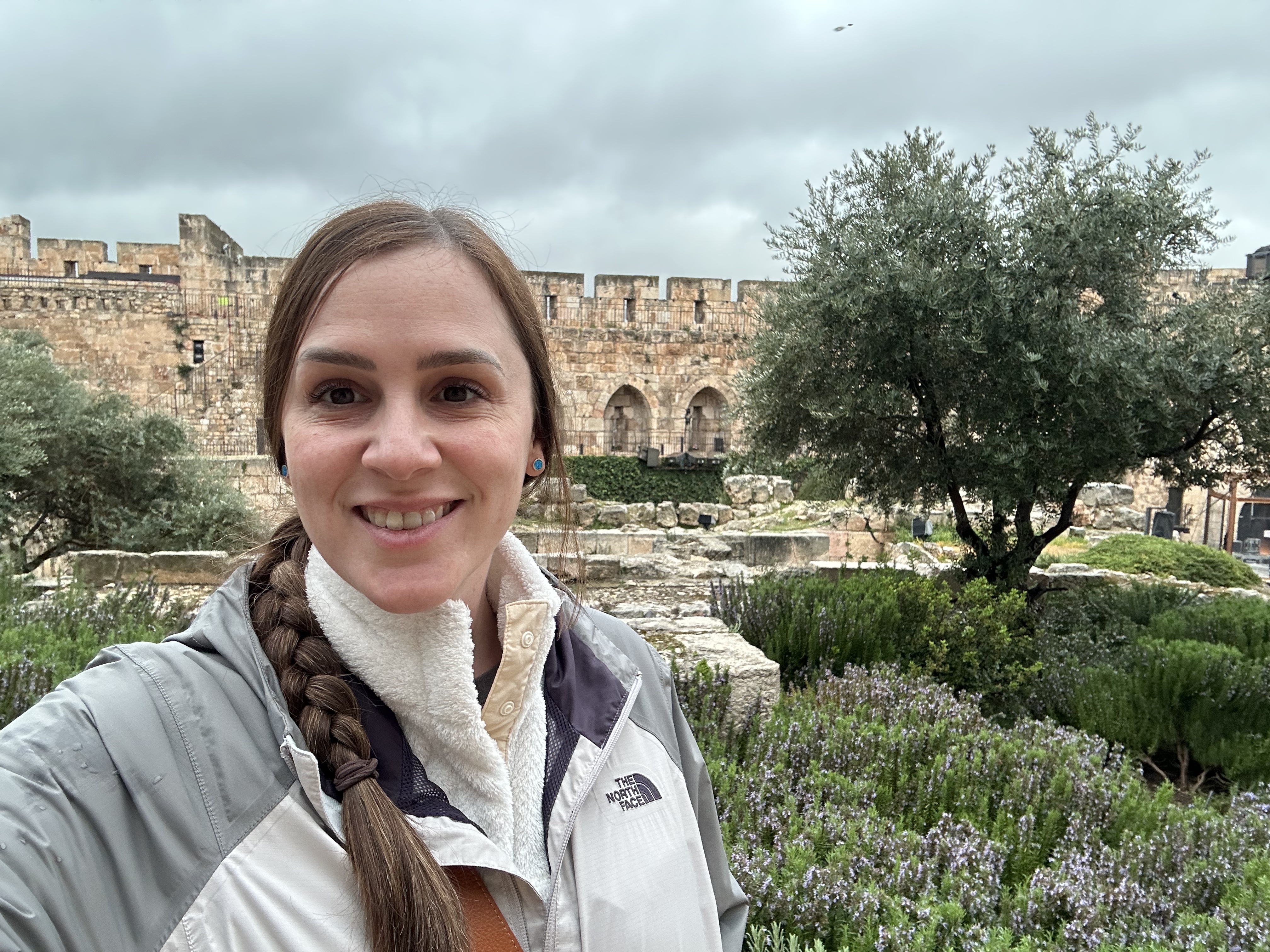
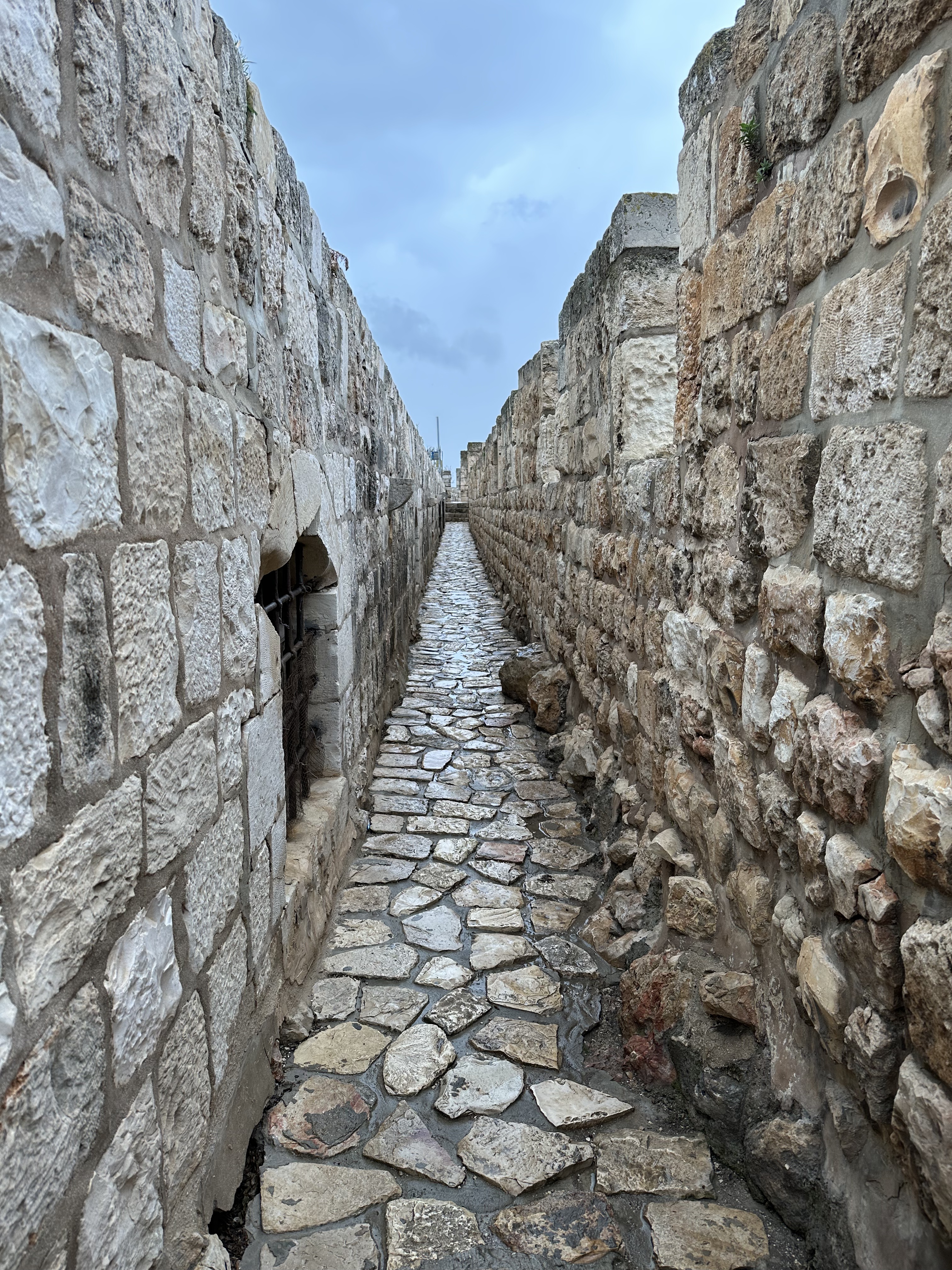
The massive golden dome of the Al Haram Ash Sharif (the Noble Sanctuary as it is known to Muslims) or Har HaBayit (Temple Mount as it is known to Jews) is visible from multiple viewpoints. A section of the Old City ramparts is accessible from the citadel. We planned to complete at least a portion of the ramparts walk but decided against the exposed position when it began hailing and raining heavily. We waited out the worst of the storm inside the citadel before we decided to find some lunch.
We found a small pizza restaurant called Pizza Yafa down a side street near the citadel. The food was hot and fresh which we needed for the warmth and energy. It was also nice to warm up a bit because the temperature dropped after the rain and hail. We signed up for the free Sandeman’s Tour of the Old City for our afternoon activity. The tour itself is free but you should tip your guide. Gary was our guide and he was fantastic! An American expat and retired teacher, Gary led us on a nearly three hour tour around the Old City. Gary shared ancient and modern history, insights about current relations amongst residents of the different quarters, and gave some great recommendations for seeing the most popular sights when crowds were smallest.


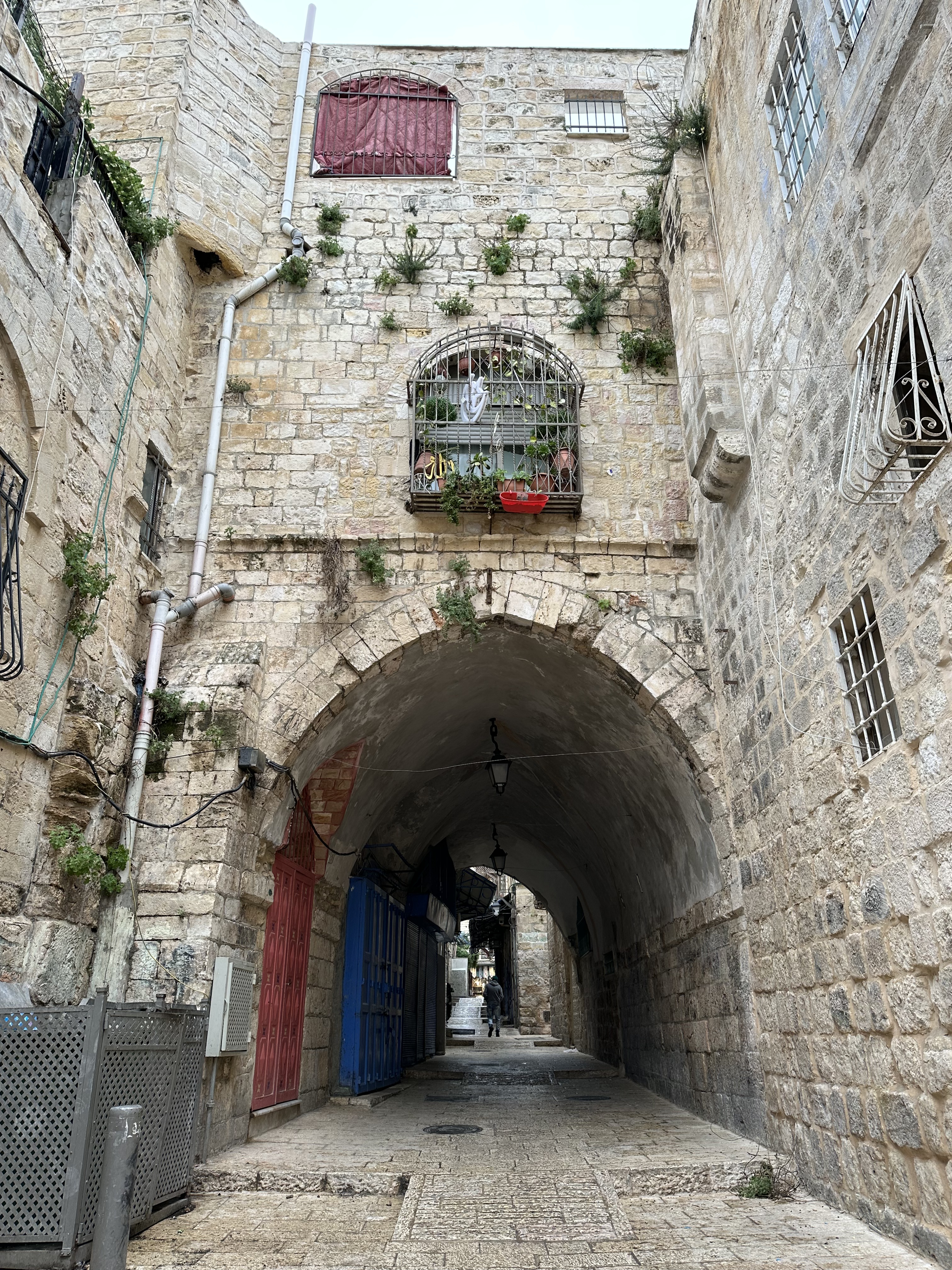
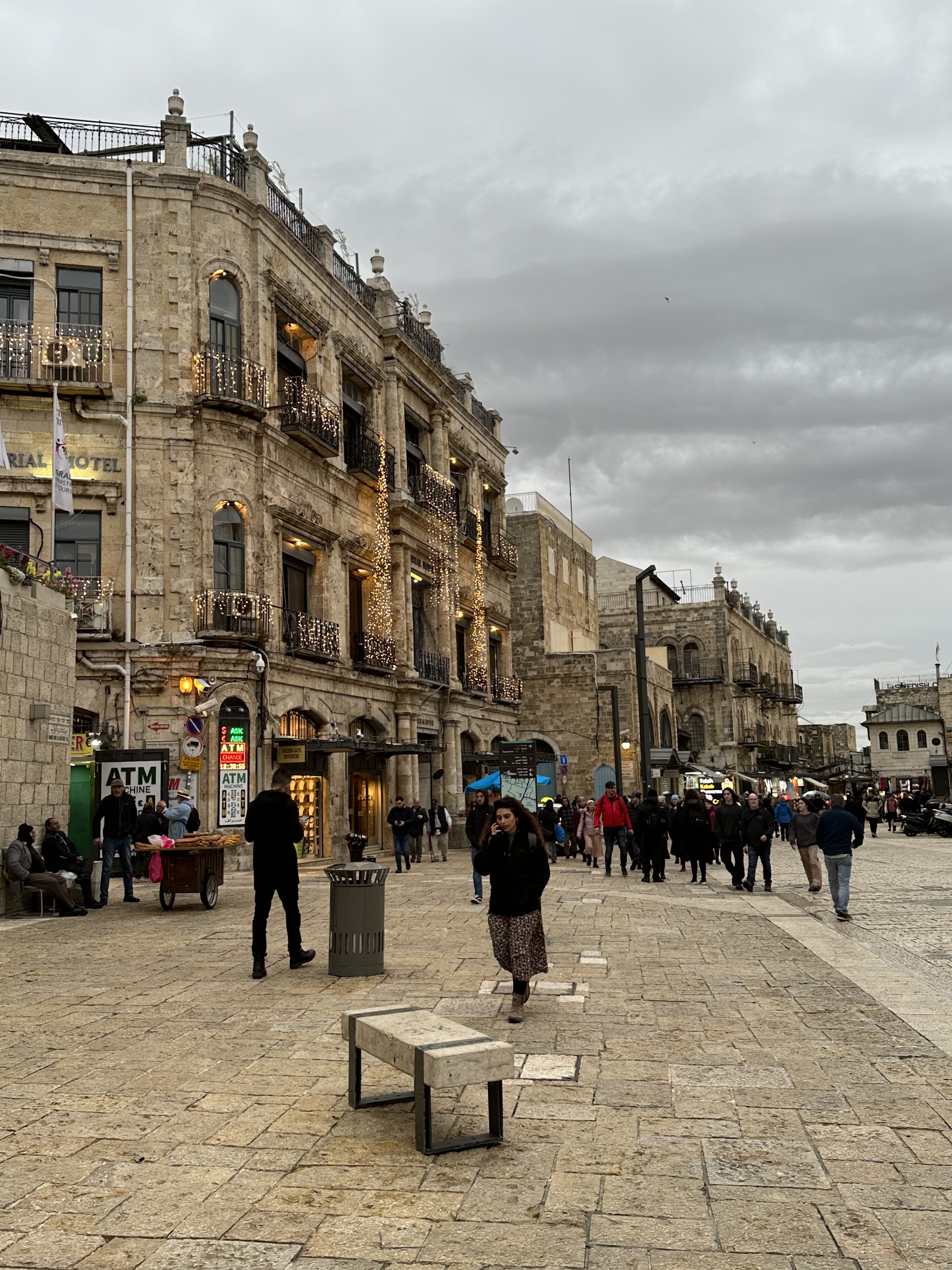

At this point I think it is important to clarify that you should always expect crowds in Jerusalem. It is a holy land for Christians, Jews, and Muslims, and people from all around the world travel here for their own religious experience. When I say Gary offered tips for seeing sights with the smallest crowds, I mean comparatively smaller crowds during non-peak hours. The tour began just outside the Jaffa Gate and concluded in the Christian Quarter (be sure to ask your guide about ending location as this is helpful info for planning the rest of the evening).
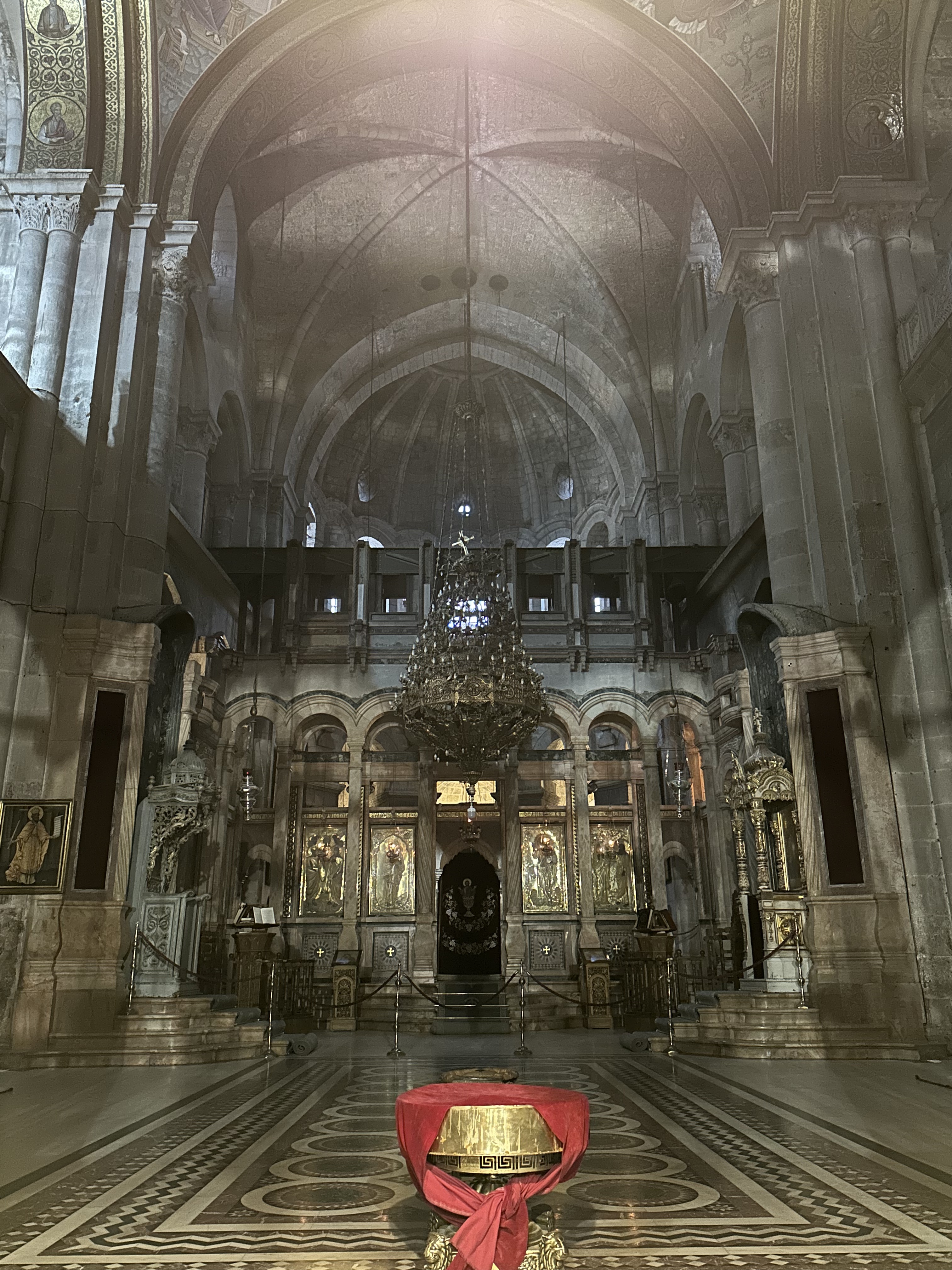

We took advantage of our tour’s ending location and entered one of Christianity’s most sacred sites, the Church of the Holy Sepulchre. Many Christians believe this church is built over the biblical Calvary or Golgotha where Jesus was nailed to the cross and later rose from the dead. There are a number of worthwhile sights inside the church including the final five Stations of the Cross (the final five stops of the Via Dolorosa. The three most popular sites within the Church of the Holy Sepulchre are the Stone of Unction, the Chapel of Cavalry, and the Tomb of the Holy Sepulchre.
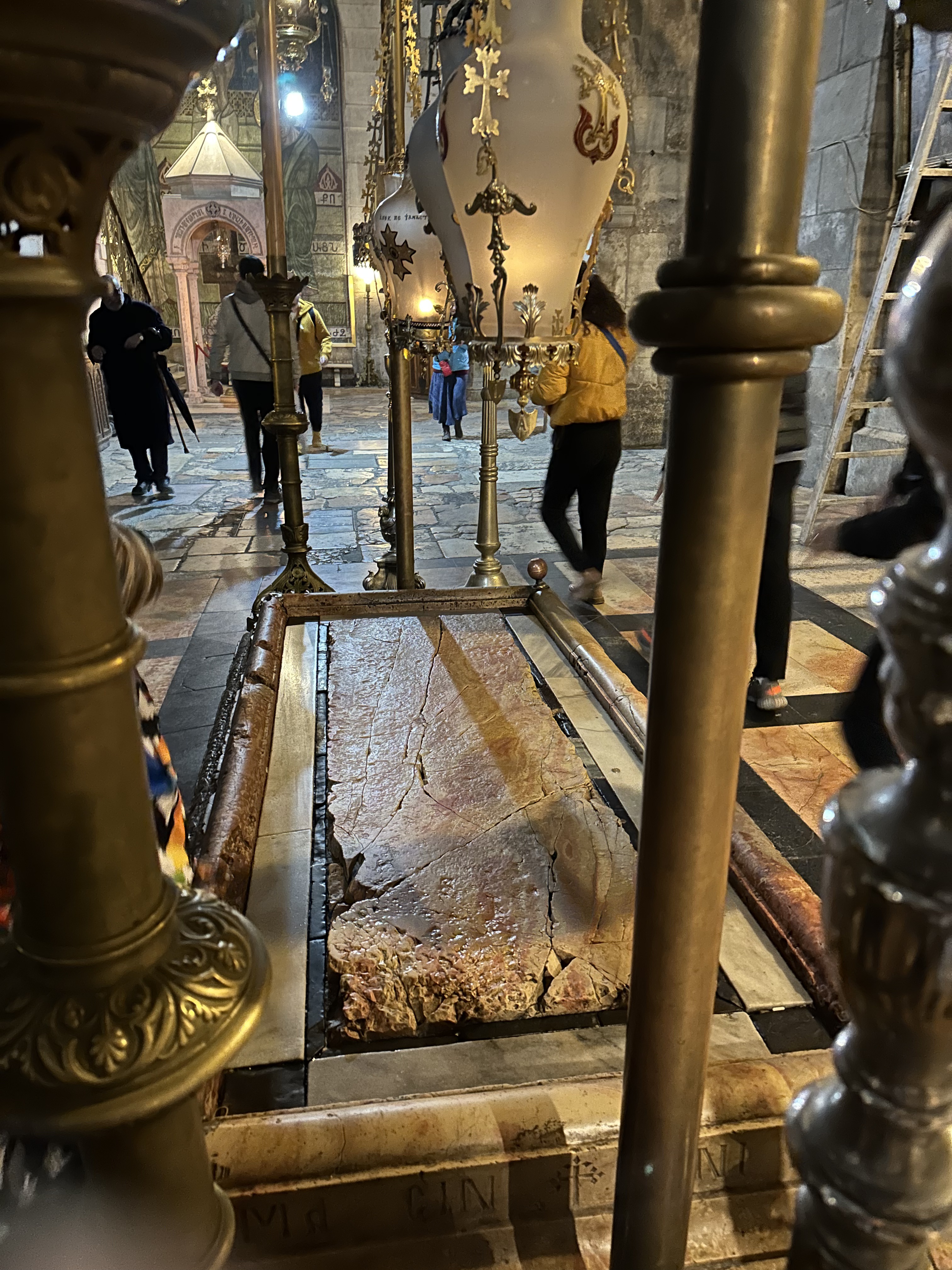
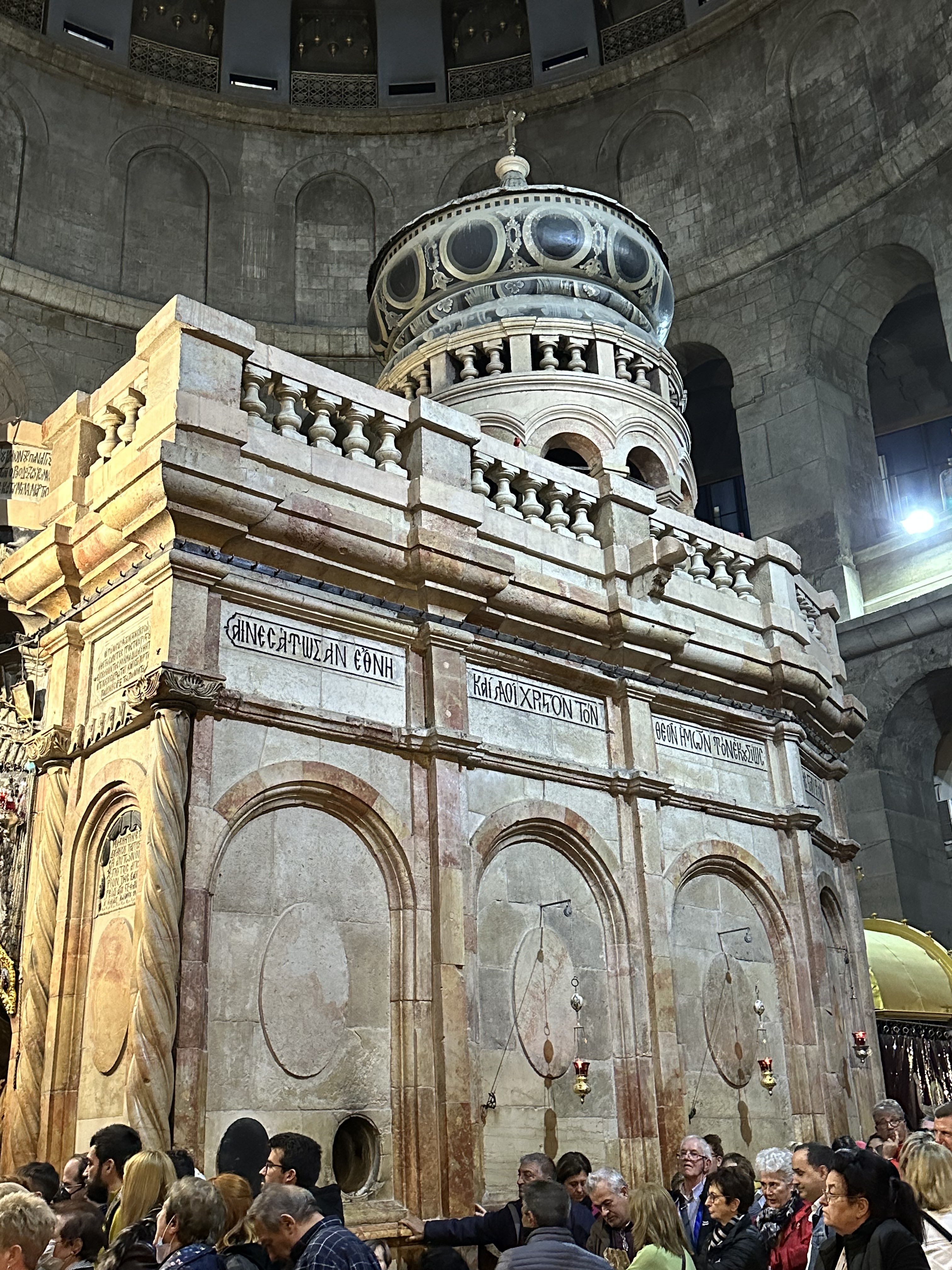

The Stone of Unction is immediately in front of the entrance to the church and commemorates the place where Jesus’s body is said to have been anointed before burial. Emotional visitors sometimes lay across the stone while others will pour oil onto it then rub it away with a cloth as a relic. The Chapel of Cavalry is to the right of the entrance and is divided into two naves which house three Stations of the Cross; where Jesus is said to have been stripped of his clothes, where Jesus is said to have been nailed to the cross, and the believed site of Jesus’s crucifixion. In the center is an altar under which a hole allows visitors to touch the Rock of Cavalry or Golgotha. The altar had to be built over the rock when too many tourists and religious pilgrims began to chisel away pieces of the rock as souvenirs. The Tomb of the Holy Sepulchre is believed to be the location where Jesus was buried and rose from the dead. Attendants are present to keep the queues moving and may deny entry to anyone who is immodestly dressed.
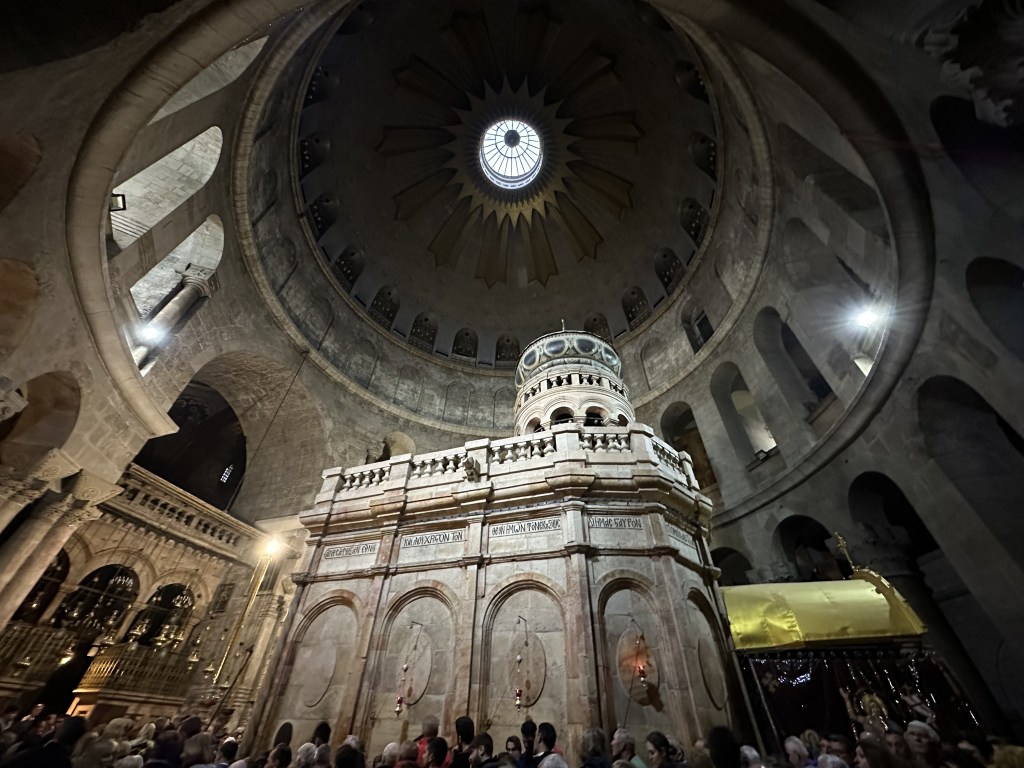
Personally, I found the Church of the Holy Sepulchre to be lavishly adorned and too full of tourists who showed little regard for their fellow travelers. I expected visitors of one of Christianity’s holiest sites to behave in a more Christian manner with patience and basic human dignity. I am deeply saddened and disappointed with what I saw and experienced. There were massive tour groups pushing their way to the front of the line, no one kept a proper queue, people pushed one another aside and to the floor, and, worst of all, no one helped those who had been pushed down back to their feet. I was pushed, pulled, and pinched in turns. My friends and I were separated by the hoards of aggressive tourist groups. Somehow my female friend and I managed to stay together while my male friend was several yards back. A few of the men, my male friend included, formed a circle around a pregnant woman to protect her from being pushed. People forgot to practice basic kindness because they feared they would miss one of the sites. It was disappointing behavior which negatively impacted the experience of visiting the church. Since we visited near closing time, I can only imagine how intense this would have been during peak hours.
Frustrated with how people behaved, we decided it was time to find our hotel and get dinner. We are staying at Ibis Jerusalem City Center which is convenient to the Old City and the shuk (market). Finding parking at night was a little challenging but my expert international driver friends managed it like pros and we were soon dropping our bags in our room. The three of us split a room so we had a bed and roll away bed. The room and hotel were clean and staff were friendly. One thing I would caution travelers to be aware of with this hotel is that the elevator is rather small. It was snug for three people with overnight bags or four people without luggage. It’s completely functional if a bit small, especially to an American who is accustomed to nearly everything being larger.
The rain continued off and on throughout the evening, including during our walk to the shuk where we ate dinner at Burgers Bar. Burgers Bar has American-style burgers, fries, and onion rings which are delightfully tasty and made to order. This location has two counter areas with a few tables at each counter and the actual kitchen area in the middle. It’s all outdoor and they had the heaters on which made sitting outside in the colder temperatures much more comfortable. We enjoyed people watching as we tucked into our food. The shuk has fruit, vegetable, meat, and pastry stalls in addition to other restaurant options. We all seemed to be craving a burger and it was a solid choice. The rain mostly stopped so we took our time walking back to the hotel and glancing at shop and store windows.
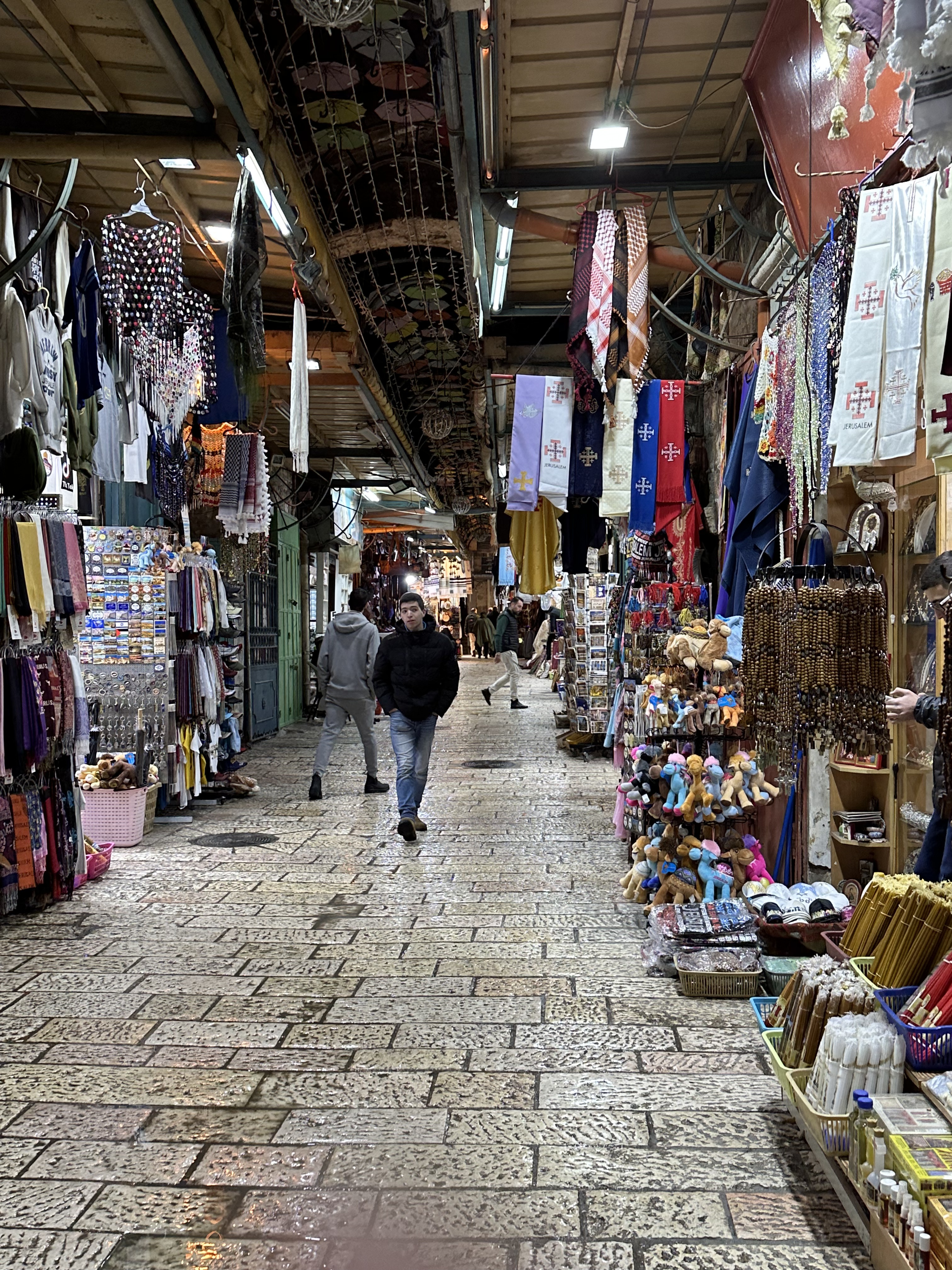
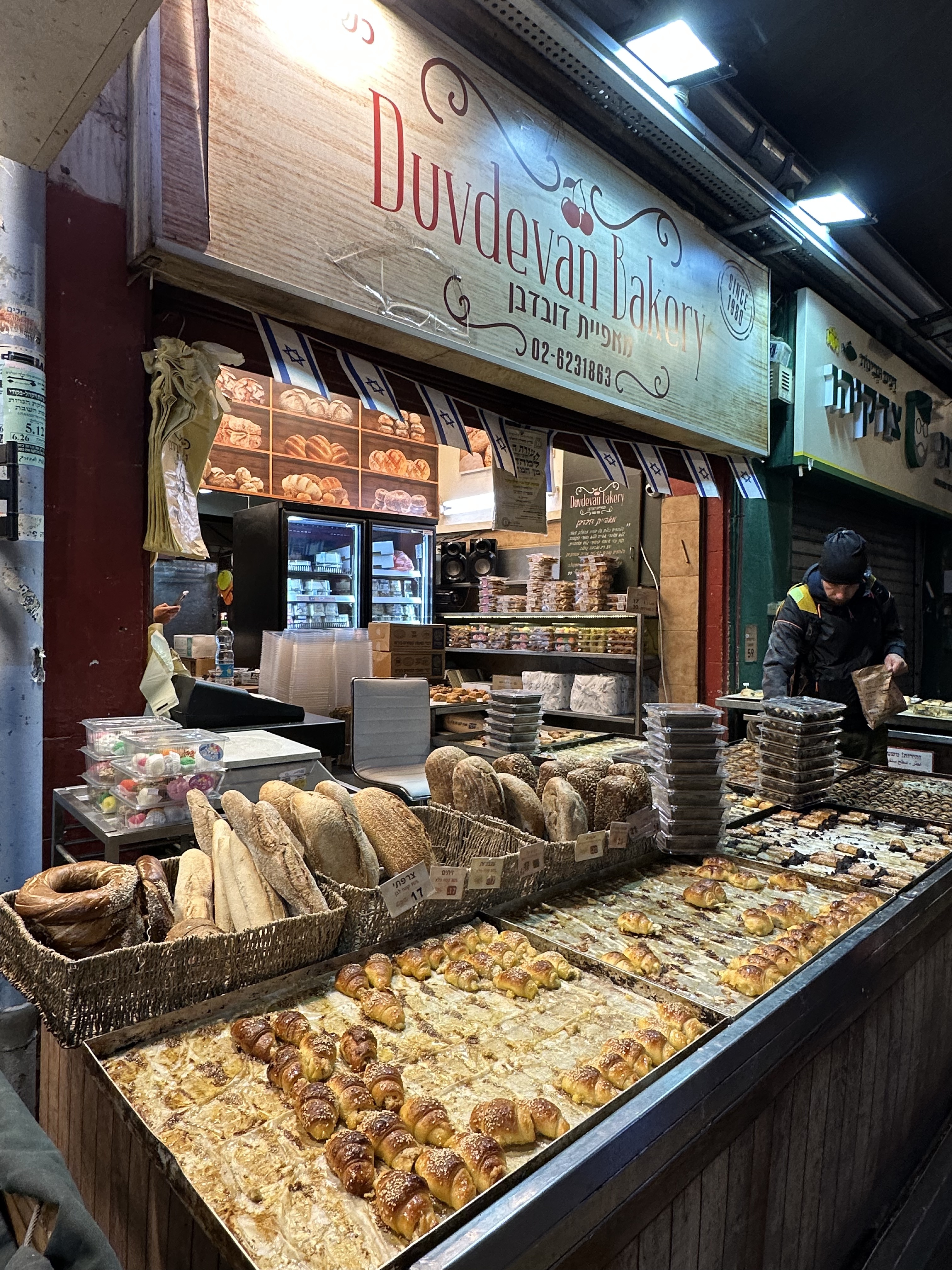
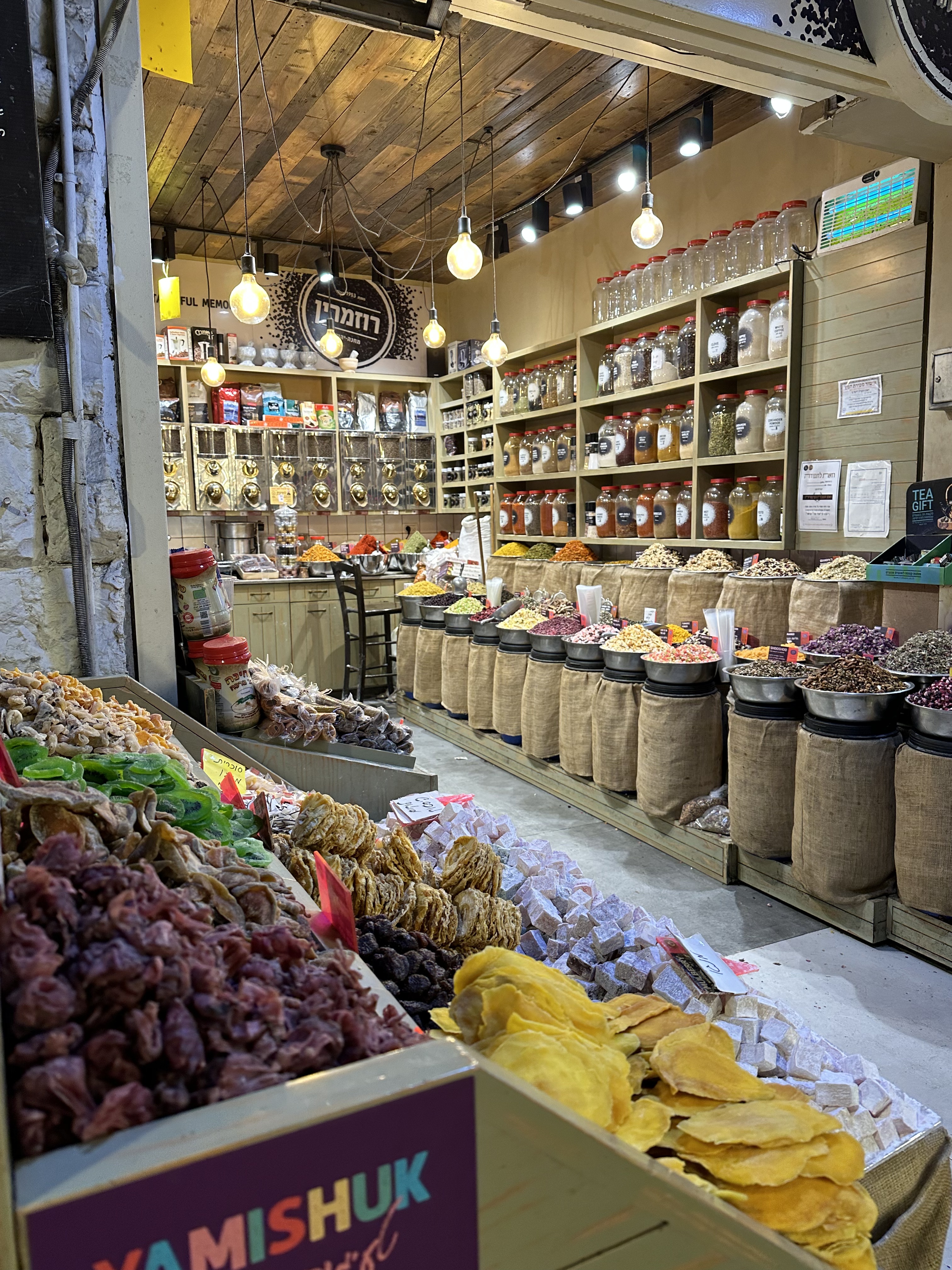
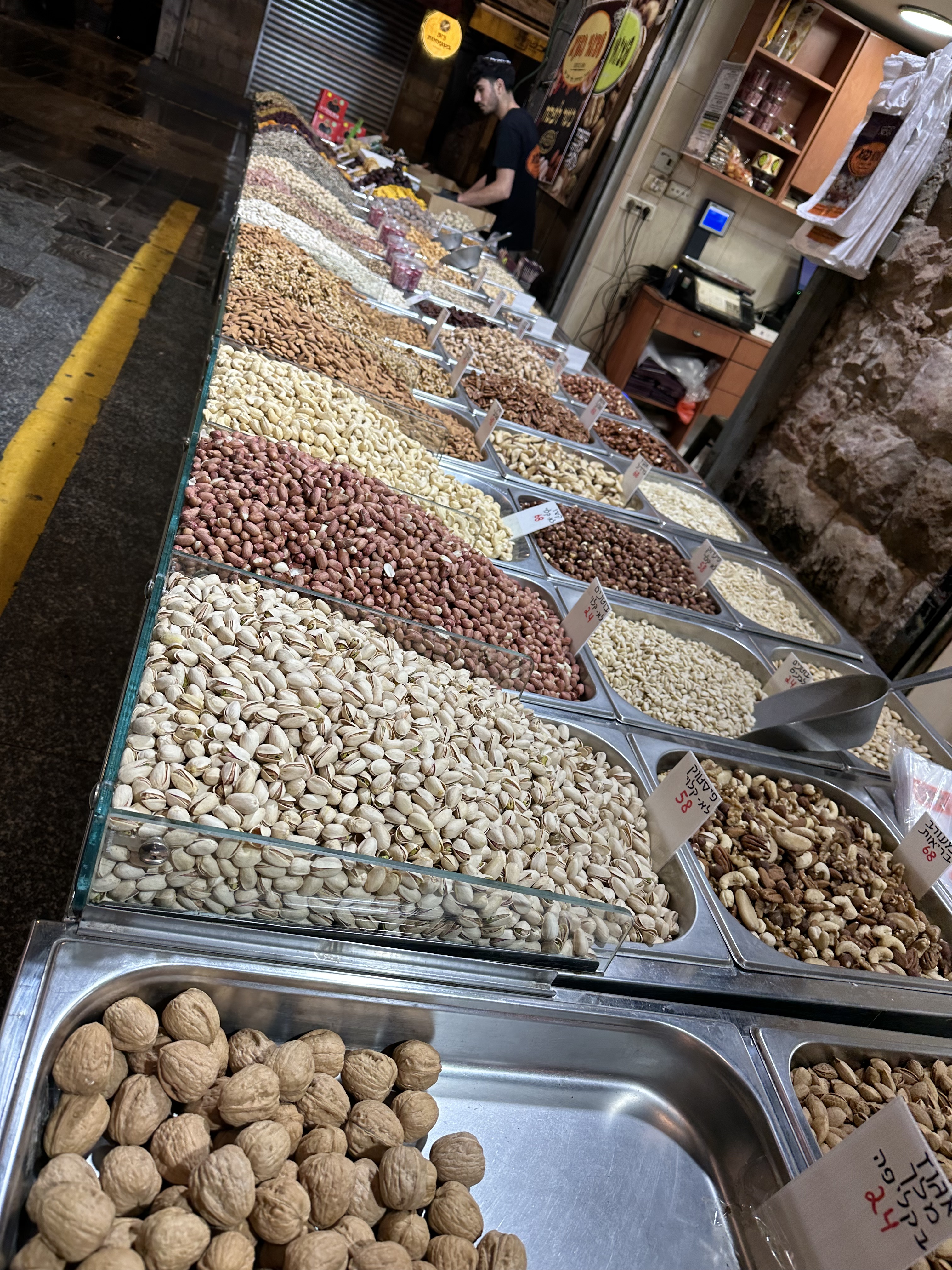
A few reflections from today:
- Day 1 in Jerusalem has been a success! It is exciting to be in one of the world’s most famous, historical, and religiously important cities!
- I am disappointed in how people behaved at the Church of the Holy Sepulchre. I know it is a holy site that many people are making once-in-a-lifetime trips to see and I wish they treated one another with more kindness and patience.
- I have heard more languages spoken in Jerusalem than I think I have heard on any other international trip I have taken. I know I have heard English, Hebrew, Arabic, Spanish, and German, I believe I have also heard Italian, French, Portuguese, and Armenian.
 Travel with Fleming
Leave a comment