
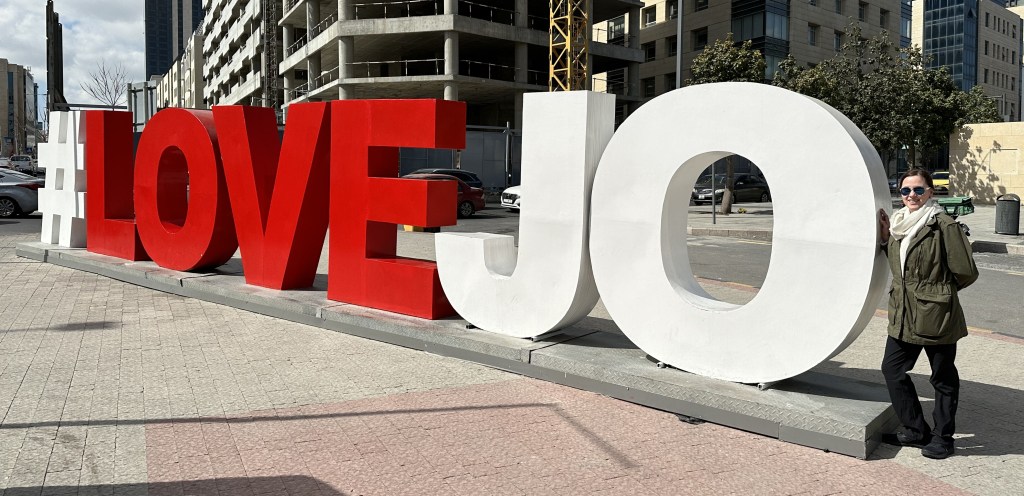
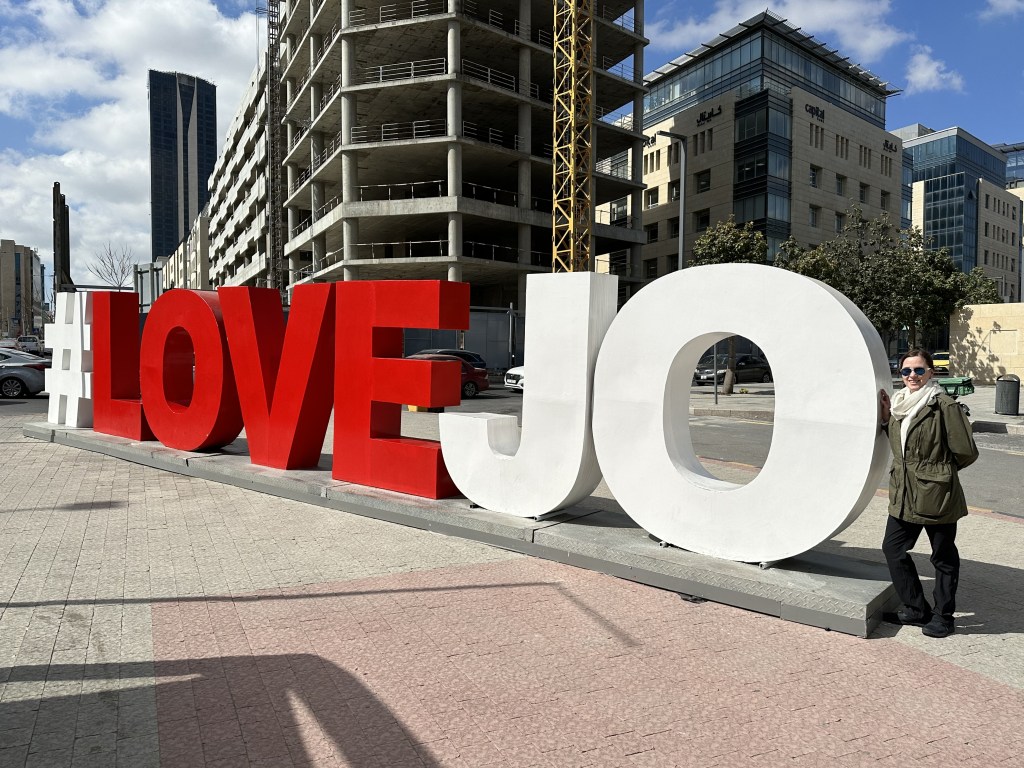
As excited as I am to spend time wandering the grocery aisles, I am more excited to visit the King Abdullah Mosque. This is my first time visiting a mosque and I’m slightly apprehensive because I don’t know what to expect and, most importantly, I want to be respectful of the people and the religion.

King Abdullah Mosque is the only mosque in Amman that openly welcomes non-Muslims. Visitors are welcomed Saturday through Thursday. (The mosque is open only to Muslims who wish to pray on Friday and other Muslim holidays.) Ladies should dress modestly and bring a scarf to use as a head covering. Enter the gift shop area to purchase tickets and don’t be offended if you are asked to wear an abaya which is a full length black garment provided by the mosque. This is also a good time to ask for help with securing your head covering; Jordanians are incredibly welcoming and seem genuinely willing to help (whether that means helping secure your head covering or pointing you in the right direction!).
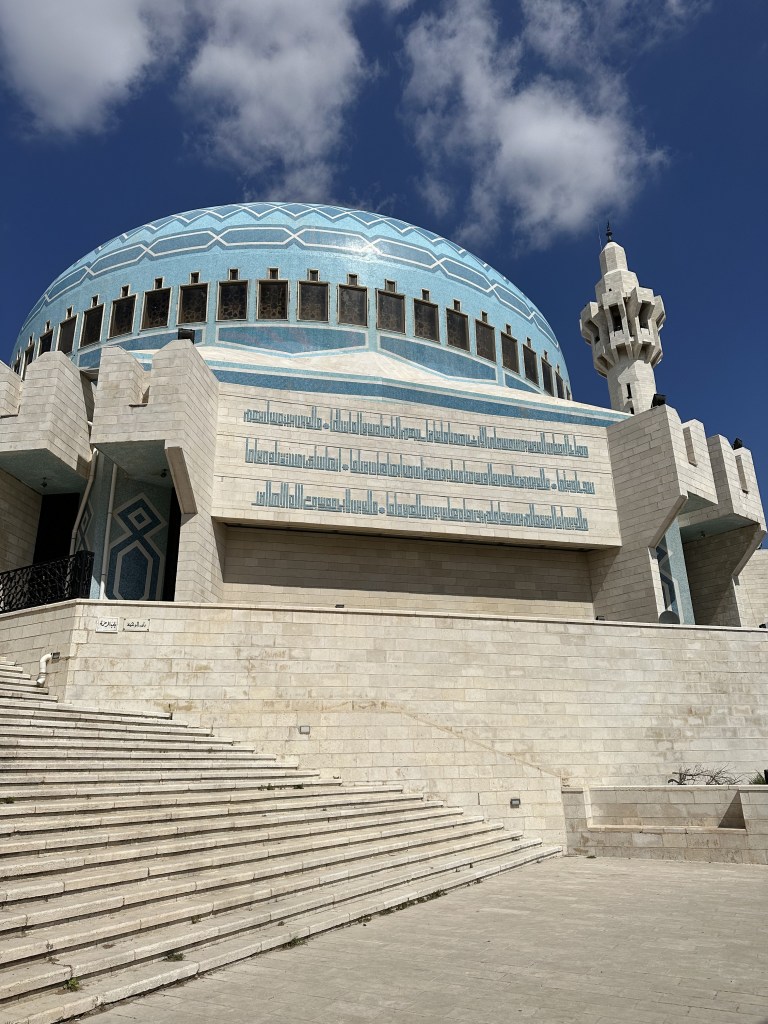
Commemorating King Abdullah I, the first king of Jordan, the mosque is a beacon for those who wish to appreciate contemporary Islamic architecture. While I am not an architecture buff, I certainly appreciated it. The blue dome boasts a 35 meter diameter with a height of 31 meters and its weight is supported by the outer walls rather than by columns. The main prayer hall is beneath the dome. Remove your shoes and quietly enter. The hall is decorated with Quran inscriptions and geometric patterns on the walls and carpet. It’s worth a full loop around the prayer hall to fully take it in. The simplistic interior of the prayer hall is in stark contrast to the interiors of the churches I have visited thus far and this does not diminish the striking beauty of the prayer hall. Geometric patterns are repeated in the carpet, walls, and stained glass panels below the dome in complimentary yet bold colors. There is an electronic display board that lists the prayer times for the day and you can see where the call to prayer is performed. Exit the prayer hall and collect your shoes before continuing through the courtyard. There is a smaller women’s section across the courtyard from the main prayer hall. Women must remove their shoes before entering and no men are permitted in this area. The women’s prayer area is similar to the prayer hall and, simultaneously, completely different. During my visit, there were a lot of women in the women’s worship section so the area was slightly louder than the prayer hall though not disruptive.
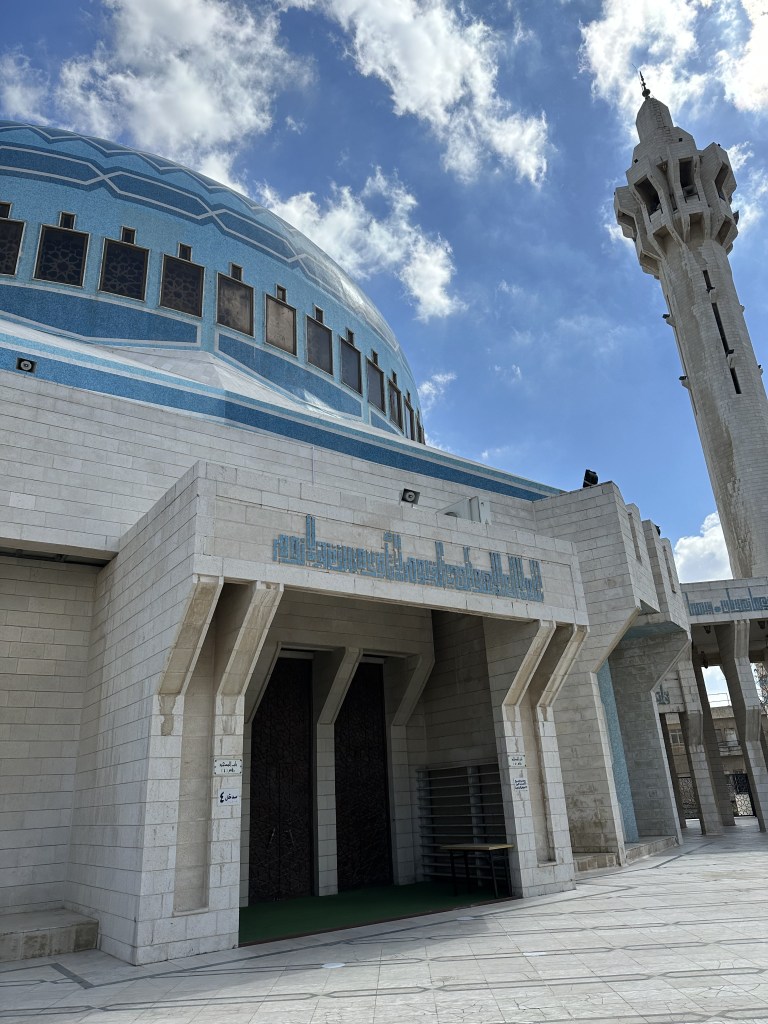
We walked around the courtyard and the museum before returning the abaya and walking through the souvenir shop. I learned that the call to prayer is played through loudspeakers outside each mosque and can be heard all around the city. Though I don’t understand the words (it is in Arabic), I find the call to prayer oddly calming in a way that is difficult to explain. It brings a certain peacefulness and anchor to the surrounding history and culture.
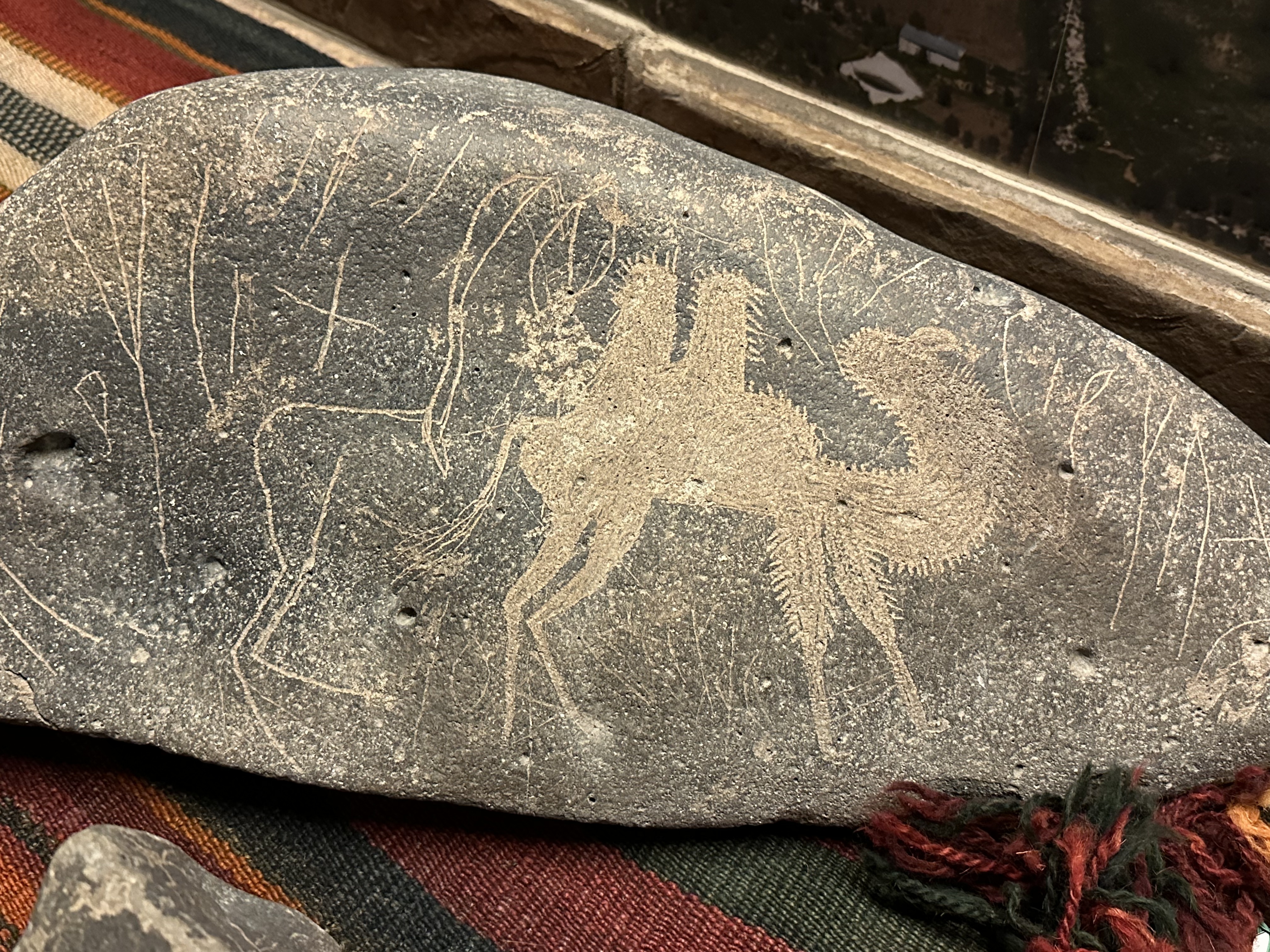
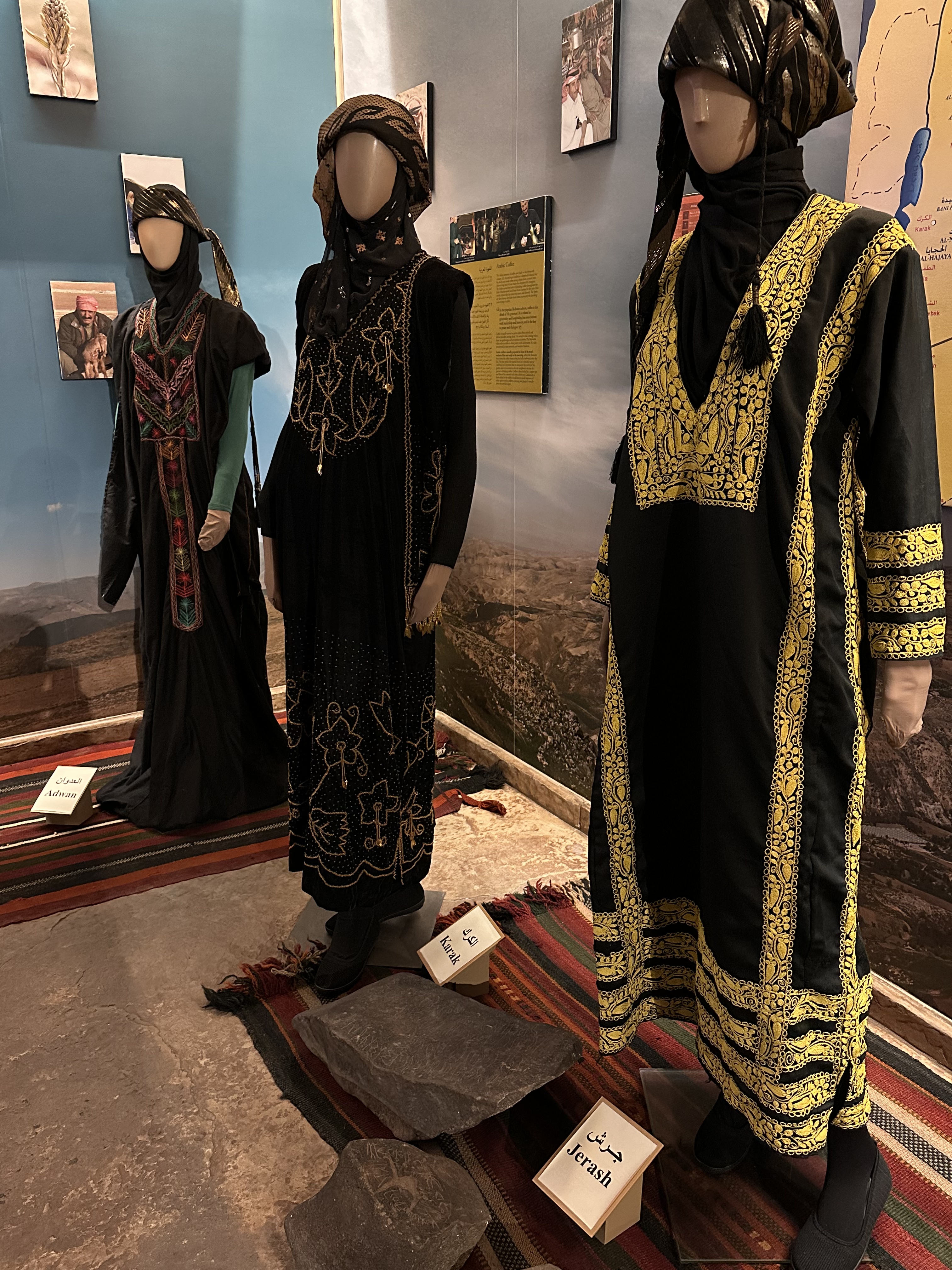
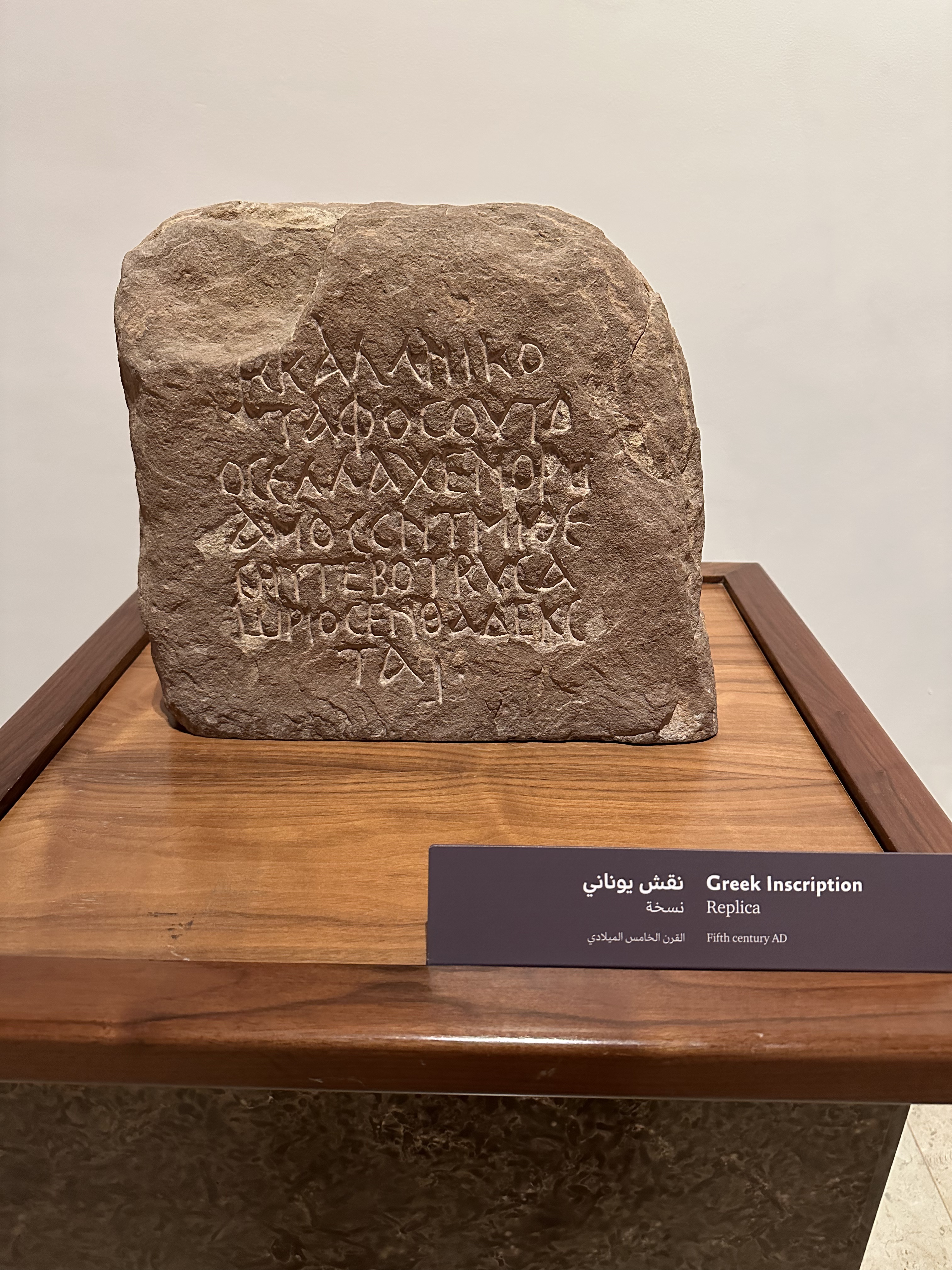
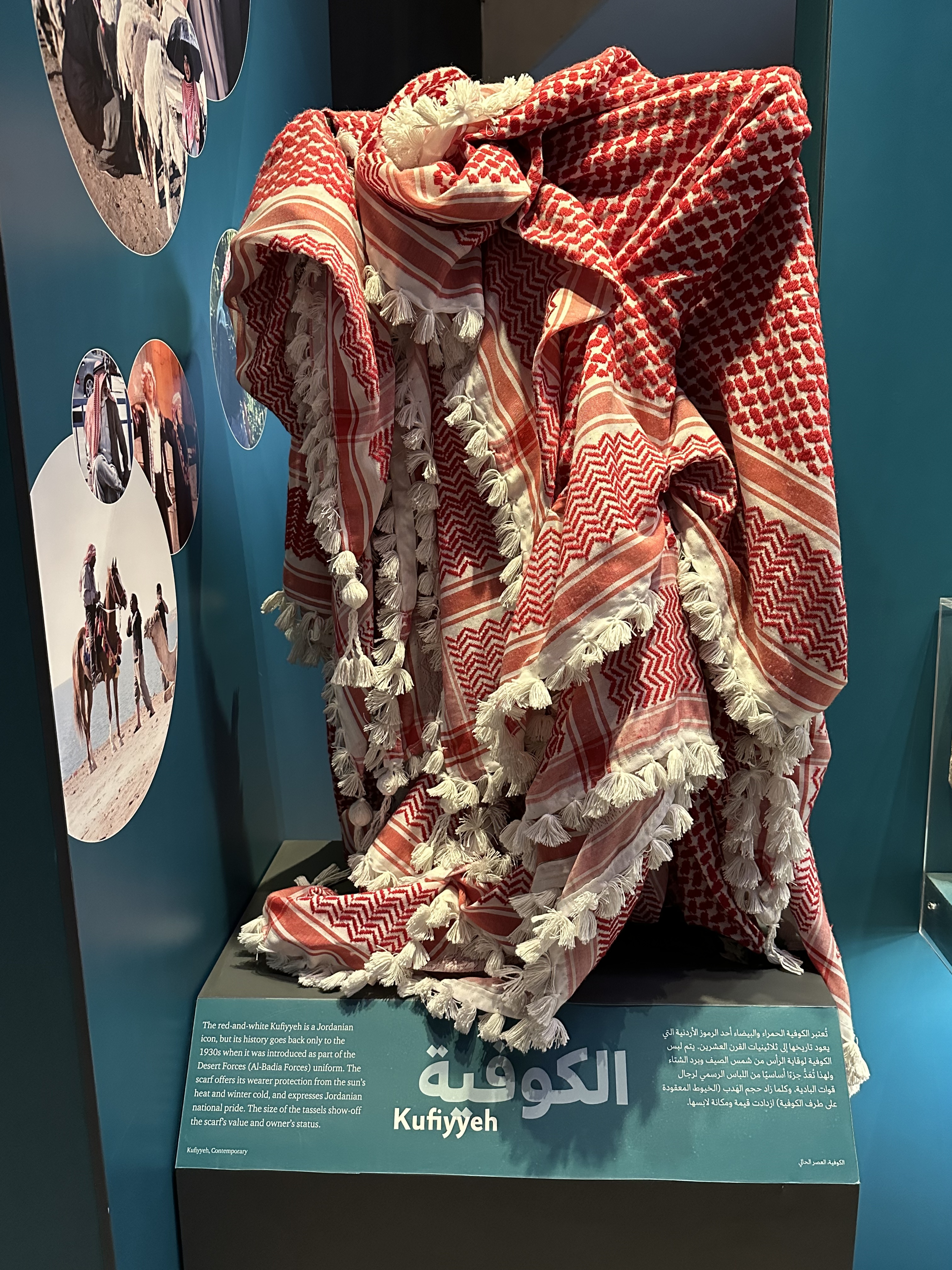
Next, my friend and I went to the Jordan Museum, located in the new downtown area of Ras al Ayn. The Kingdom of Jordan’s past, present, and future is presented through both temporary and permanent exhibits and is told through a series of galleries and interactive displays. My three favorite highlights are:
- The computer system where you enter your name and it displays it in English, Aramaic, Nabataean, Greek, and Arabic.
- The interactive display where you can learn more about where in the kingdom agricultural commodities exist, where rainfall occurs, where historical and cultural artifacts have been discovered, and where the population density lies.
- The Dead Sea Scrolls. These a written documents contain some of the oldest known copies of biblical books, hymns, prayers, and other important texts. The scrolls are primarily made of leather though some are papyrus and one is copper. All of the Dead Sea Scrolls on display at the Jordan Museum were found during excavations which were completed at a time when the West Bank was part of the Hashemite Kingdom of Jordan.


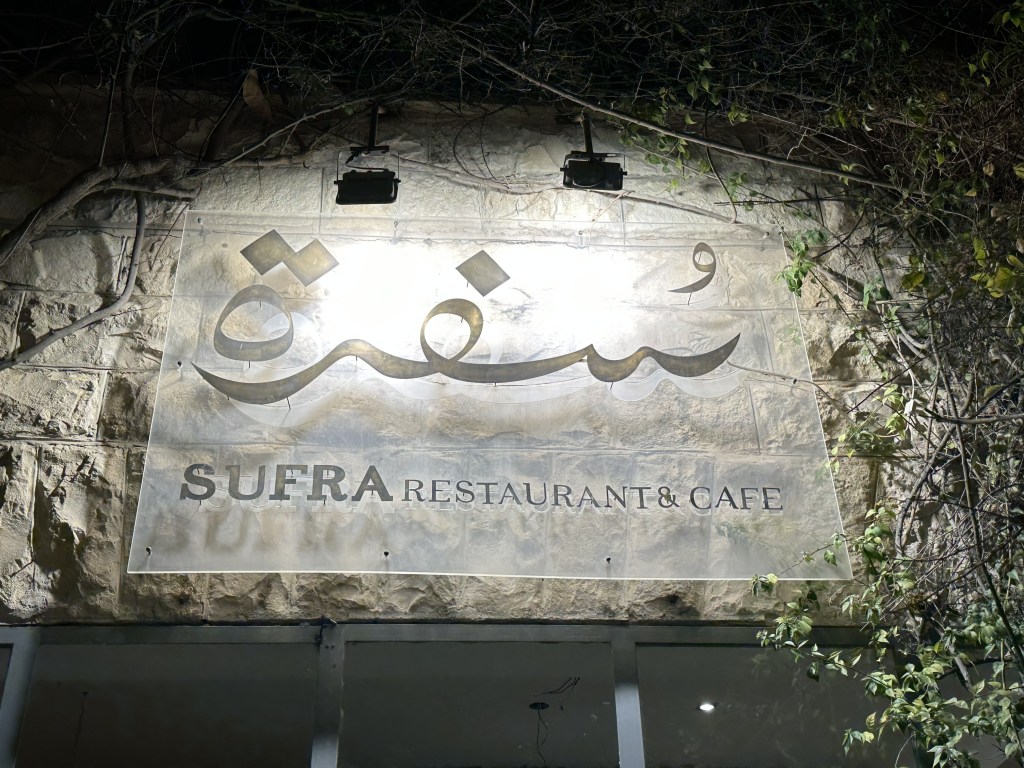
Tonight, dinner is at Sufra Restaurant and Café located on Rainbow Street. The restaurant was established in 2011 and serves a variety of traditional Jordanian home-made dishes. The food is fantastic! We ordered a few mezze to share and each ordered an entree; everything is delicious. I thought I might get bored of eating hummus but everything here is fresh and each recipe is unique so no two orders of hummus are exactly the same. A small cup of coffee is served at the end of the meal and, I’ll be very honest, I am not a fan. I don’t like coffee to begin with so this is not a mark against Sufra in any way, and I am proud of myself for trying it. Rainbow Street seems to pick up considerably in the evening and there are plenty of shops and restaurants to wander through.
 Travel with Fleming
Leave a comment