
The first stop on today’s adventure is Madaba! World renowned for incredibly beautiful and detailed mosaics, Madaba deserves at least a half day to explore.
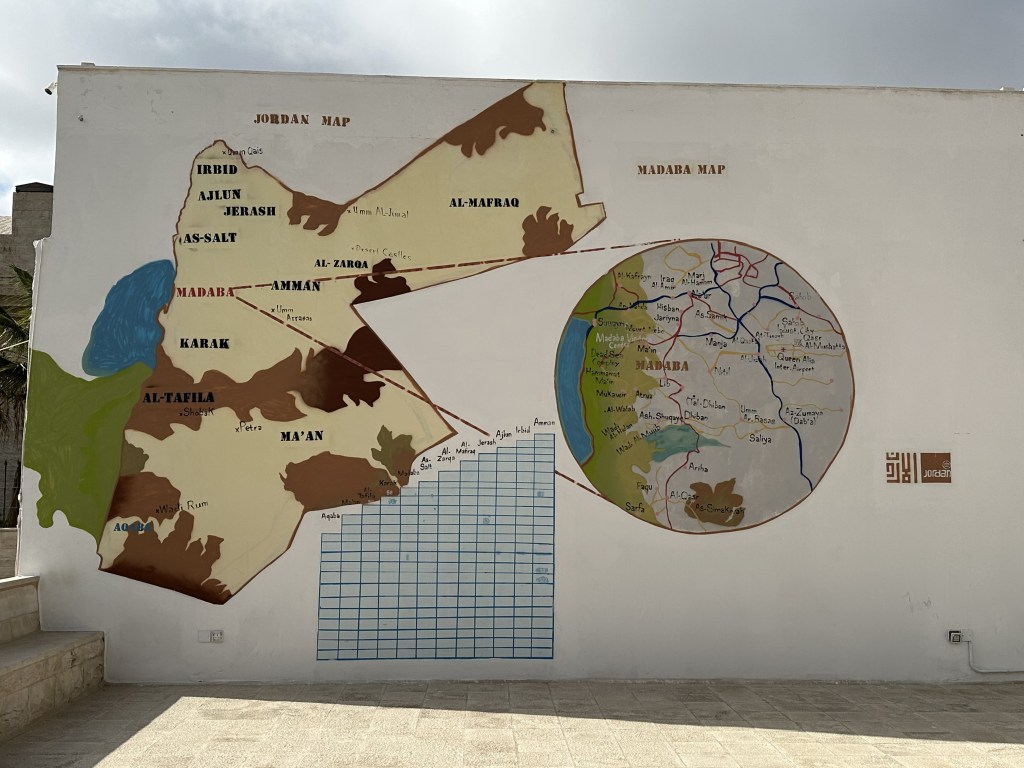
The region around Madaba is believed to have been inhabited for around 4500 years and is said to be one of the towns divided amongst the 12 tribes of Israel at the time of the Exodus. Madaba came to prosperity during the Roman era and enjoyed continued prosperity under Byzantine and Christian control with construction of churches and lavish mosaics to decorate them. An earthquake devastated the region in 747 resulting in the town being abandoned for nearly 1100 years before Christians returned to Madaba from Karak after a bloody dispute. The mosaics were rediscovered when the newly arrived inhabitants began construction for houses. The most famous of Madaba’s mosaics is the floor of St. George’s Church, which is a map of the Holy Land.
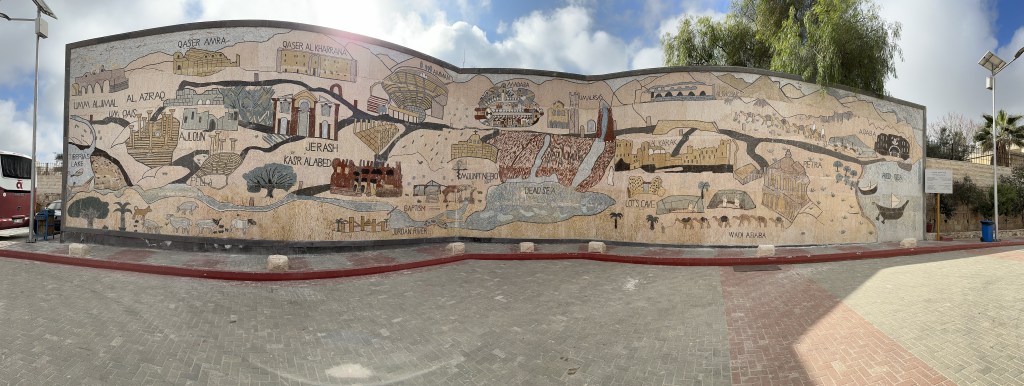
Madaba remains home to one of Jordan’s largest Christian communities and the town is very visitor friendly. Many tourists go to St. George’s Church without visiting the rest of the town; don’t make that mistake. Madaba is easily walkable and worth at least a half day. The visitor’s center is a great central point with some parking (be aware tour buses park here too), toilets, maps and information brochures, and a massive mosaic wall of the King’s Highway.
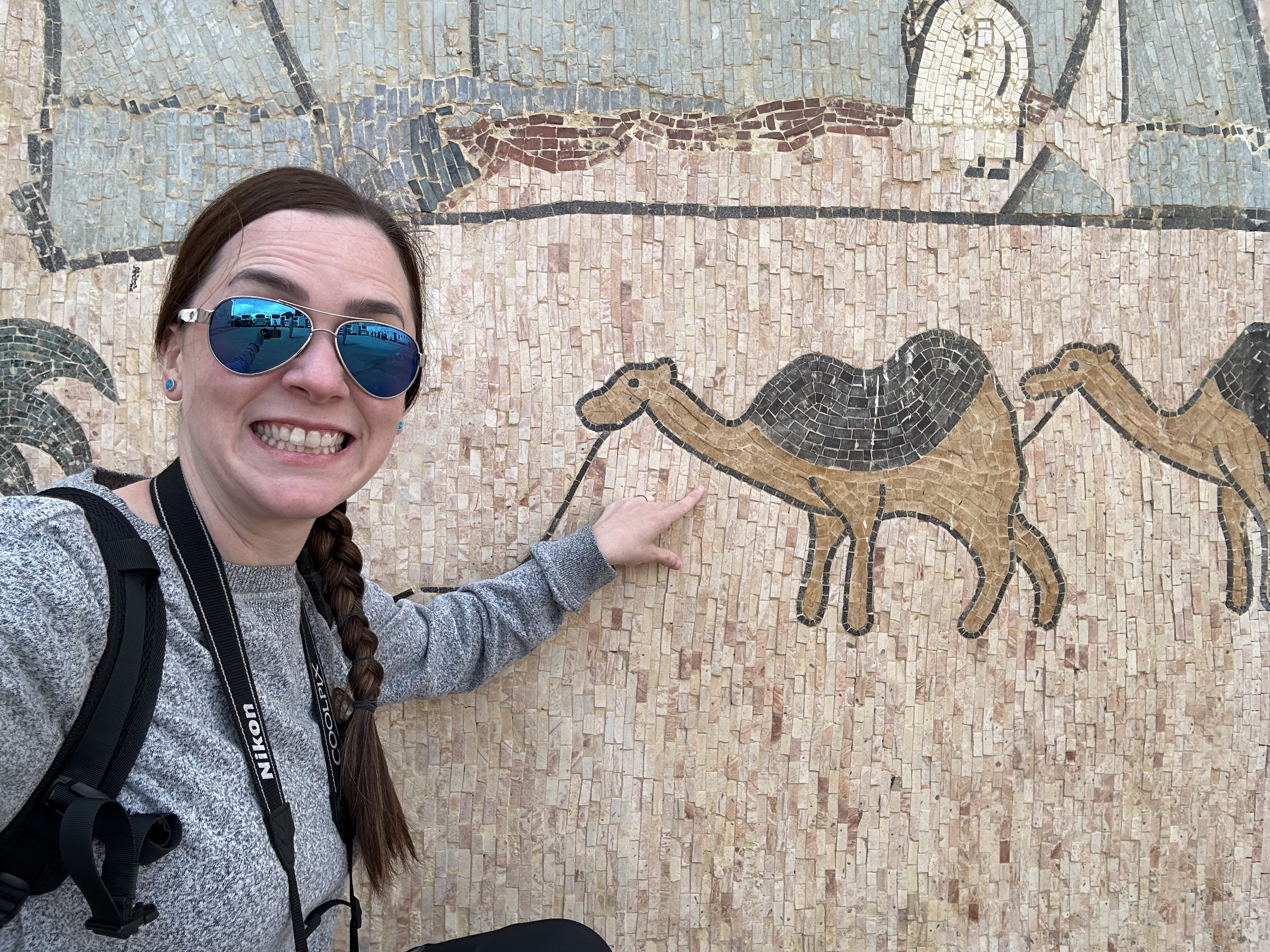
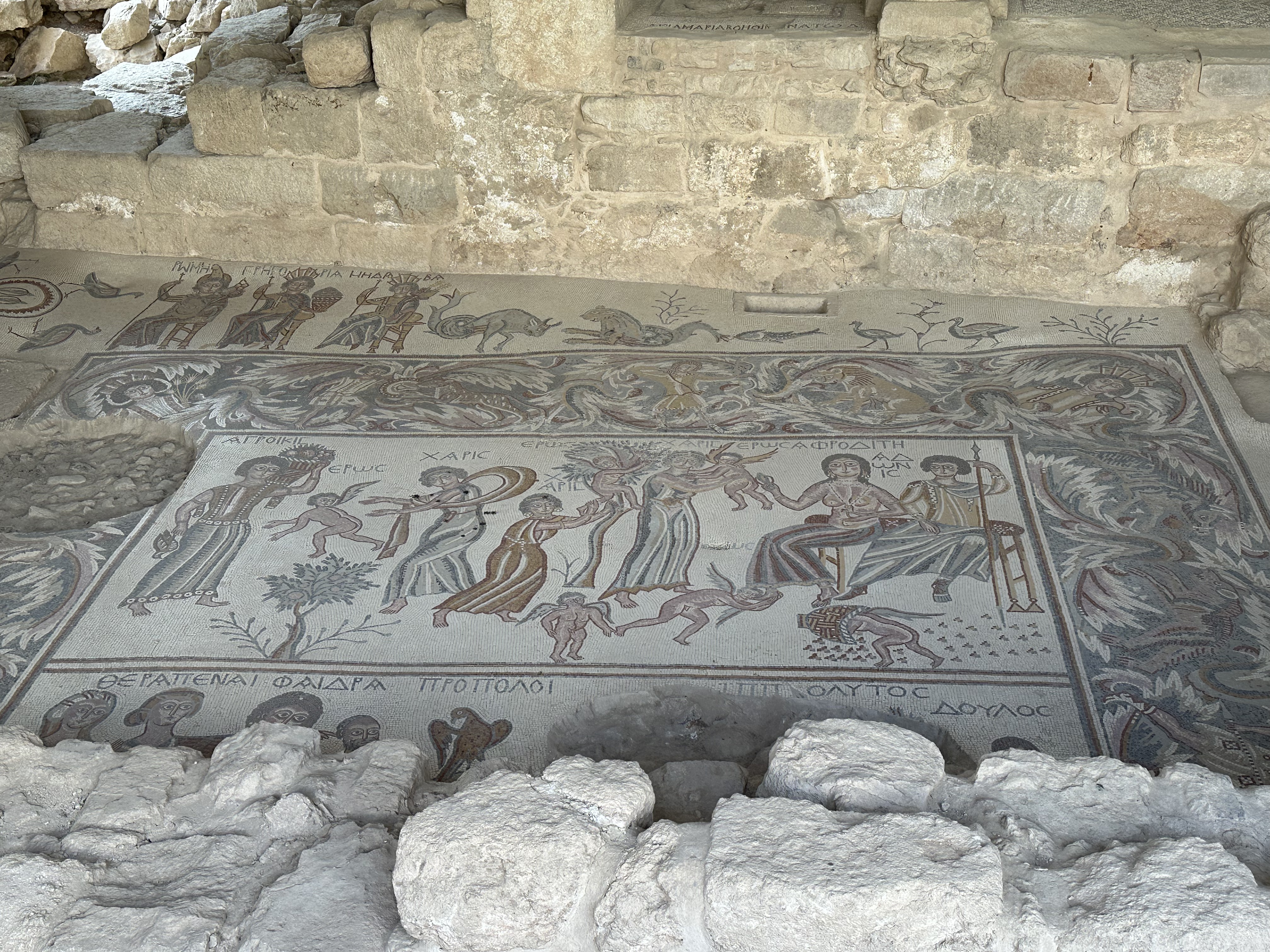
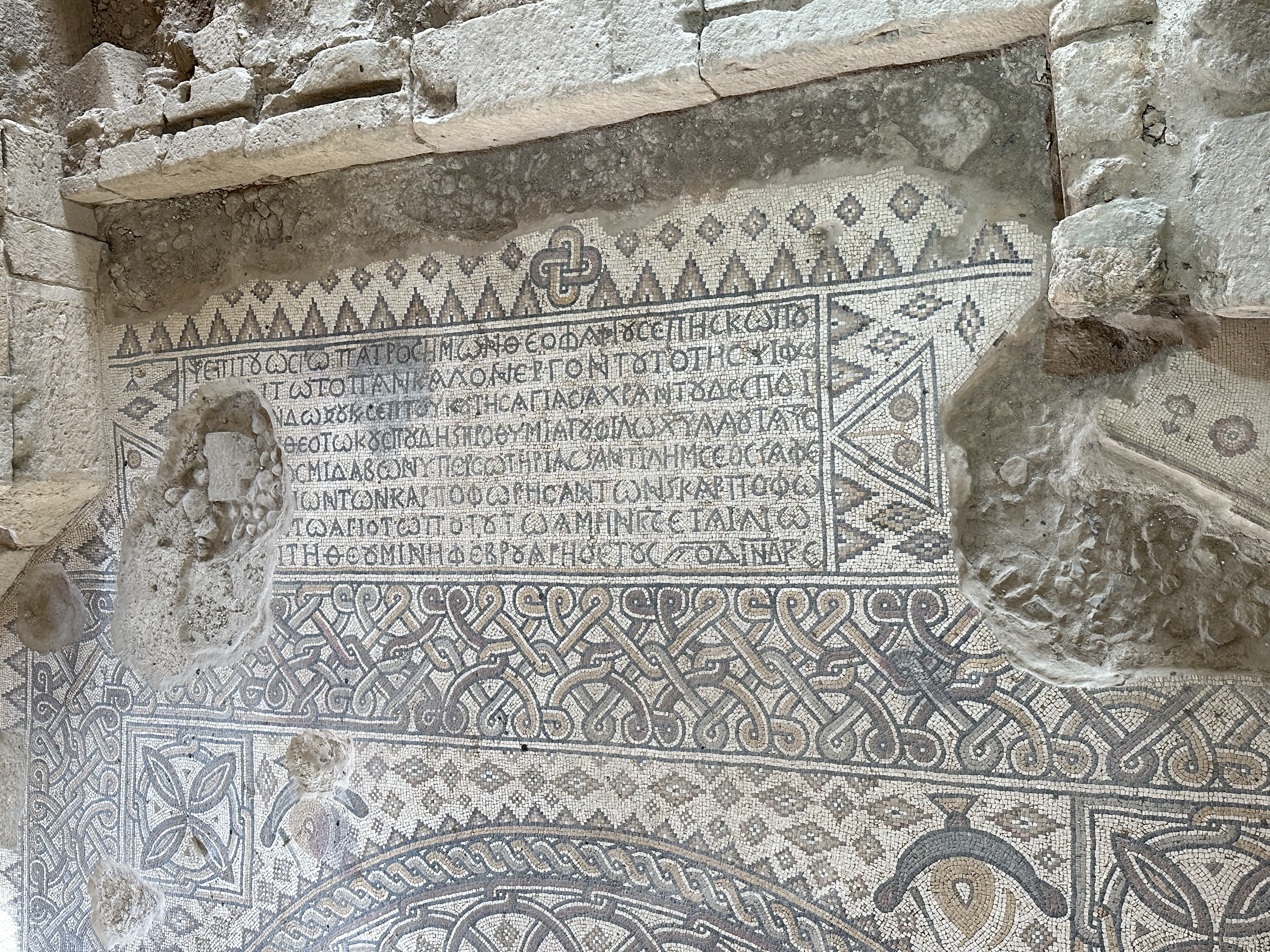
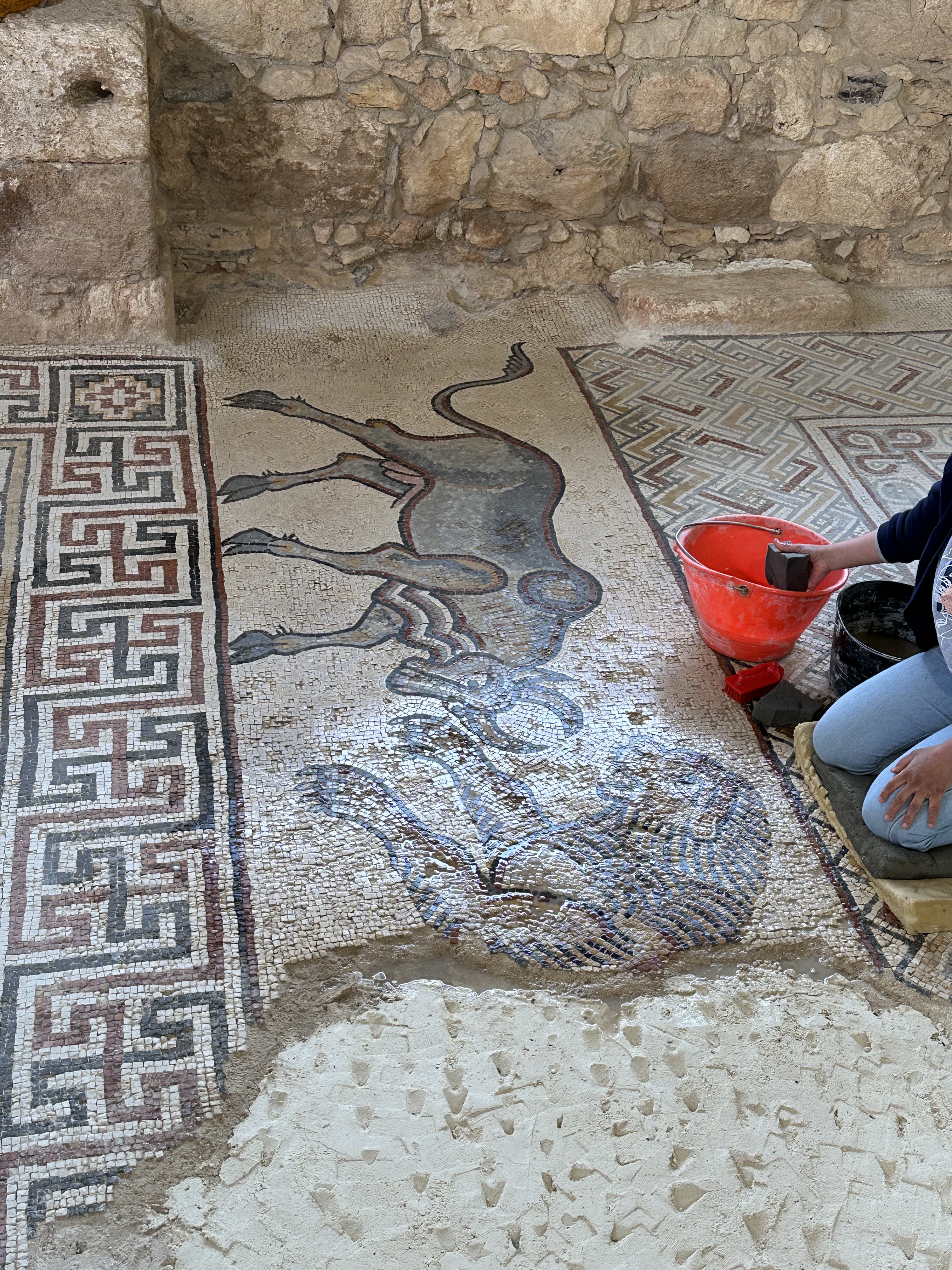
The Madaba Archaeological Park I contains stretches of the Roman paved street and the Virgin Mary Church which is worth viewing. (Pro-tip, keep a tight grip on your camera lens caps. It is incredibly embarrassing to be standing on the walkway above the mosaic and have someone bump into you causing you to drop the lens cap onto the mosaic floor below. The staff are very kind and understanding and will help you recover it but still embarrassing.) Archaeological Park II is an active site and we were able to see archaeology students cleaning some of the mosaics when we visited. This park takes more imagination but the animal mosaics are beautiful. Pay attention to the size of the mosaic pieces and what they represent. Our guide at the park told us that Byzantine mosaics use smaller pieces and tell the history while Roman mosaics use larger pieces (relatively) and are decorative.
A treasure of early Christianity is housed in the modest Greek Orthodox Church of St. George. Despite willful destruction, fire, and neglect, this mosaic represents the oldest map of Palestine in existence and provides historical insight into the region. The map depicts all the major biblical sites of the Middle East from Egypt to Palestine, and once contained more than two million pieces. Although much of the mosaic has been lost, enough remains to appreciate the complexity of the whole and the enlarged map and key outside the church is very helpful to orient yourself. The map is not available for viewing during Mass on Friday and Sunday mornings so plan accordingly. Take a few minutes to walk around the church and appreciate the mosaic depictions on the walls as well as the map.
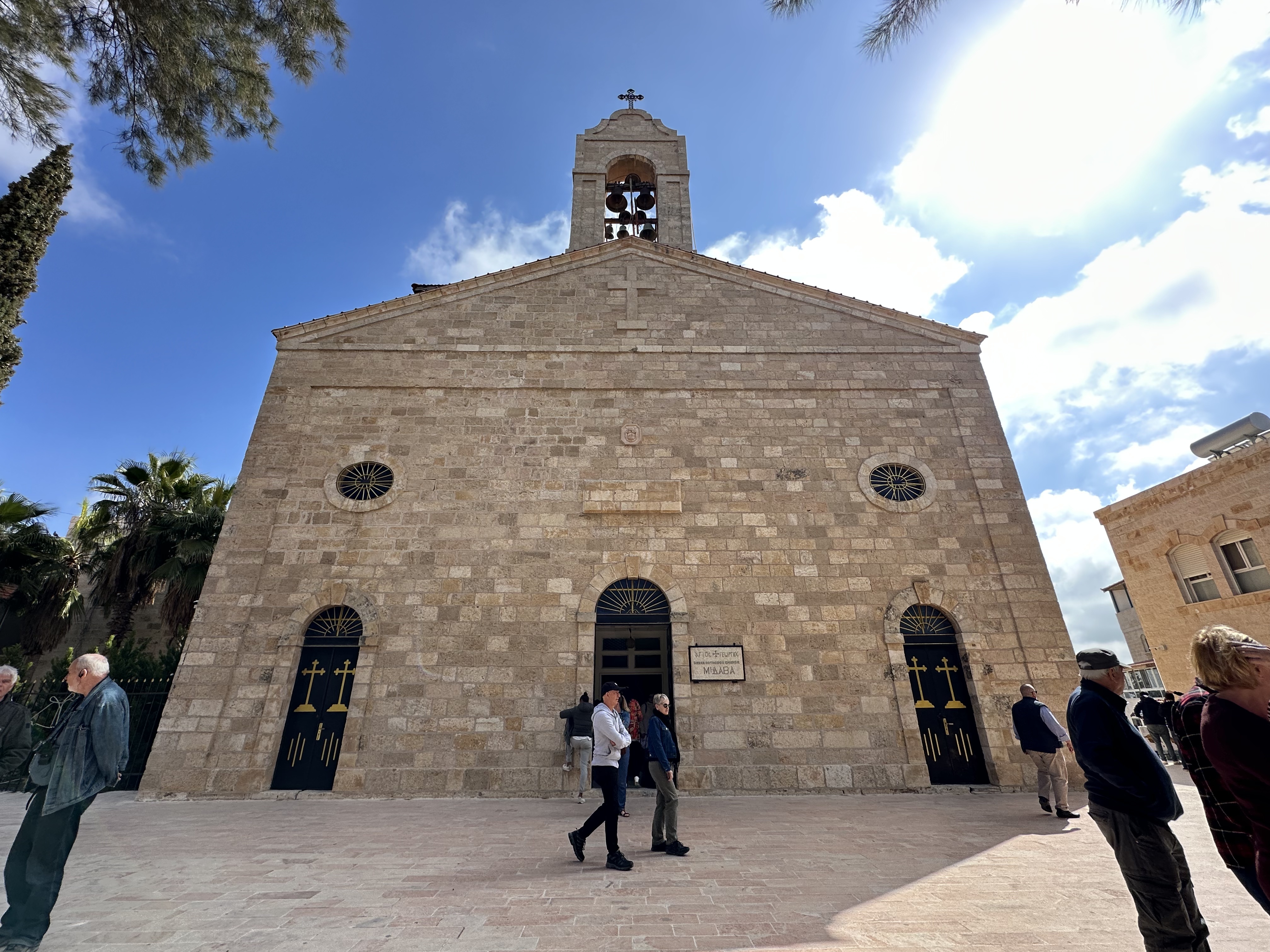
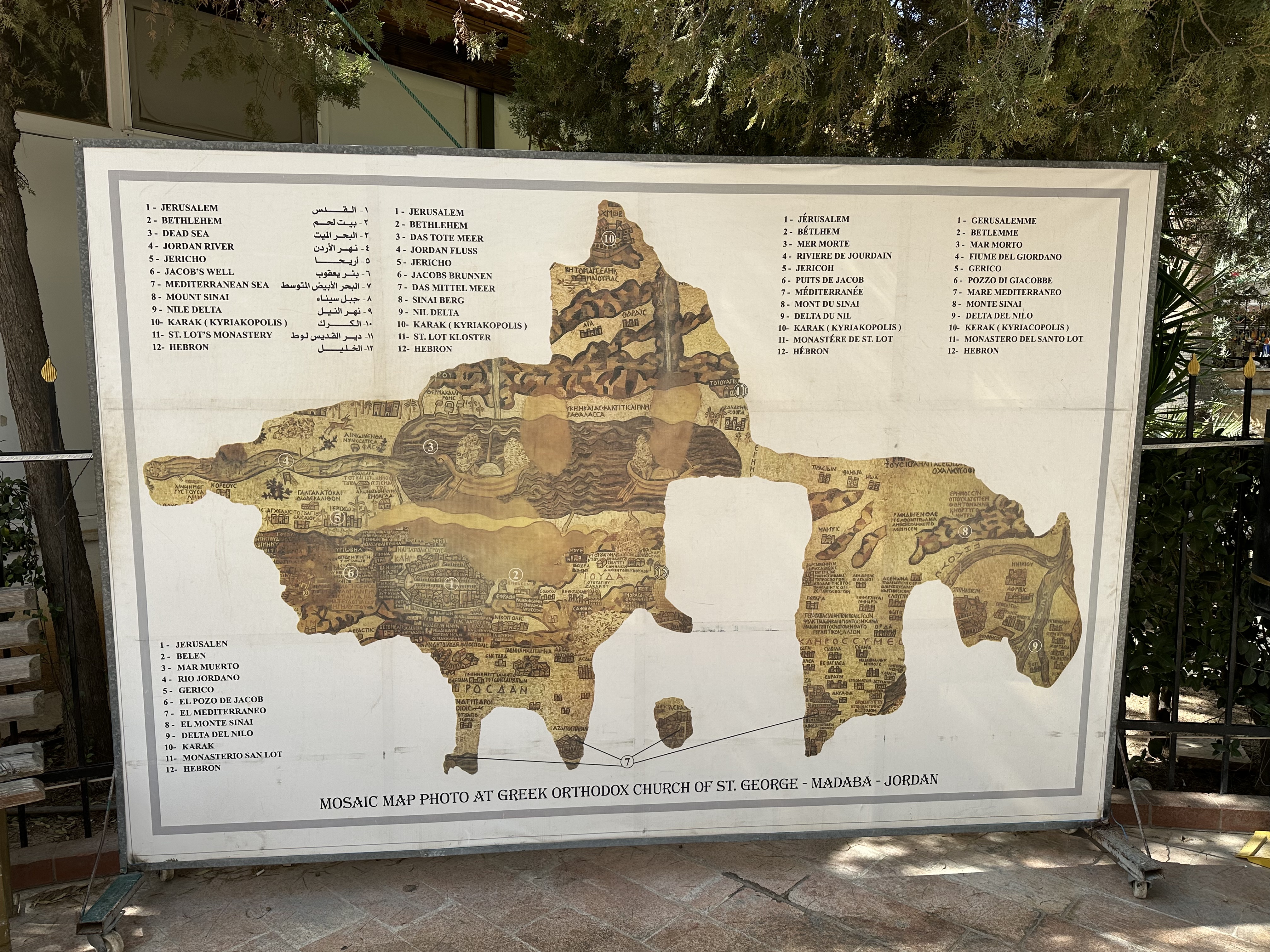
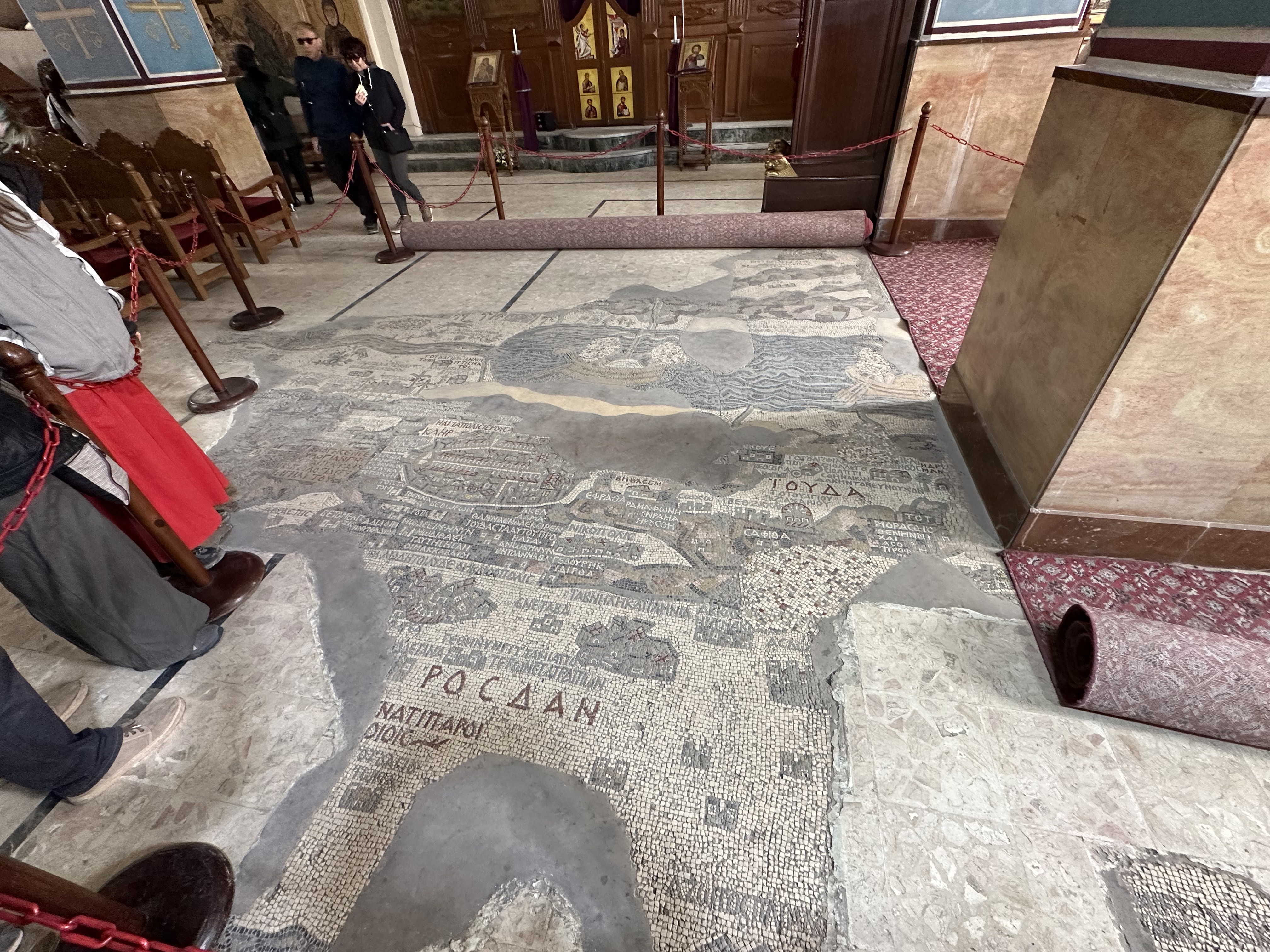
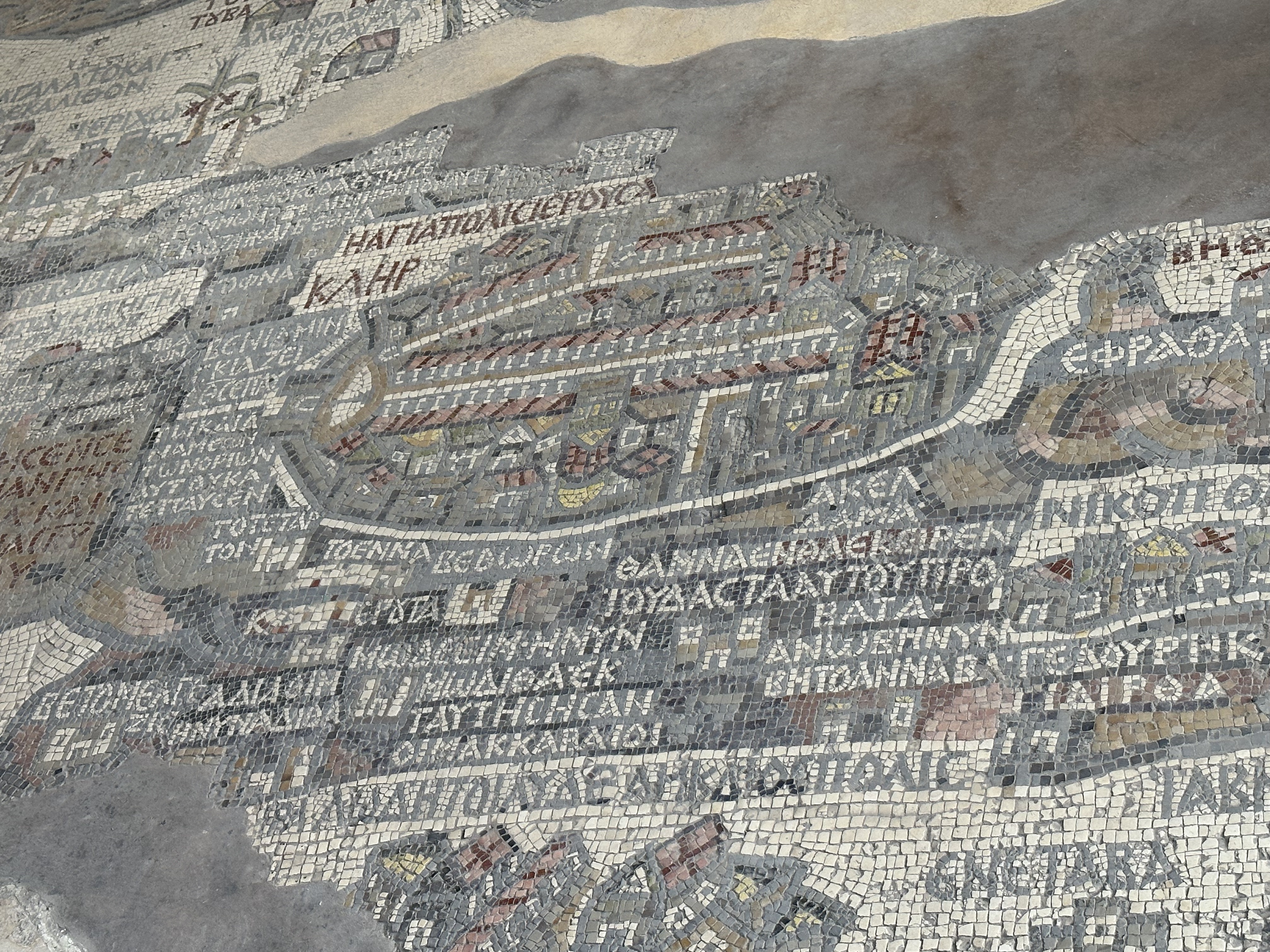
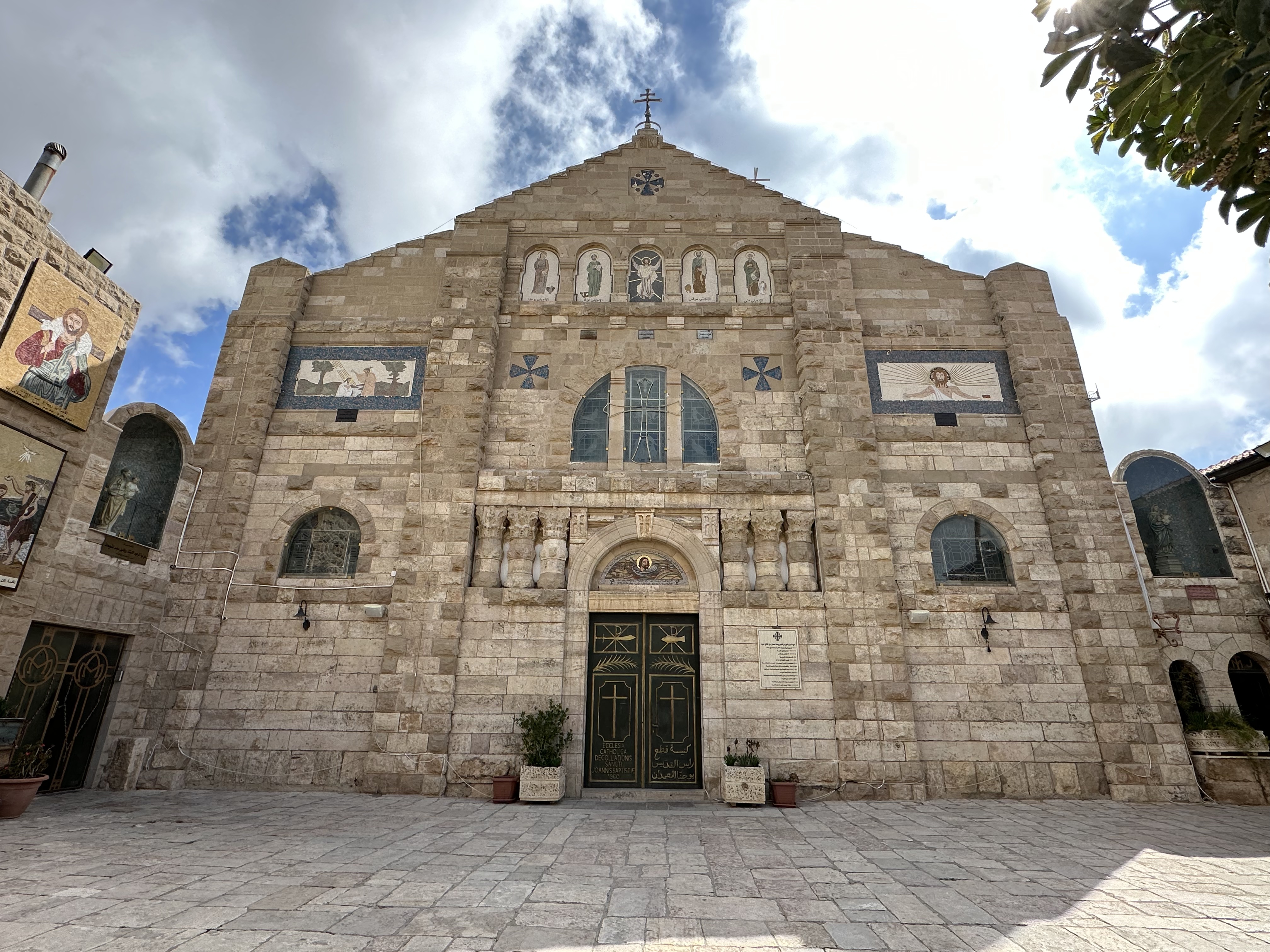
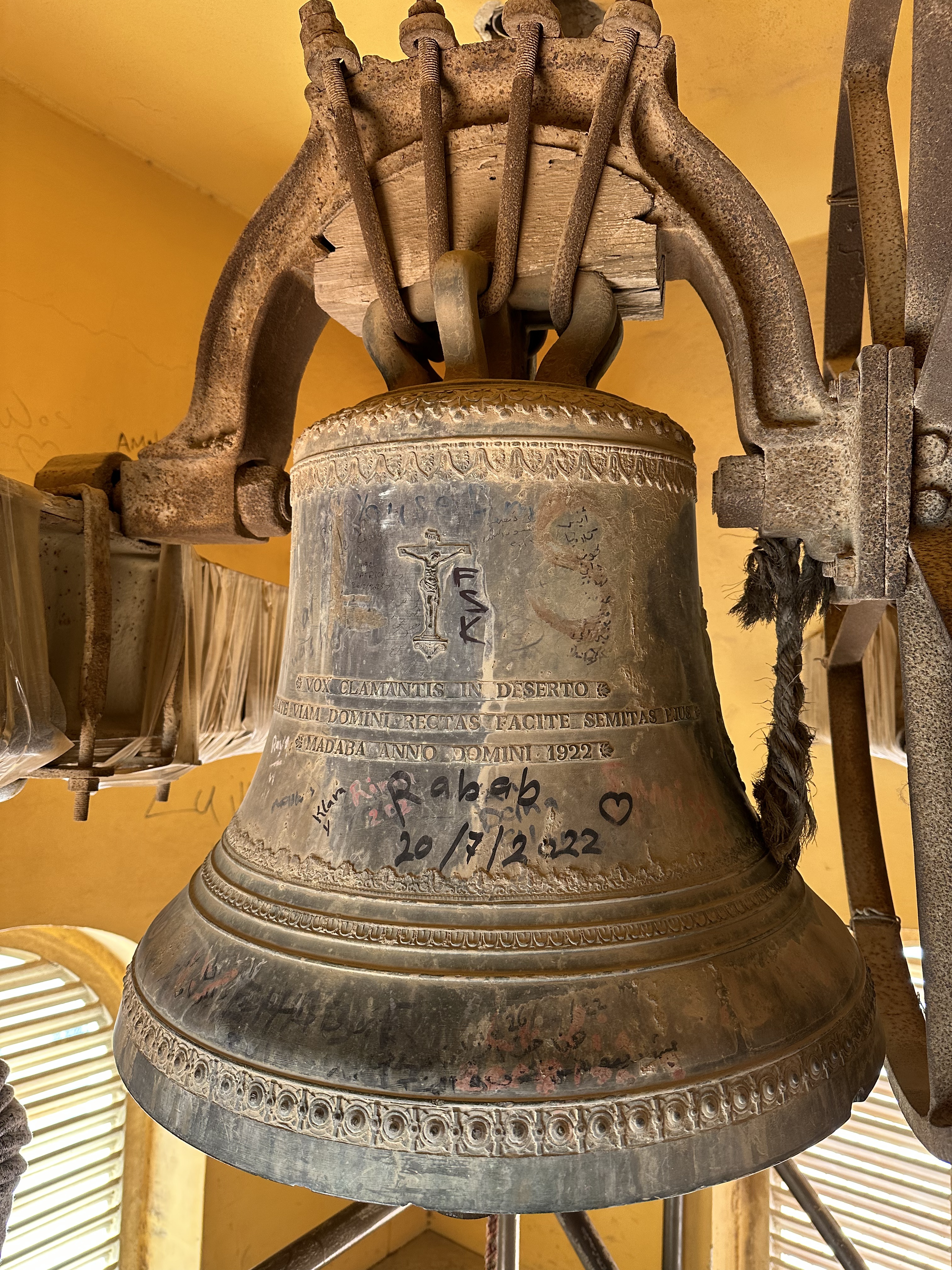
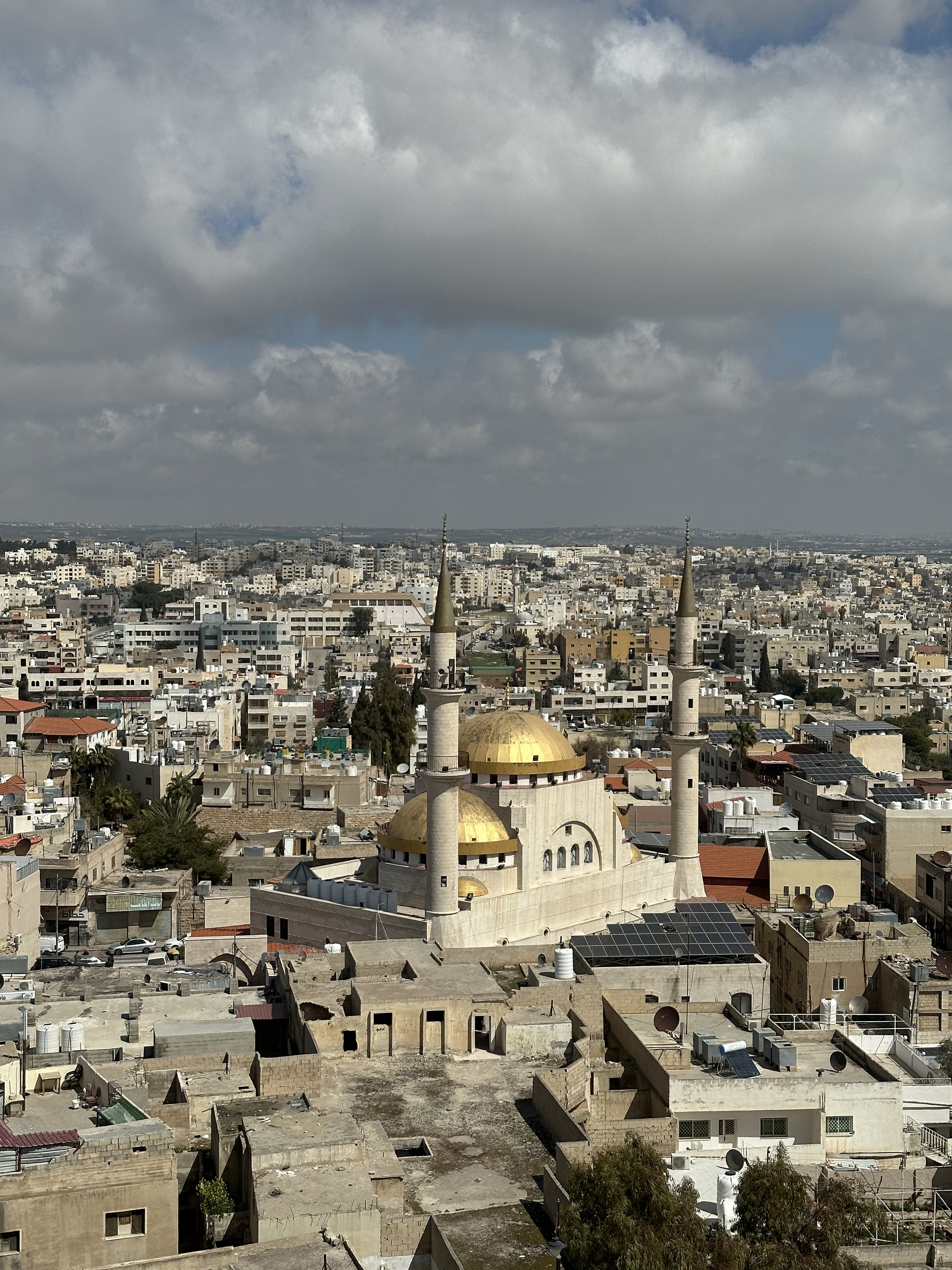
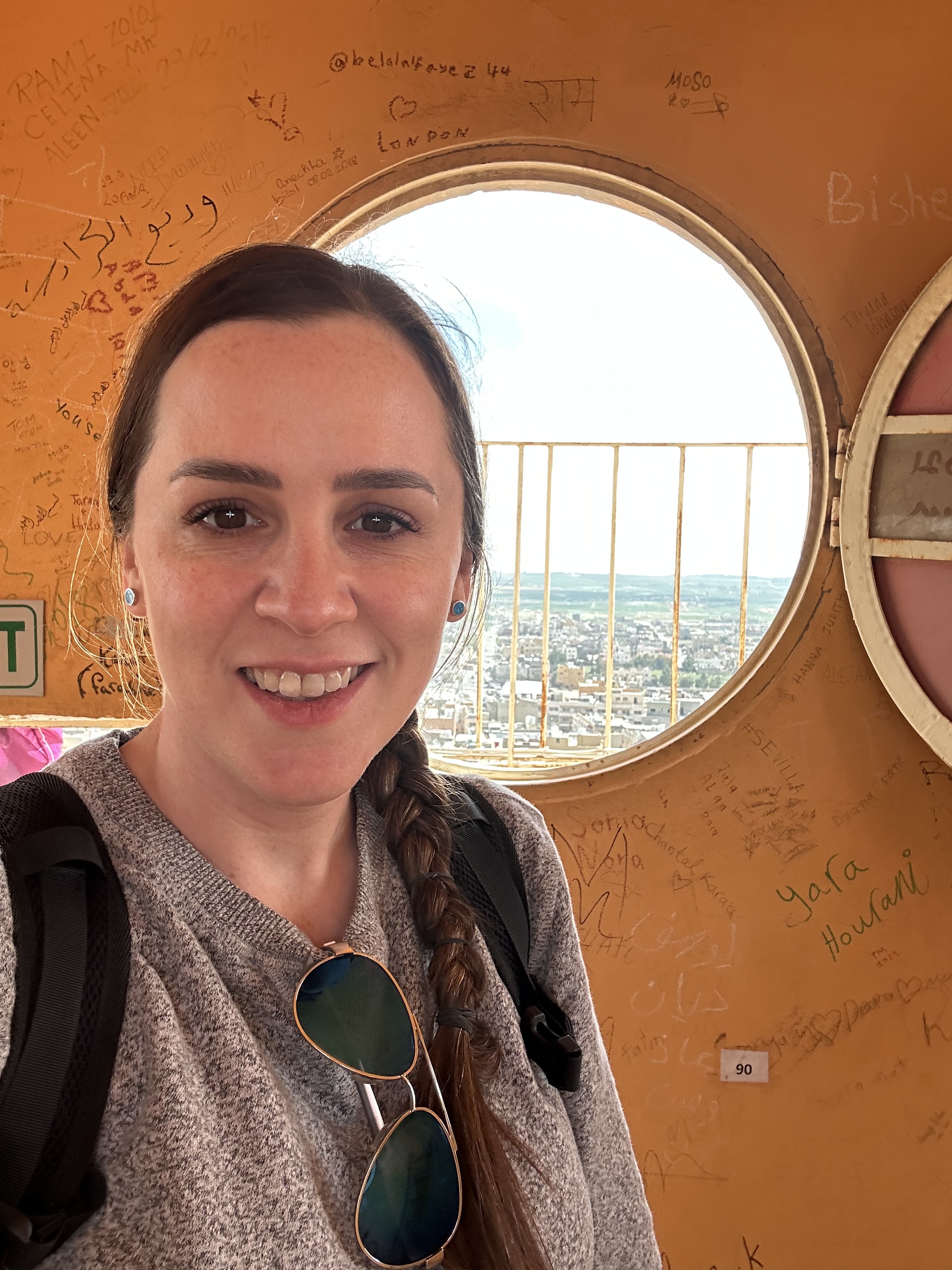
The Church of the Beheading of John the Baptist was beautiful and worth walking through. I really enjoyed climbing the belfry for the panoramic view. The climb is not easy; you have to be mindful of your head, scale steep metal ladders, and have dexterity to maneuver around the bells and ropes. Visitors have left remnants of their presence in the form of names, dates, and quotes written on the interior of the belfry. One of these quotes stood out to me and has become a bit of a mantra about living life to the fullest. “The idea is to die young as late as possible.”
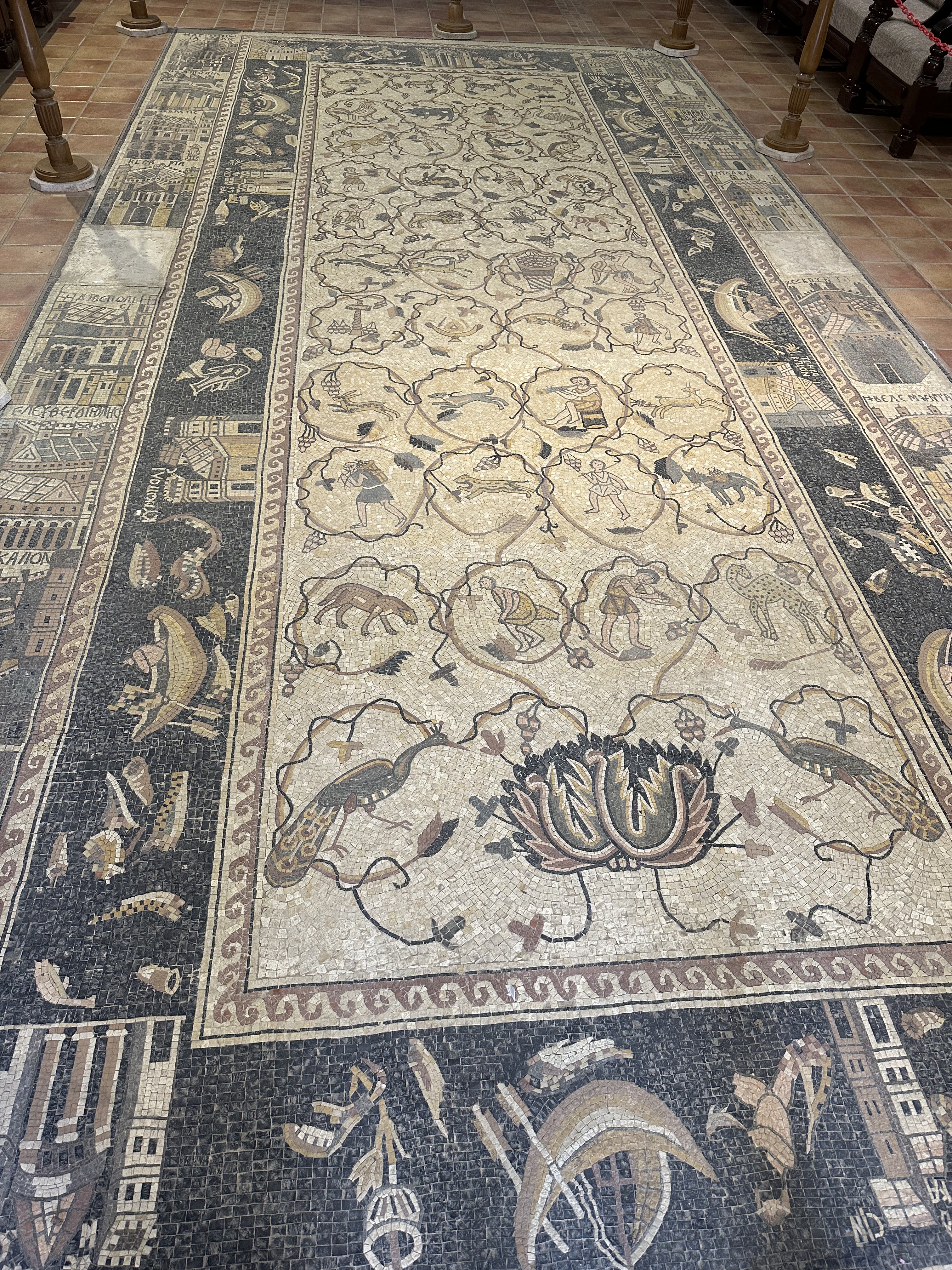
The Church of the Apostles appears insignificant from the exterior but is worth a short visit to view the mosaic dedicated to the Twelve Apostles. The central portion shows Thalassa, a female personification of the sea, as well as native animals, birds, flowers, and fruit. The walk to the Church of the Apostles from the Church of the Beheading of John the Baptist is an easy downhill trek. The walk back up the hill afterward is less easy.


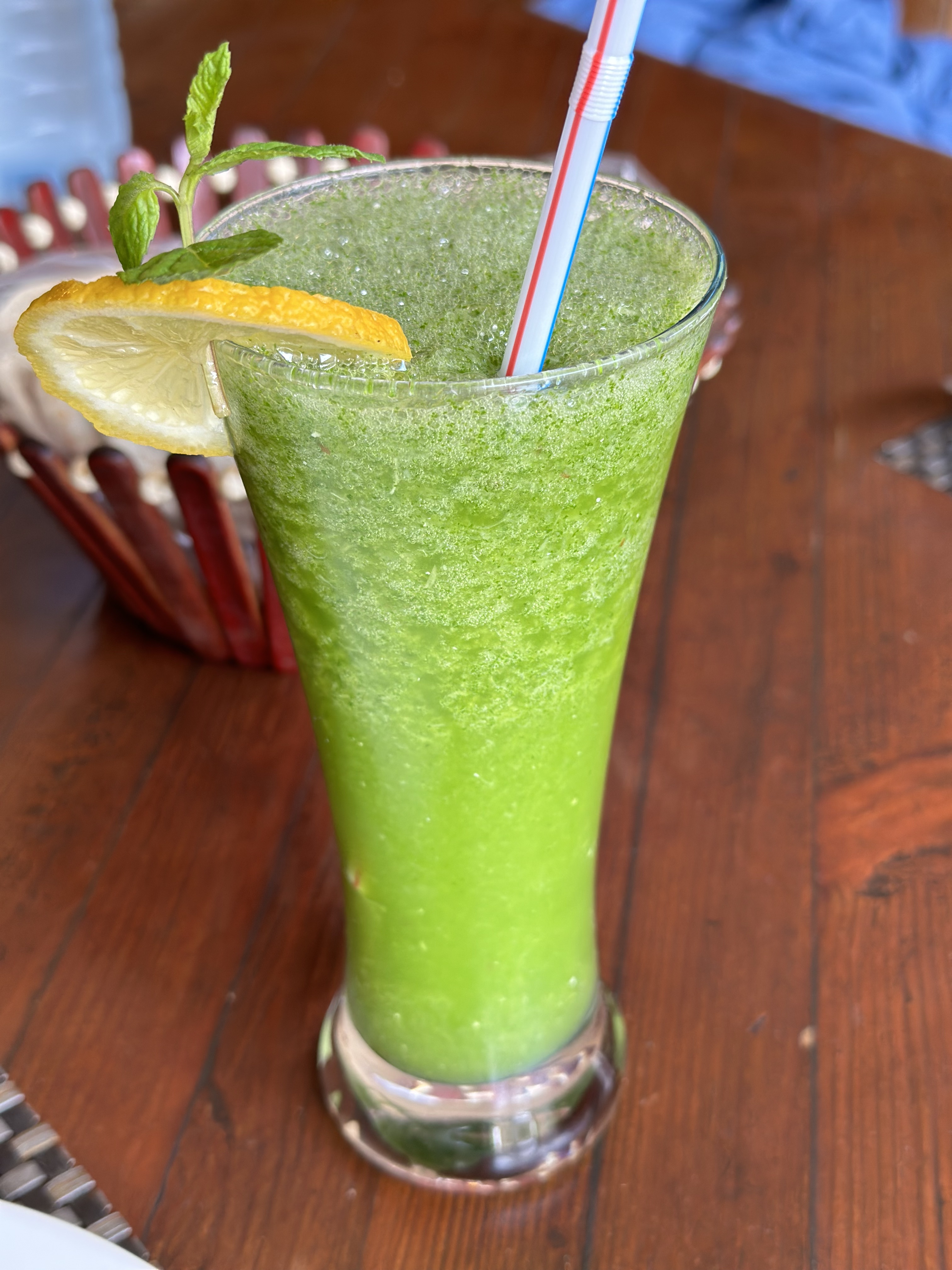
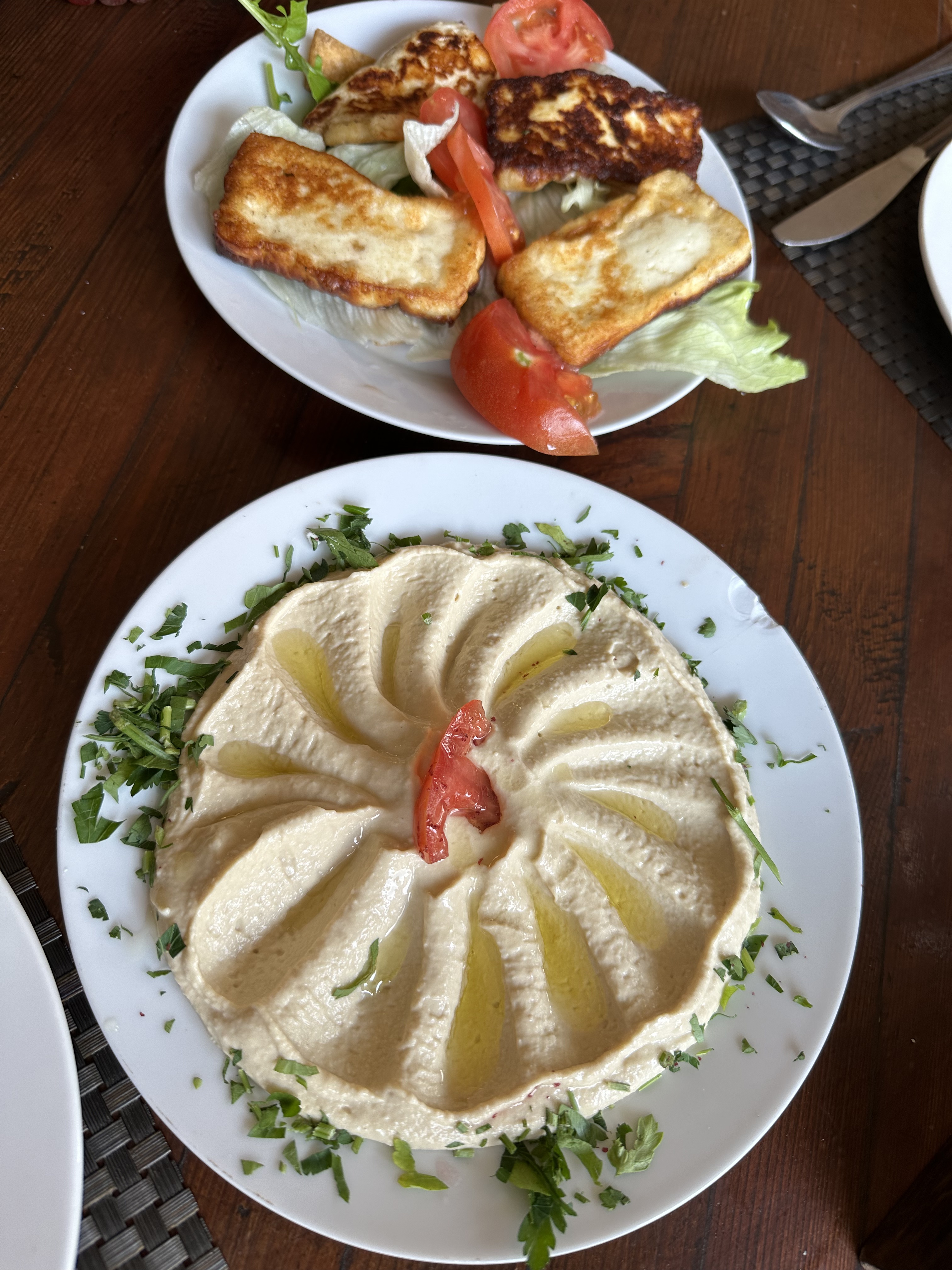
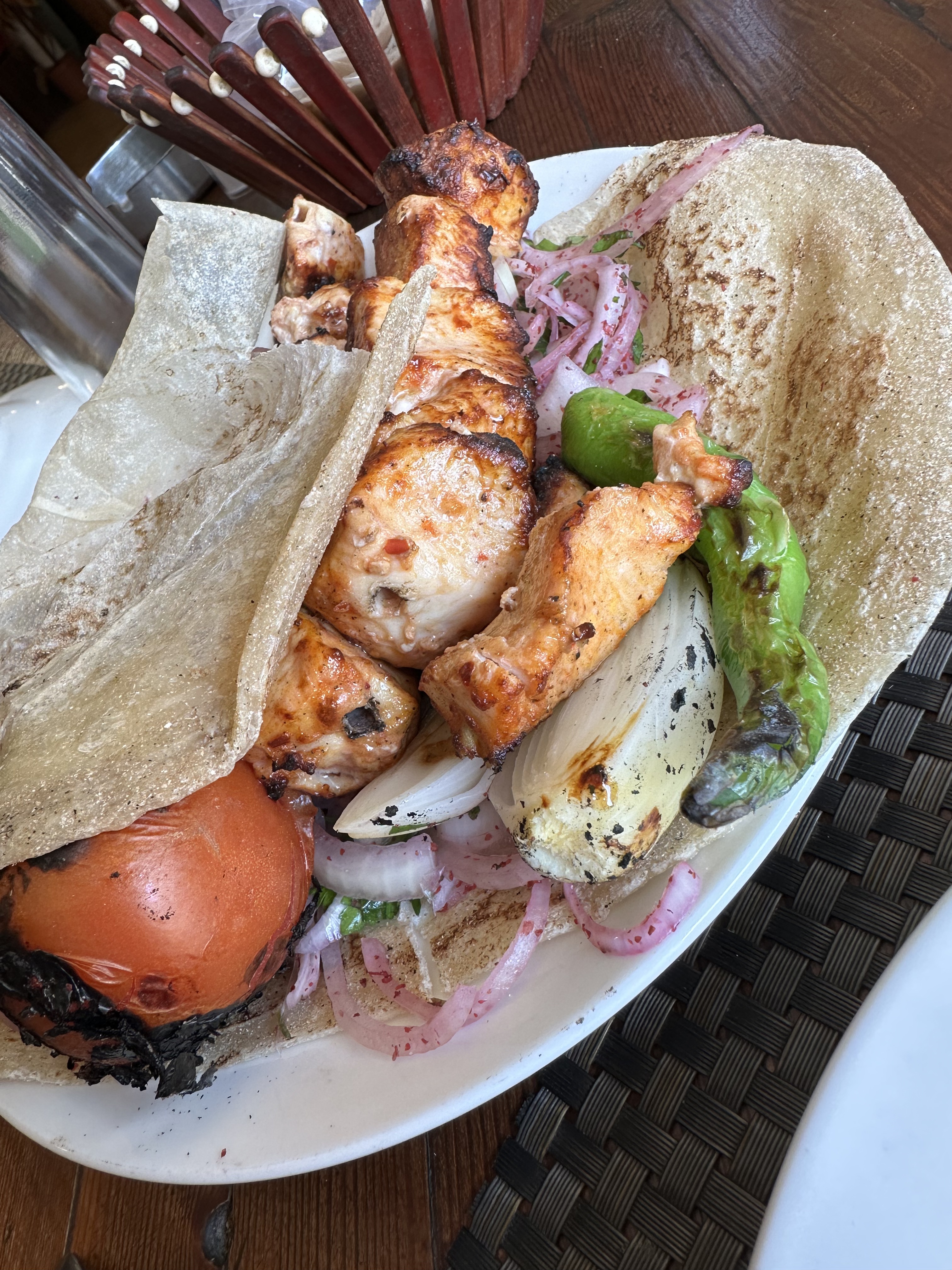
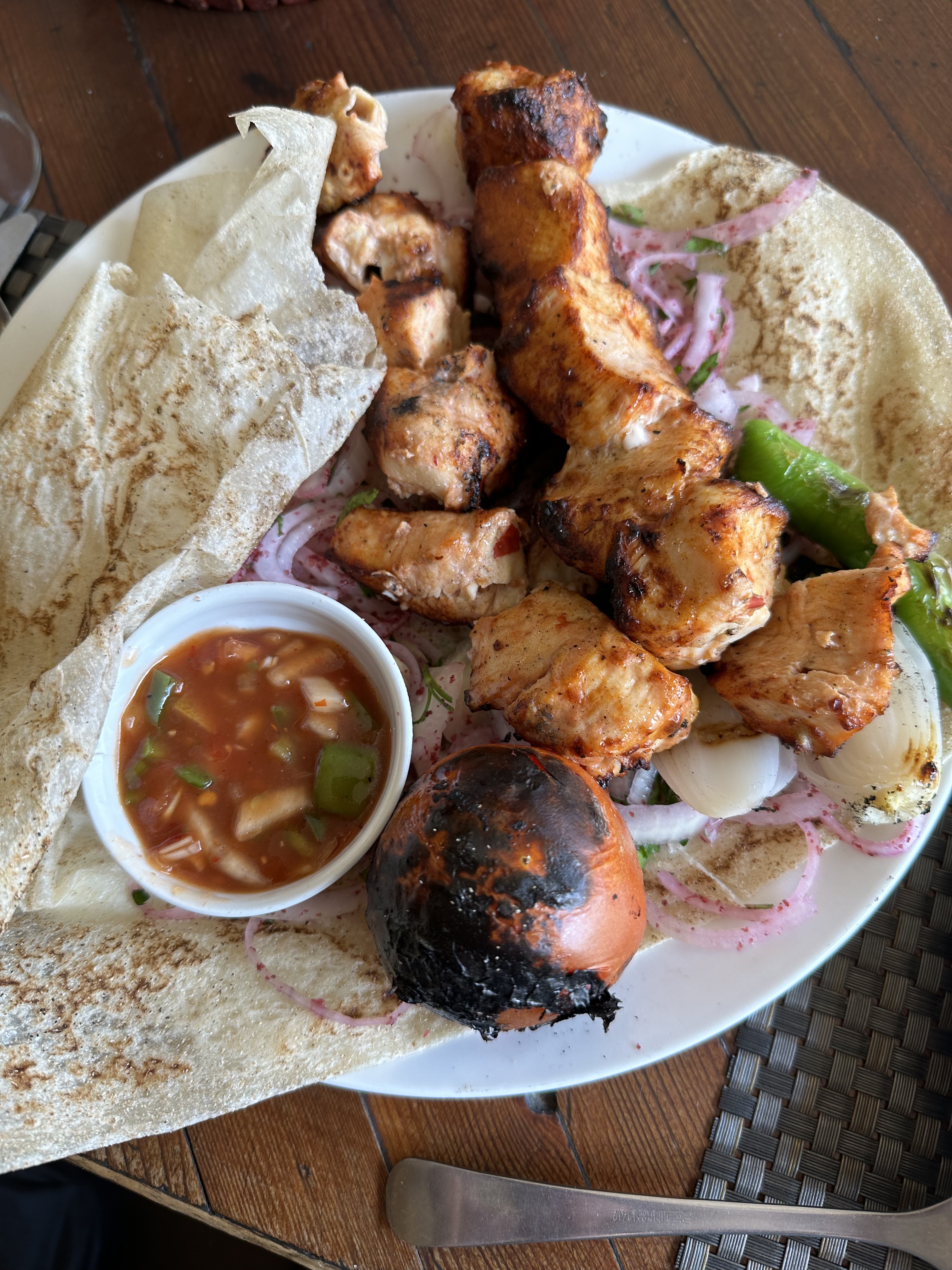
Adonis Restaurant and Café is a lovely place to sit down and enjoy lunch. The restaurant is in a typical Madaba residence which has been beautifully restored. The menu is traditional Jordanian fare at affordable prices of 10-12 dinar for an entrée. As with nearly every meal I’ve had, the food was fresh and incredible. I can personally vouch for the hummus, grilled halloumi, and chicken shish tawouk. Adonis also has a delightful lemon mint drink which was probably my favorite of all the lemon mint drinks I have tasted thus far. The bright green color initially threw me off but the flavor was fantastic and it was perfectly refreshing.
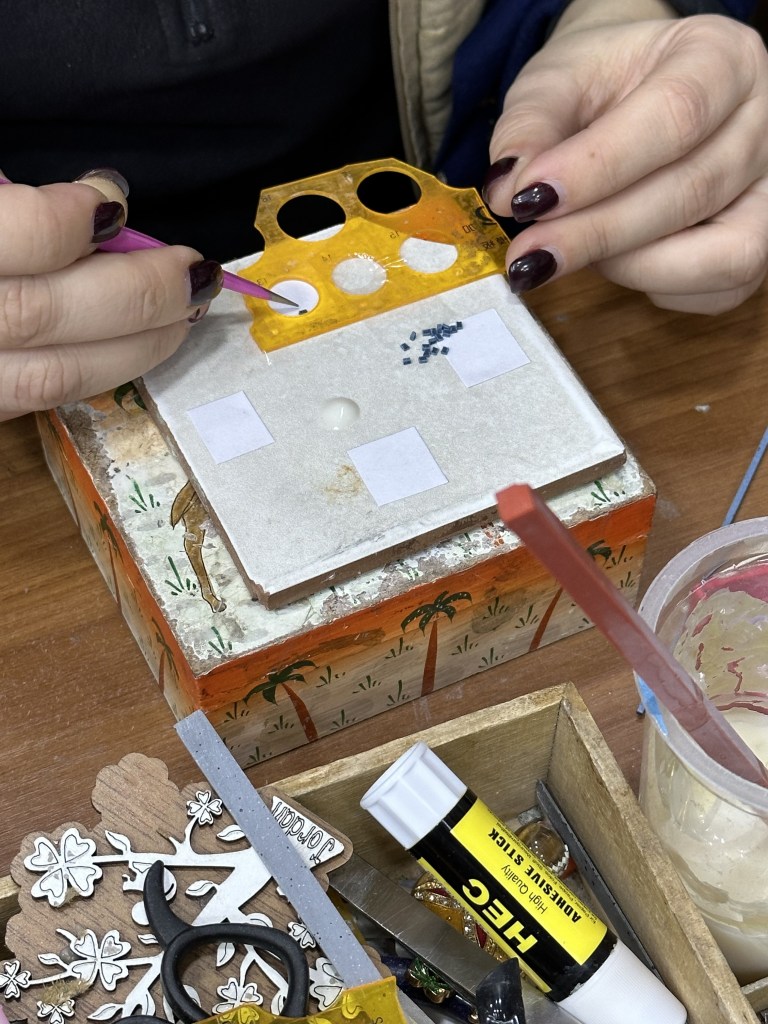
After lunch we decided to check out some of the shops in town and we were not disappointed. We stopped in the Map Bazaar (Google maps pulls up Saint George Bazaar and it appears to be the same shop) which is in the pedestrian only shopping area off K Talal Street. The shop has mosaic jewelry, ceramic items, Christmas ornaments, and more. I was able to find a lovely gift for my mom, a stuffed camel for my nephew, and a few nice souvenirs for myself. I highly recommend purchasing a mosaic souvenir, particularly if you find a shop where you can watch the artists creating them. Part of the reason I purchased from the Map Bazaar was that there was a lady working on the mosaic jewelry and we were able to chat with her and watch as she worked to create beautiful designs. There are plenty of shops to choose from in Madaba, with a selection of wares for your souvenir preferences, and any one would be a worthwhile stop. It’s good to have a small backpack or tote bag to carry your purchases and keep your hands relatively free for taking photos or sipping on a freshly squeezed pomegranate juice as you walk. We walked through a couple more shops in Madaba before leaving for Mt. Nebo.
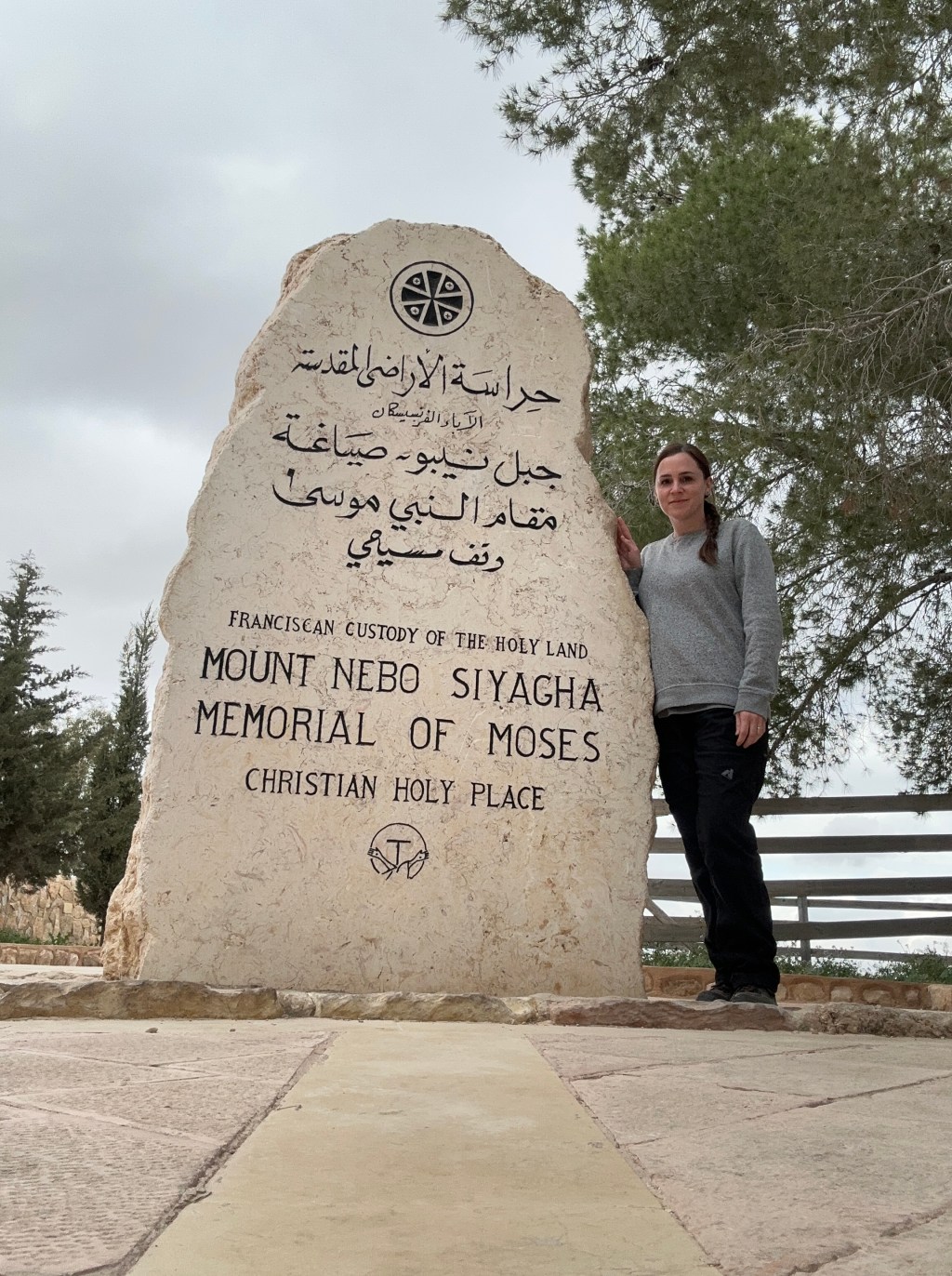
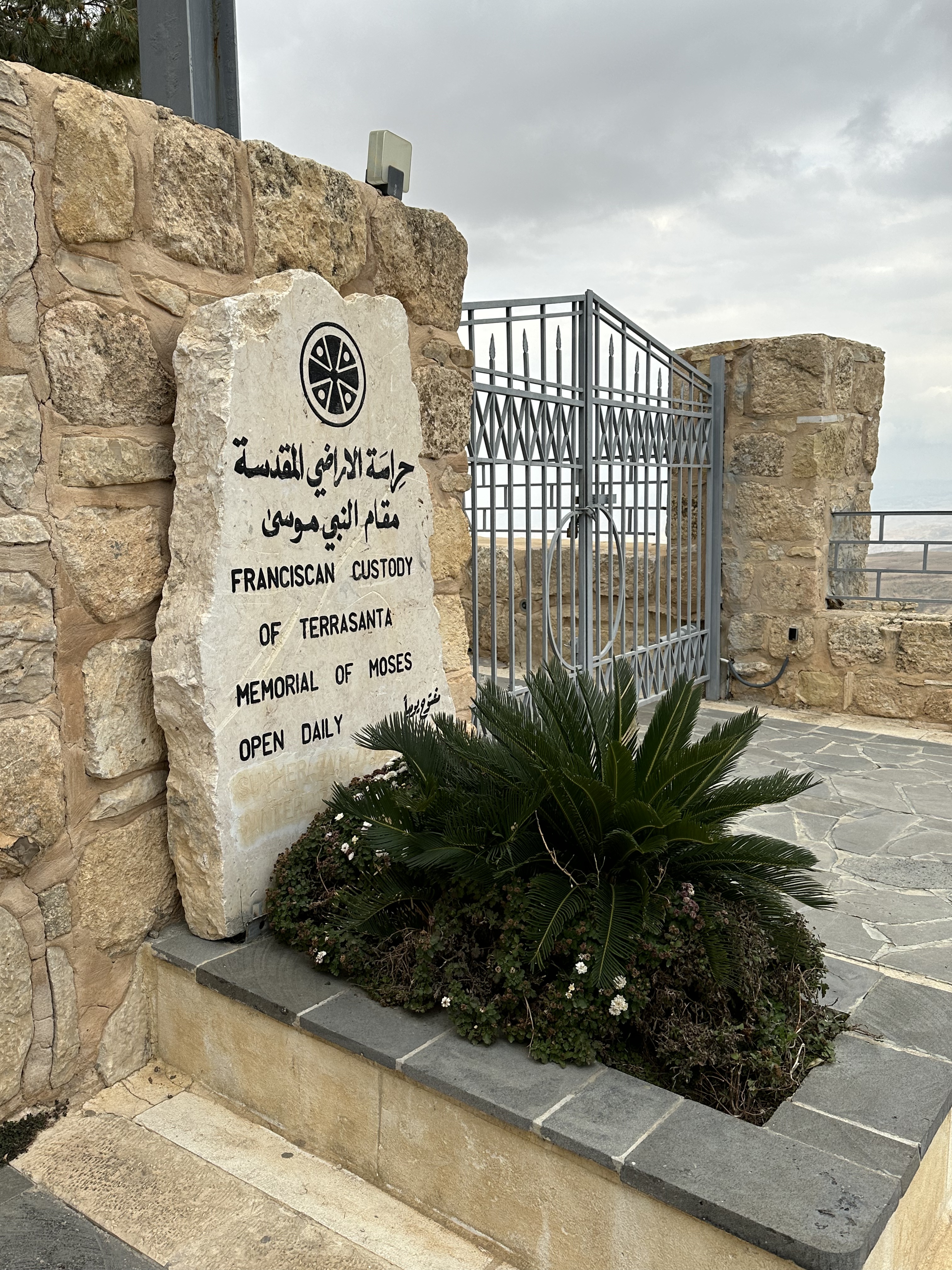
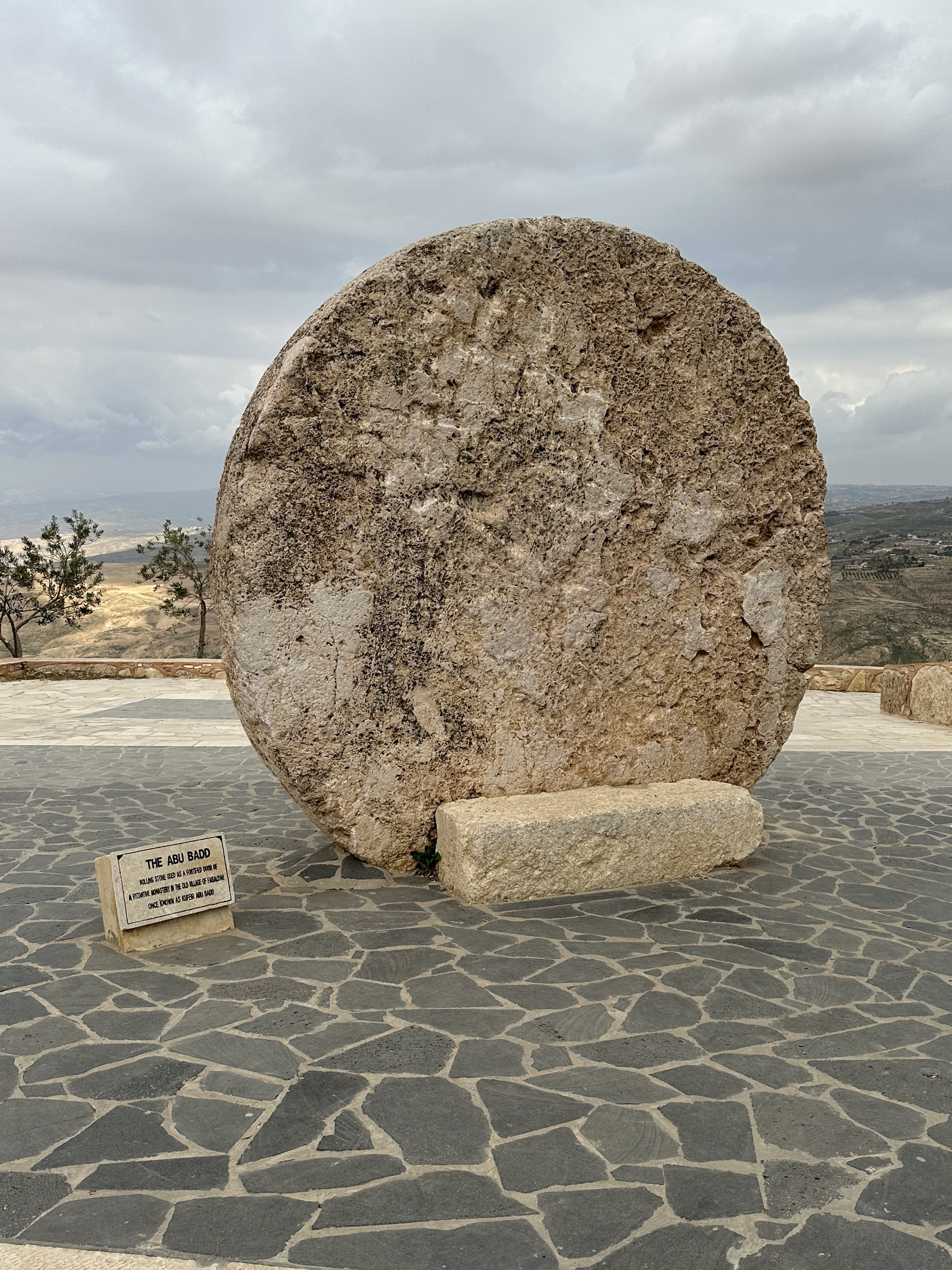
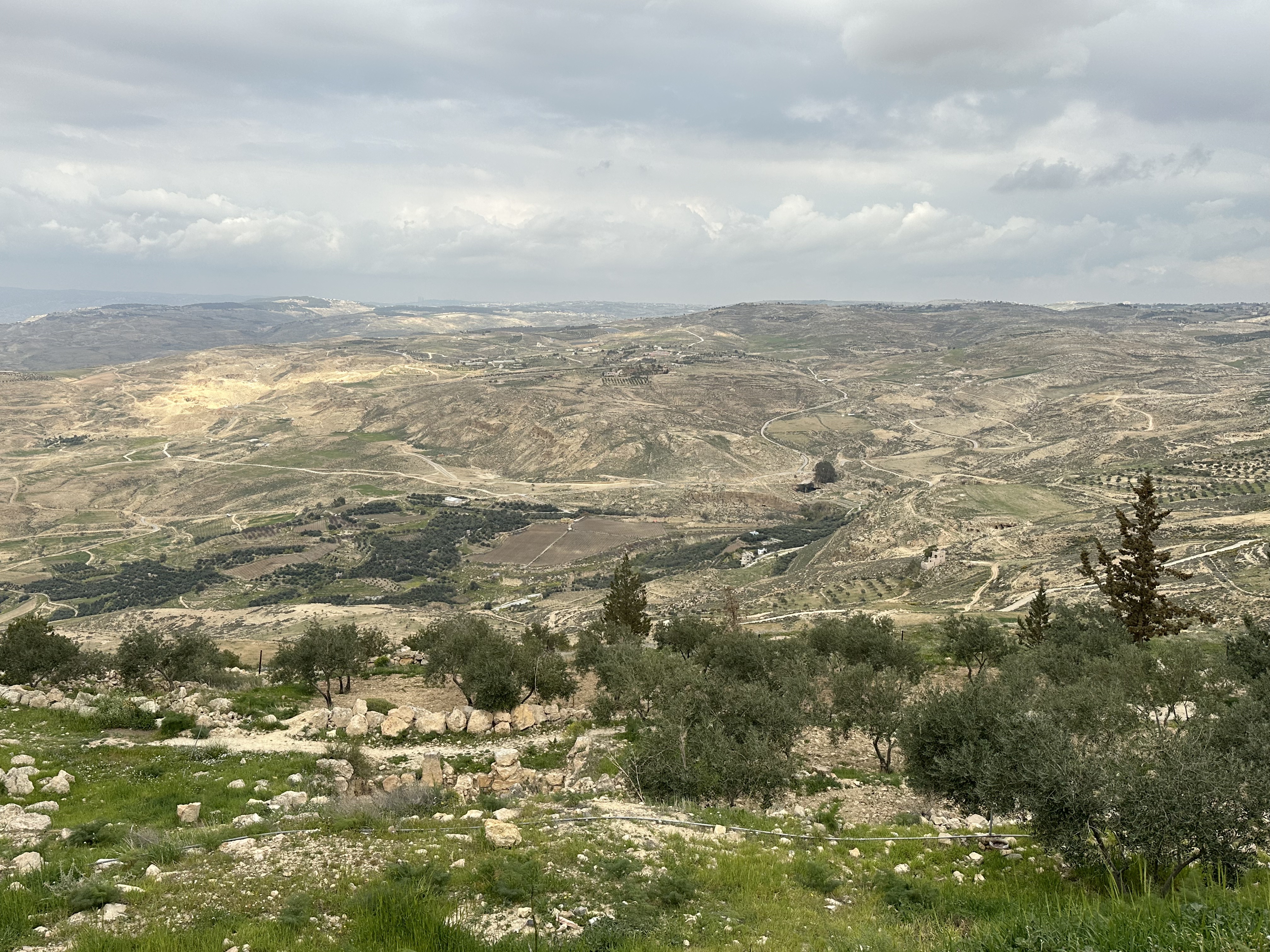
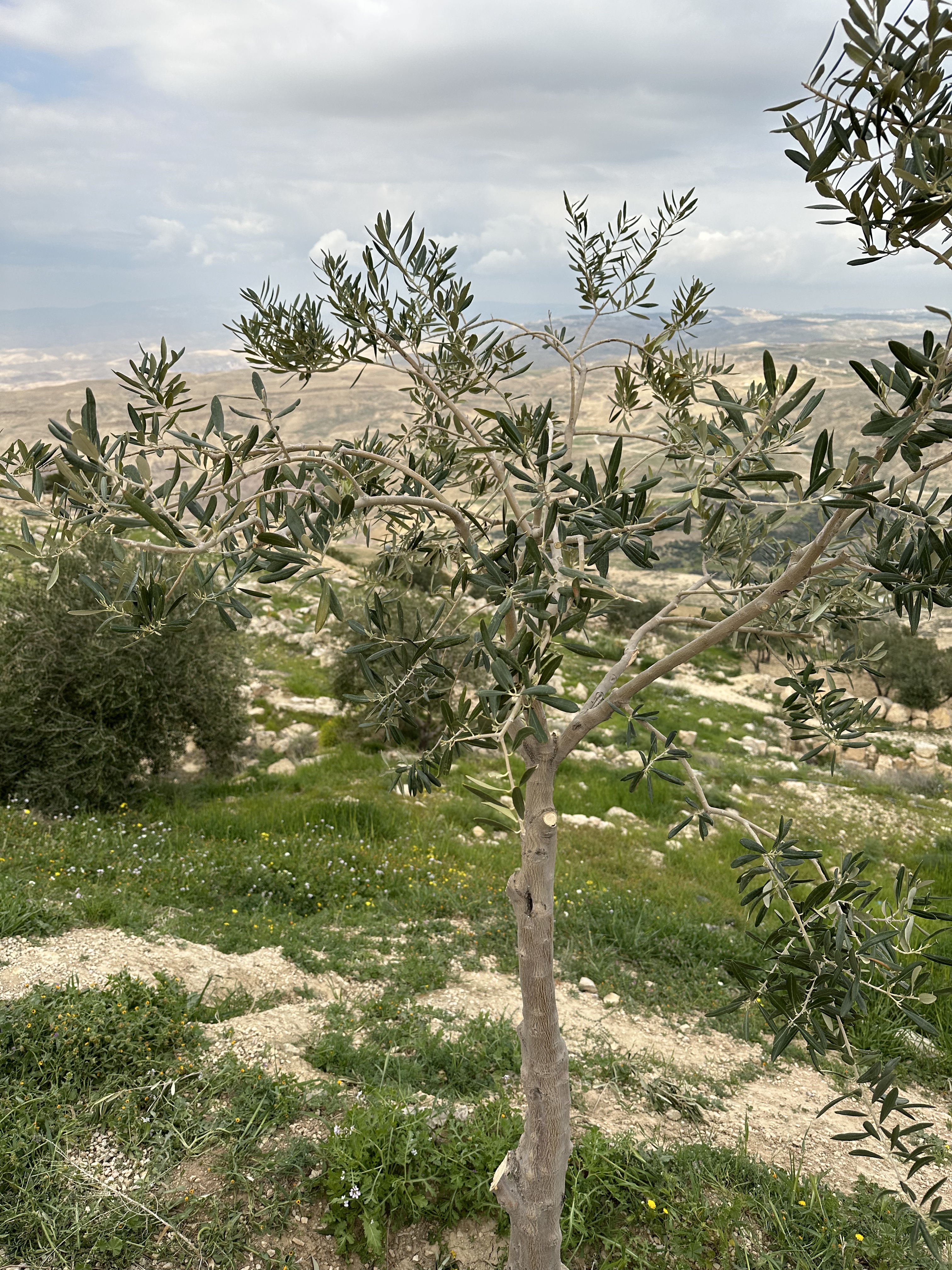
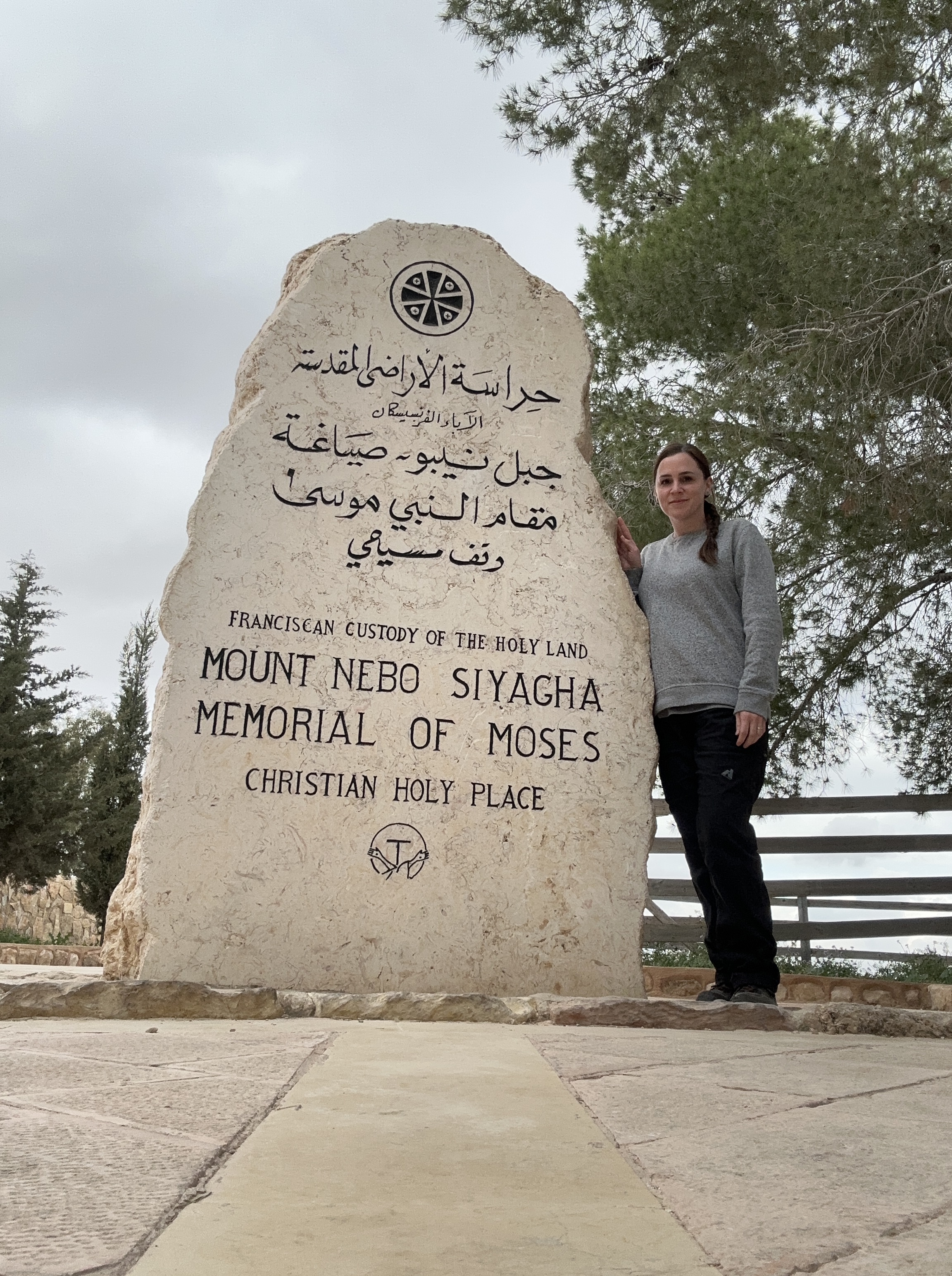
The bible refers to Mt. Nebo as the place where Moses surveyed the promised land, a land he would never enter. A short 9 km drive from Amman, Mt. Nebo is an easy addition to an itinerary. The site has ample parking across the road from the entrance, be mindful of traffic when crossing, and more parking lots are being created. Stop by the ticket window and walk through the turnstiles to enter. There is a small gift shop and café near the entrance but food and drink are discouraged throughout the site so stop buy the café as you exit. A bit farther up the path are a small museum and toilet facilities. The museum takes about 10 minutes to walk through if you stop and read all the signs. The toilet facilities are clean so using them when you arrive and before you depart is advisable. Continue along the path for beautiful sweeping views of the valley below, the Dead Sea, and modern day Israel and the Palestinian Territories in the distance. The grounds are well maintained and the entire area is dotted with olive trees. You should not take pieces of the olive trees with you as you will permanently damage the trees. The church/Moses Memorial is worthwhile for more gorgeous mosaics but be respectful and remain quiet in the church. The priest on duty when we visited unfortunately had to repeatedly shush people who were being loud on their cell phones. Not only is this behavior rude and disrespectful, it detracts from the experience for everyone.
Our day was rounded out with dinner at Fatty Dabs Burger Shack which is an American style burger joint in Amman. I would describe it as being somewhat similar to a Five Guys Burger and Fries. Solid burger, good fries, and fast service with unique house-made sauces. We also had a fresh-from-the-oven chocolate chip cookie topped with vanilla ice cream to finish off dinner. Fatty Dabs won’t be winning any awards for the healthiest dinner option but the food is good and I would happily go back.
 Travel with Fleming
Leave a comment