
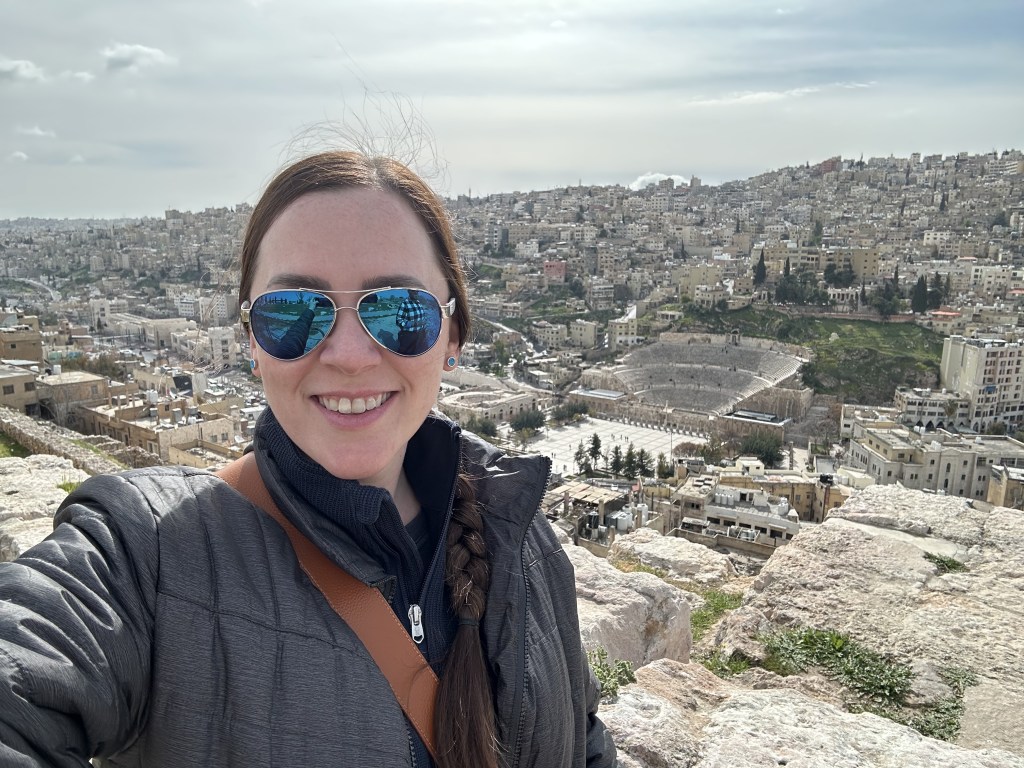
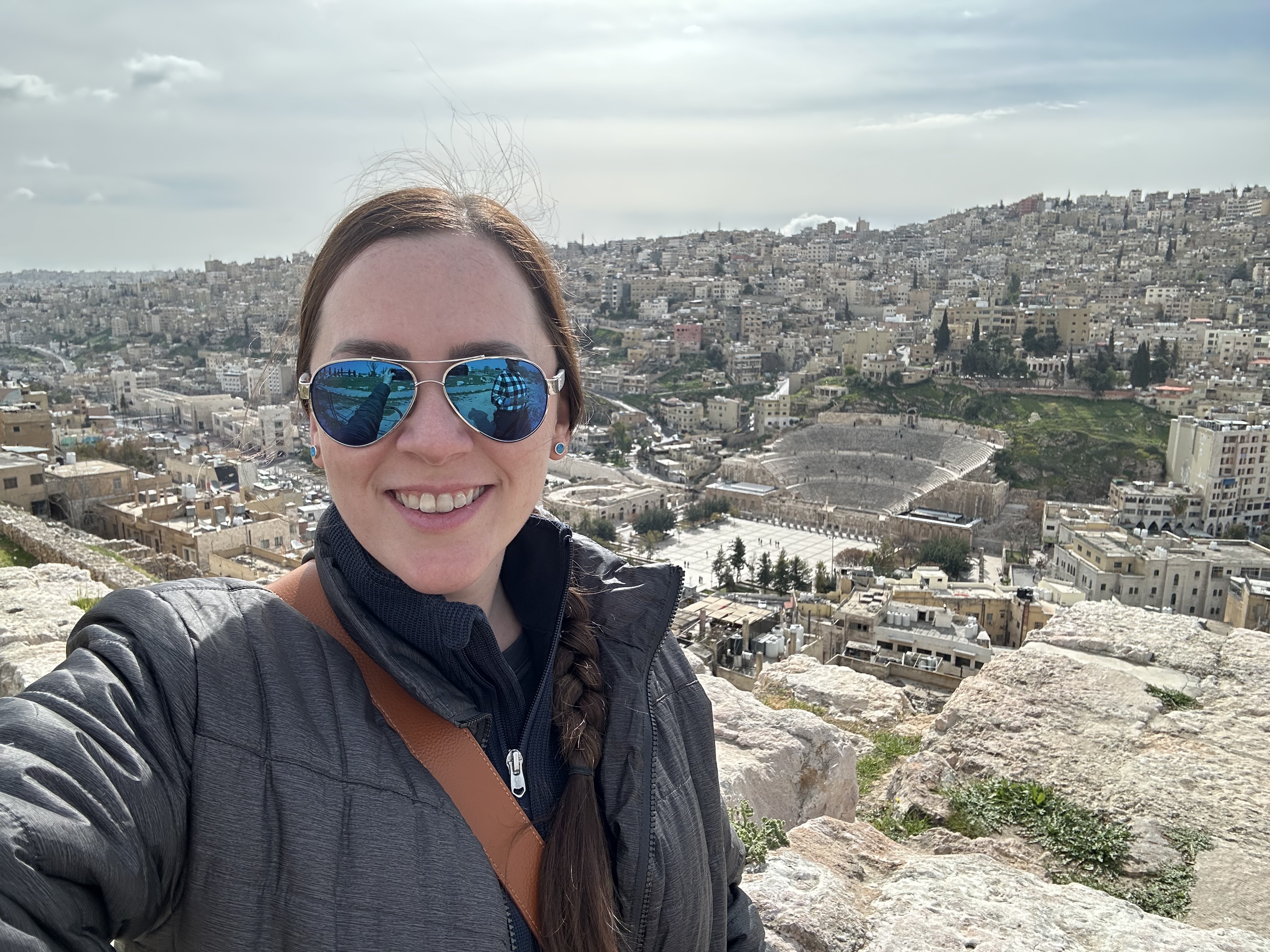
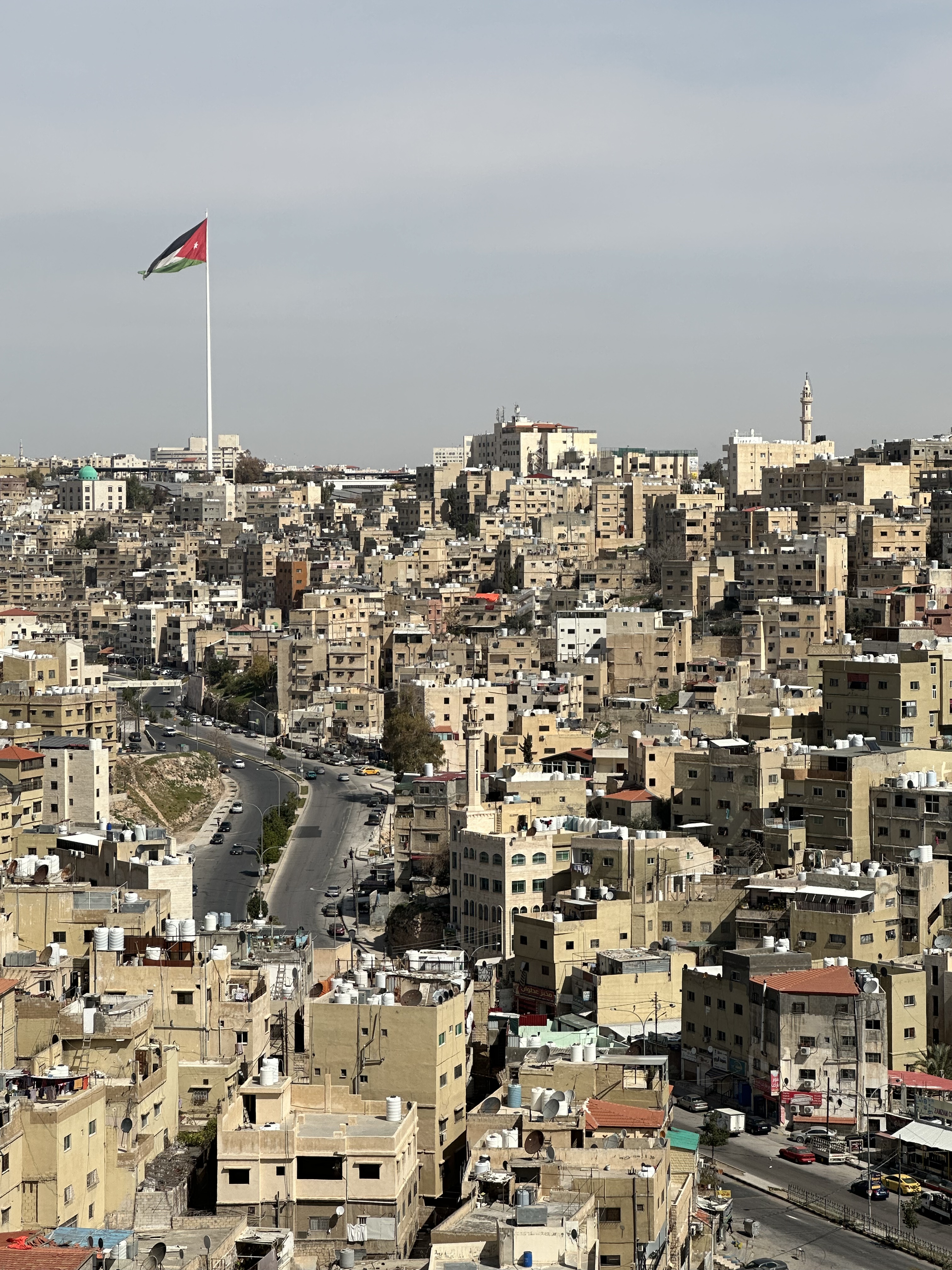
Today we explore the city of Amman! Amman has all the trappings of a modern city including residential areas, cafes, restaurants, bars, malls, coffeehouses, mosques, and souqs which are all intertwined into Jordanian life. The city is a culmination of cream- and beige-colored concrete buildings built into the hillsides. Some buildings appear newer and brighter in color while others are grayed, weatherworn, and in need of some renovations. Each home has a cistern (or set of cisterns) that water is delivered to each week. Take advantage of the city overlooks to appreciate the juxtaposition of sharp concrete edges, rounded mosque domes, and tall minarets which combine to create a beautiful landscape that unites ancient and modern Amman.

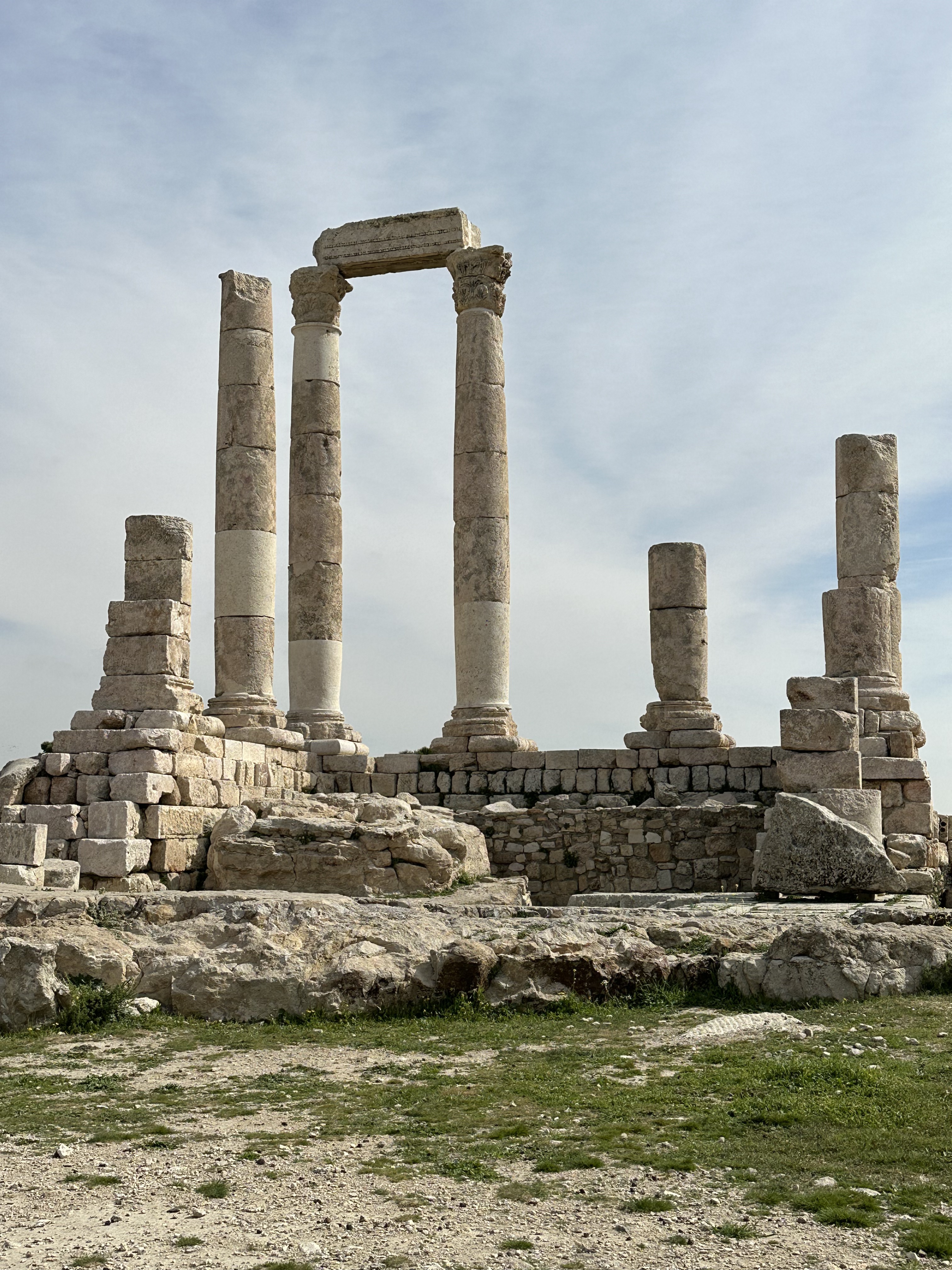
The city also has some pretty phenomenal Roman ruins and museums which was where our day began. The area known as the Citadel is atop the highest hill of Amman. Multiple areas of the Citadel are worth exploring but two of my favorites are the remnants of the Roman Temple of Hercules and the stone carved hand which is near the museum. The Temple of Hercules was built during the reign of Emperor Marcus Aurelius and is visible from around the city. The sheer size of the remaining pillars is incredible. It is worth walking around the temple for different perspectives and it makes for some cool pictures of the sun in front of and behind the columns. My second favorite part of the Citadel was the remnant of the stone carved hand. Again, the size is impressive as the statue is estimated to have stood 13 meters tall, but the detailing of the stone carving was incredible. The angles of the joints, the lines of the knuckles, and even the cuticles around the fingernails were nearly lifelike.


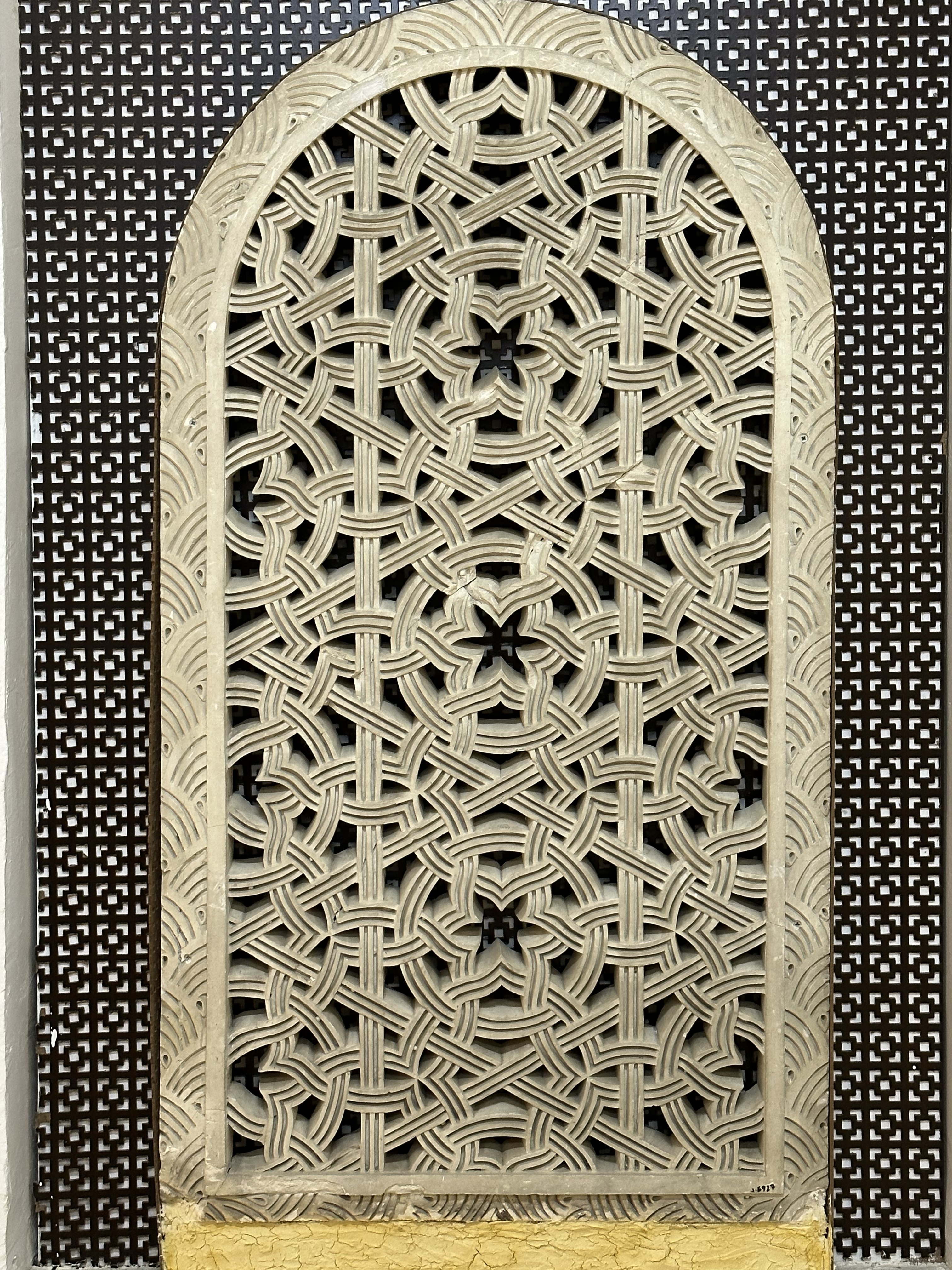
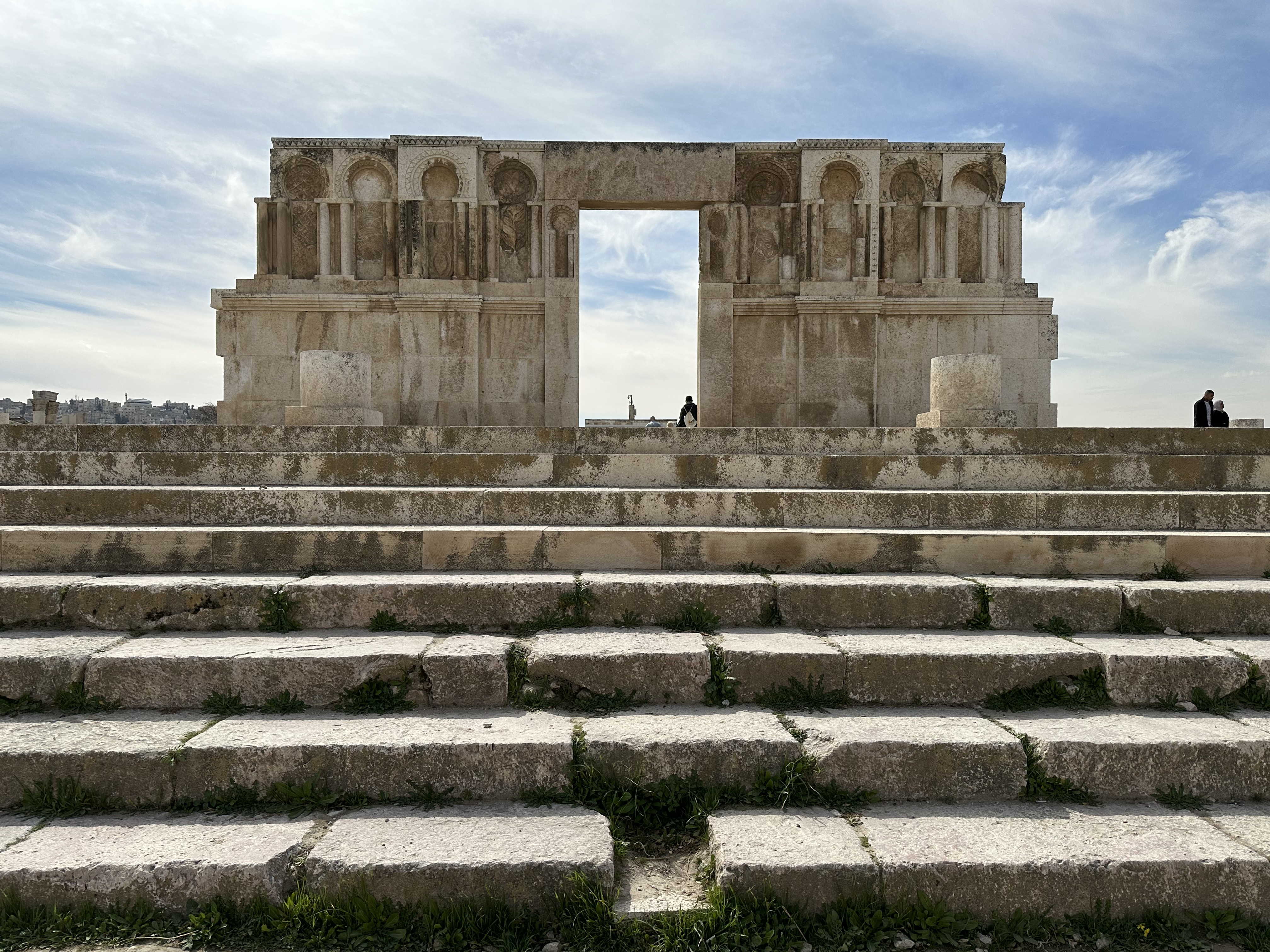
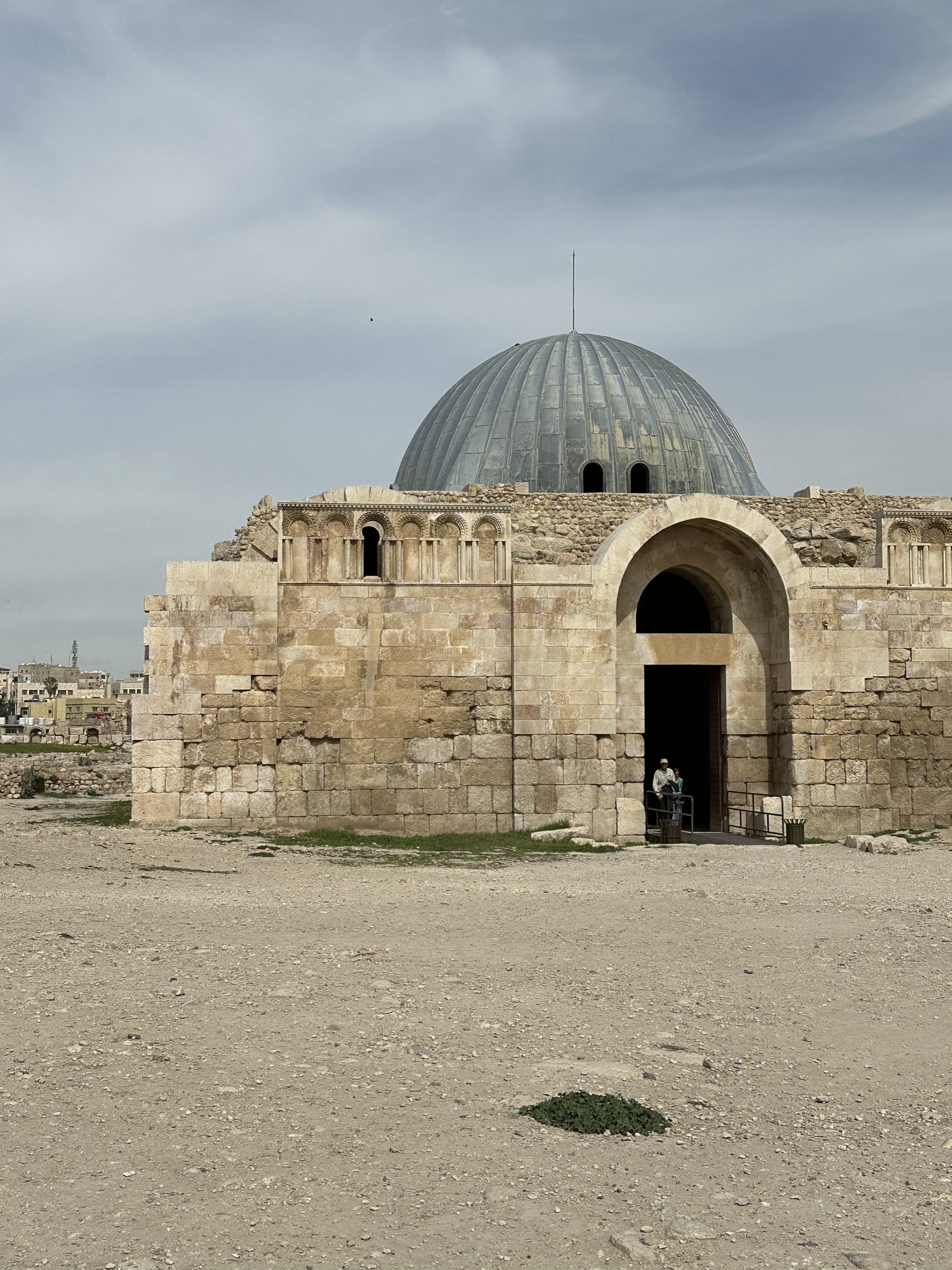
The museum is worth a walk through to see artifacts from different time periods including pottery, a bread oven, and more beautiful, carved marble pieces. The Umayyad Palace, with its impressive domed audience hall, is believed to be the work of Umayyad Arabs dating from about 720 CE. Beyond the domed audience hall, wander the colonnaded street and picture residential and administrative buildings on either side. Don’t forget to check out the Umayyad cistern which would have once supplied water to the palace and surrounding areas. Stop by the toilet facility and café area as you exit. Plan for a couple hours here and bring water as the Citadel is exposed to the sun and wind.



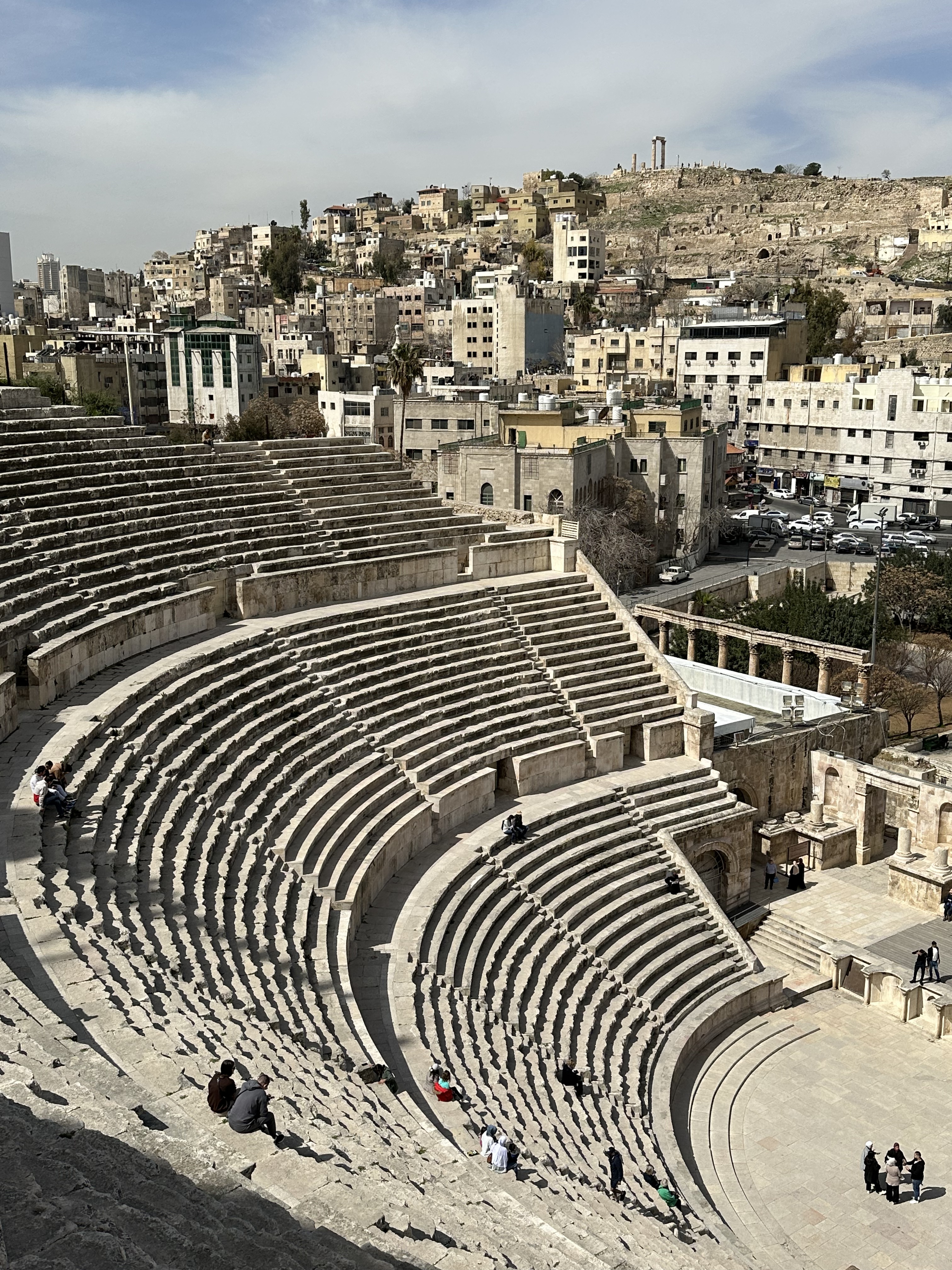
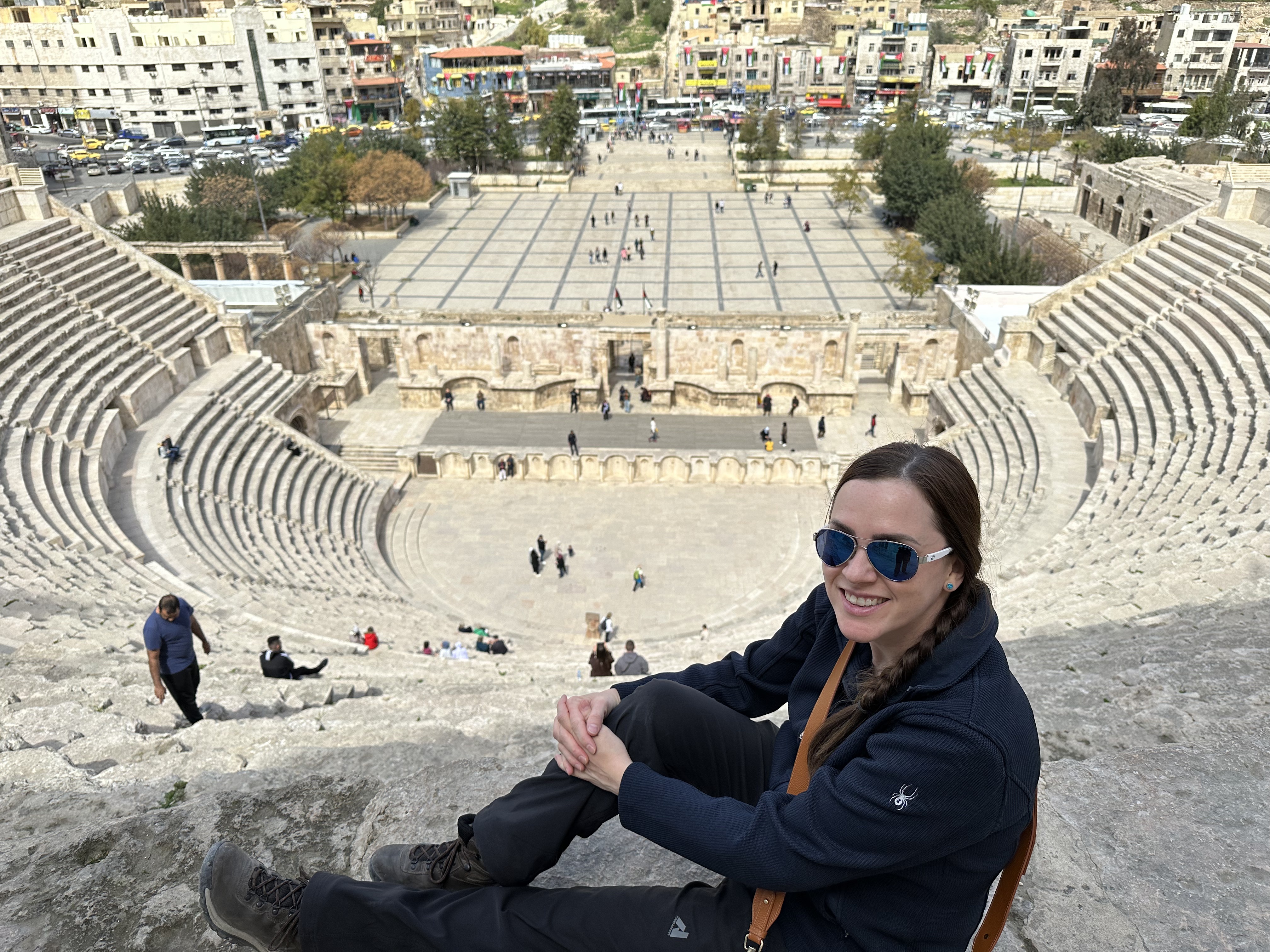
Our next stop was the Roman Theatre, Forum, and Odeon. I recommend going to the Odeon first as this 500 seat venue will otherwise be overshadowed by the 6,000 seat Roman Theatre. The Roman Theatre has been restored with some non-original materials. Regardless, it remains impressive. Climb to the top for a full view of the theatre and the Citadel on the hilltop beyond. Be mindful both going up and coming down as the Romans did not believe in handrails for the steep stairs. If you are a little nervous, have a fear of heights, or are generally a bit clumsy, go down either sideways or backwards for safety. We spent a few minutes at the Forum, the row of columns immediately in front of the Roman Theatre, for some people watching. Expect to see street food vendors, people chatting and catching up, and children playing soccer, and travelers congregating. Here again, the full display of Jordanian culture and diversity is on display.

The Nymphaeum was confusing to enter and to exit. The gentlemen who let us in was nice but after 15 minutes of walking around and another 15 minutes of a conversation heavily dampened by a language barrier, I felt like we might not be allowed to leave. This is the one place I would describe as being lackluster. I intend absolutely no disrespect, but after seeing the Citadel and the Roman Theatre, the nymphaeum pales in comparison. Excavations began in the early 1990s and were expected to continue for many years without the effects of a global pandemic. I think the nymphaeum will be more of a stand alone and worthwhile visit as the excavations and restoration work continues but that will be several years from now.
The souq or market was a high energy assault on the senses! Think similar to a farmers market but much bigger, way more diversity, and a lot more yelling. There is so much to see including fruit, vegetables, meat, cheese, nuts, spices, candies and sweet treats, clothing, shoes, jewelry, and household goods. All of this comes together to create some potent smells in certain areas. That isn’t to say it smelled bad. You do get the occasional whiff of a butcher shop or a seafood stall which can be slightly pungent but you also get the savory smells of spices and the sweet smells of the candies and other sweet treats. People in the souq would grab a few nuts or sample the offerings before purchasing. This threw me off a bit at first, especially with the pandemic still in the back of my mind, but the people here went on about their business. The souq is very loud with vendors yelling out their wares and haggling with locals on prices. This is the one time where not knowing any Arabic was very intimidating. At least three vendors yelled out their wares as we walked by and, because I didn’t understand what they were saying, it took several minutes to adjust and feel like they weren’t yelling at me.

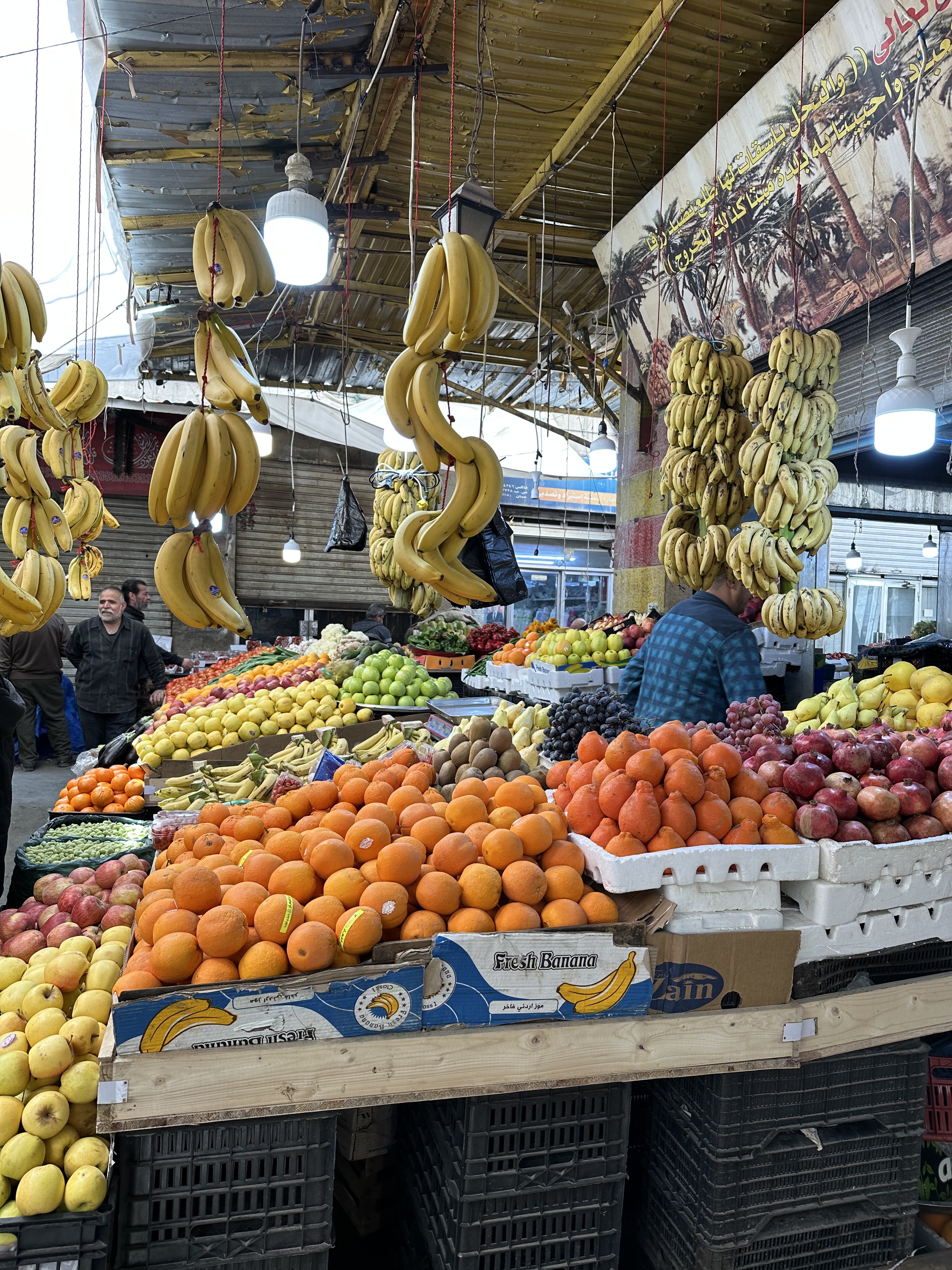
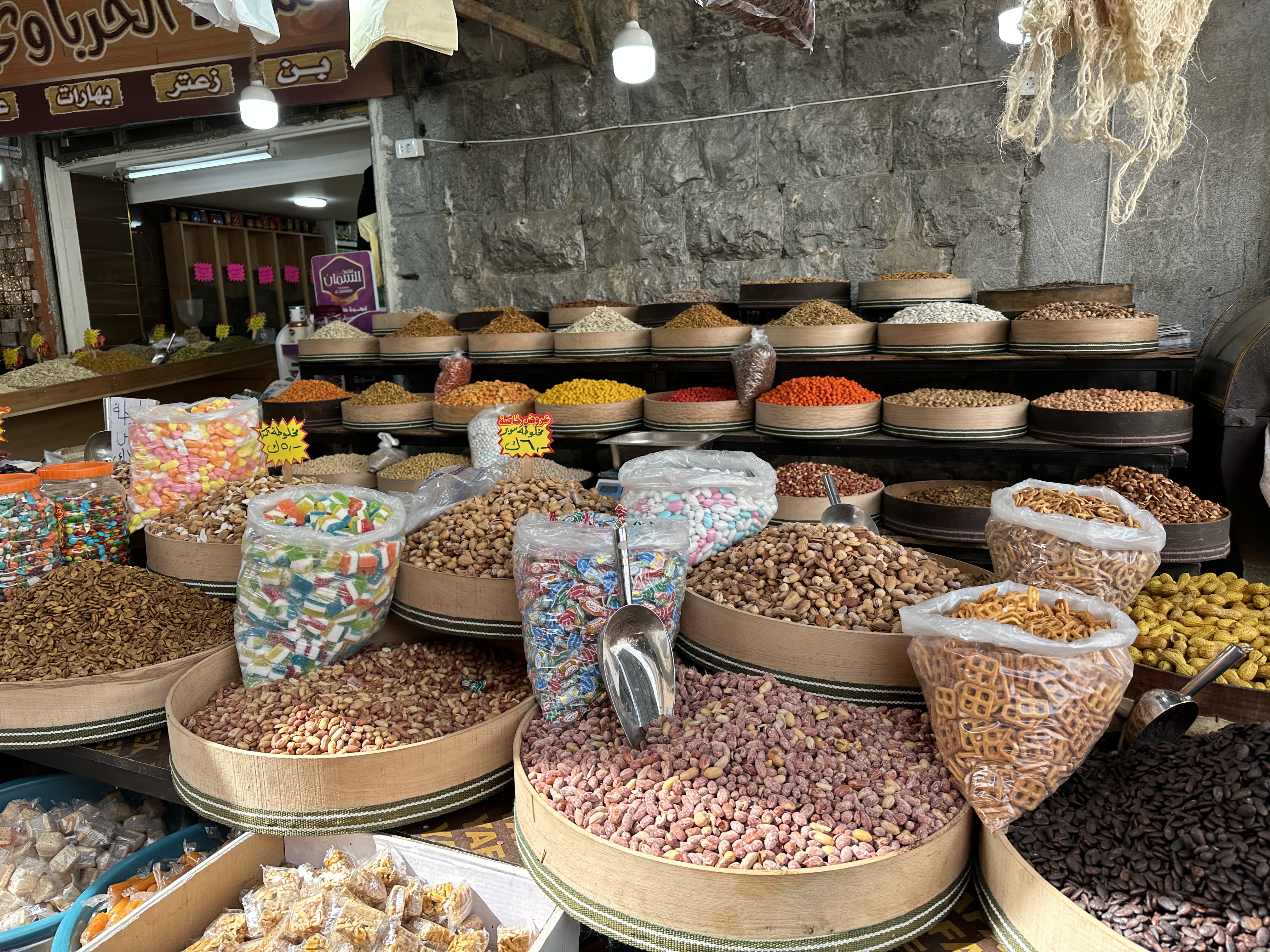
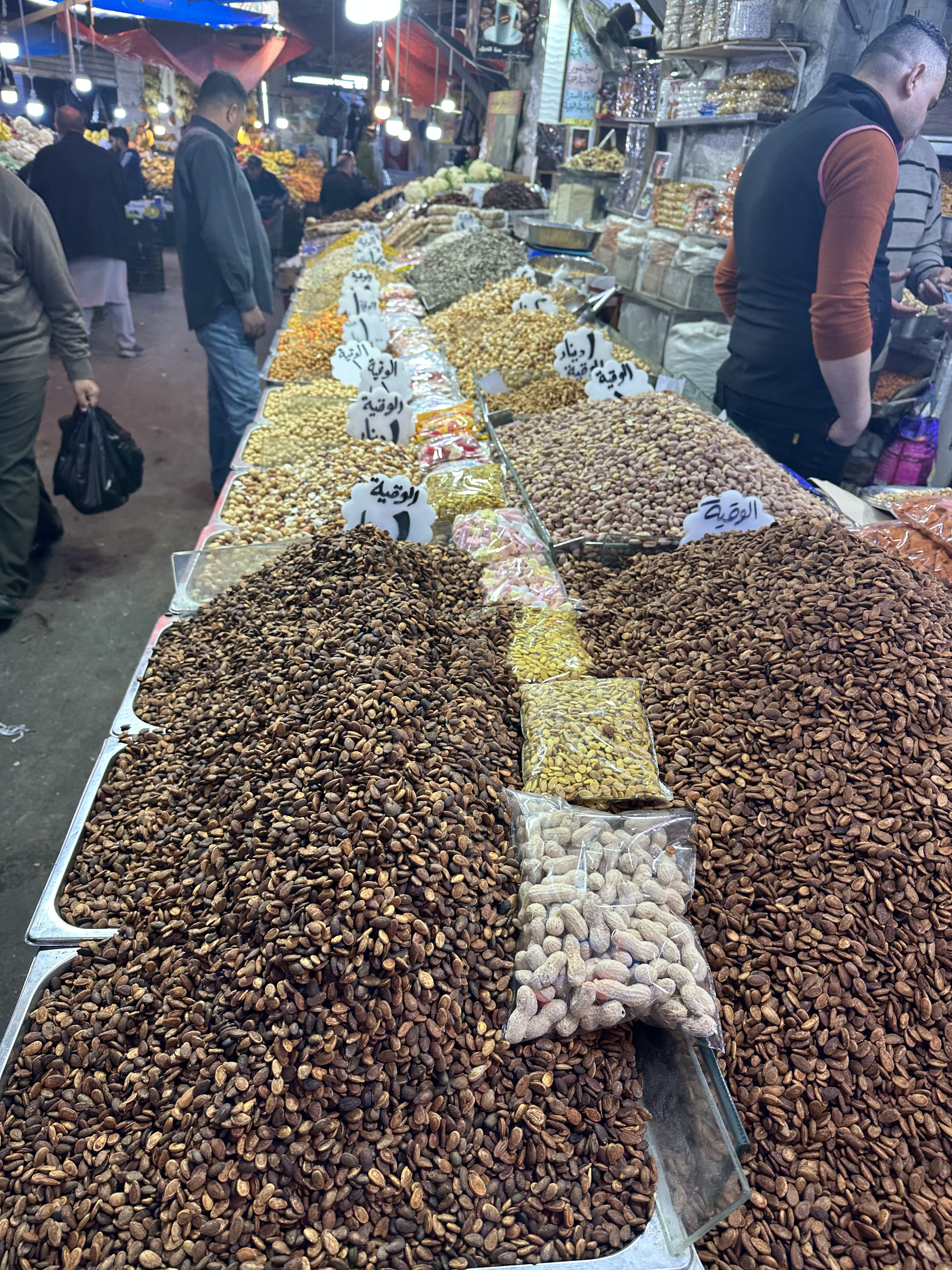
Once I was able to acclimate myself, the souq became a fun game of show and tell where we would look for things that were different from what we are used to at a farmers market stateside. There were a lot of bulk spices; some familiar, some unfamiliar, all creating a rainbow of color. Nuts including cashews, walnuts, pistachios, peanuts, and almonds were offered raw, roasted, and roasted and seasoned. There were a lot of familiar fruits and vegetables available like oranges, lemons, limes, bananas, apples, grapes, strawberries, cabbage, onions, garlic, radishes, carrots, and herbs . I was surprised at how many pomegranates I saw because I can only find them around Christmas at home. Cabbages tend to be flatter but otherwise look the same; still clearly recognizable as cabbage. The herb sachets are massive, more like a floral bouquet than the tiny sachets Publix and Kroger have, and the smell is divine. I found it intriguing that some of the fruits and vegetables were opposite sized; for example, Jordan has what I would describe as mini zucchini (the length of an iPhone) and massive lemons (the size of a softball). We also saw stalls of pickled vegetables, grains, olives, and dates.
The meat stalls were where I noticed a lot of differences. There is no pork, which is expected. Seafood, beef, chicken, and lamb are the predominant animal proteins and the entire carcass is used. Heart, liver, tongue, kidneys, and testicles were all available in the souq. You could walk up to one of the butcher stalls and they would carve your order from the carcass hanging in front of the stall. The souq is more open air than refrigerated but there was a mix. Based on what I saw, the seafood was displayed on ice, some of the lamb carcasses were in what appeared to be glass front coolers, and chicken was displayed in open top coolers. The only completely open air meat stall I saw had a beef quarter hanging in the front. I wouldn’t buy any meat items from the souq in the heat of summer but I think it would be okay during the cooler months so long as proper food safety measures are used in preparation at home. (ie: refrigerate immediately, proper hand washing techniques, preventing cross-contamination, cooking to the proper internal temperature as determined by a meat thermometer inserted into the thickest portion of the meat, etc. What can I say, old habits and professions being what they are?)
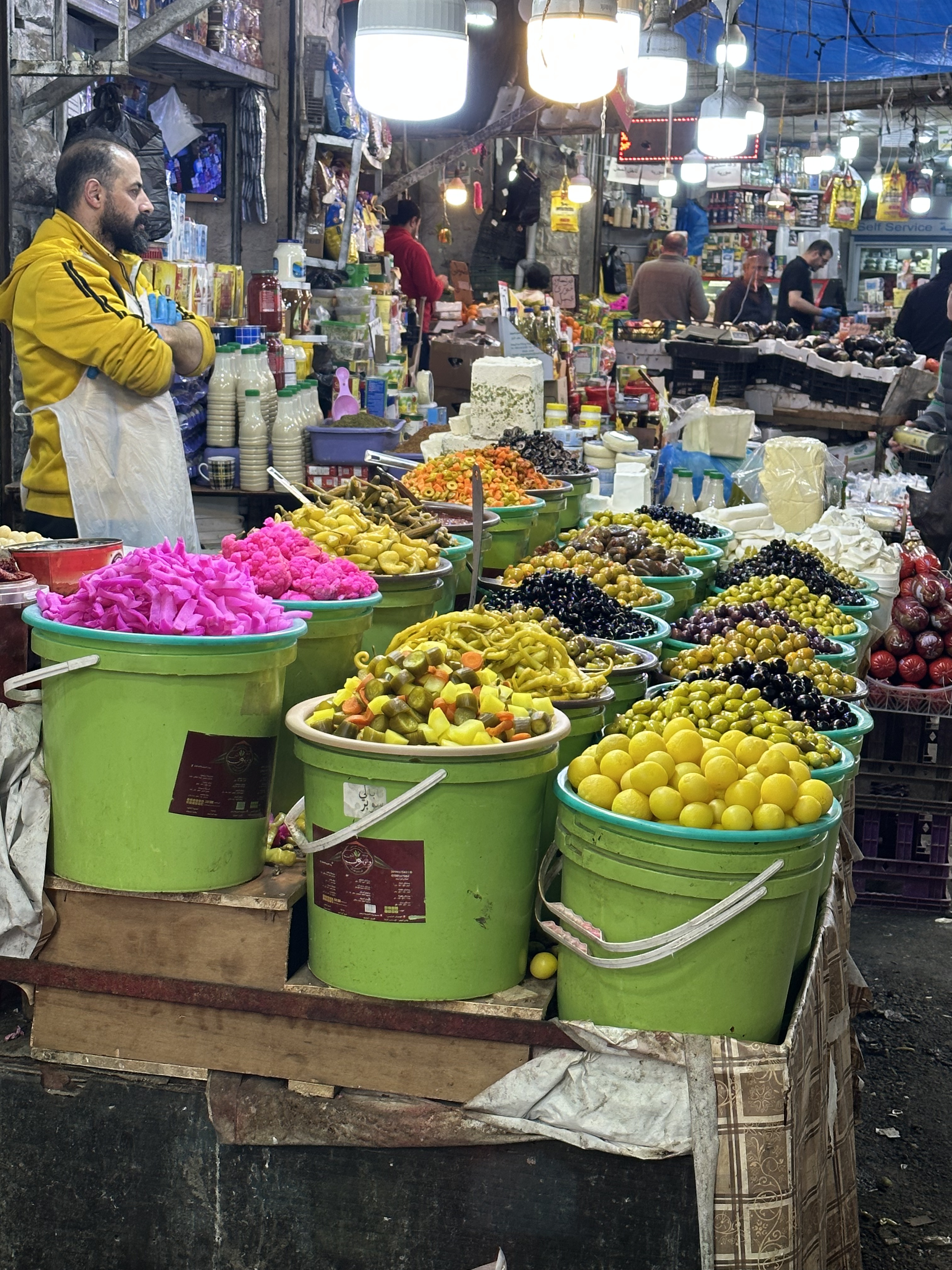
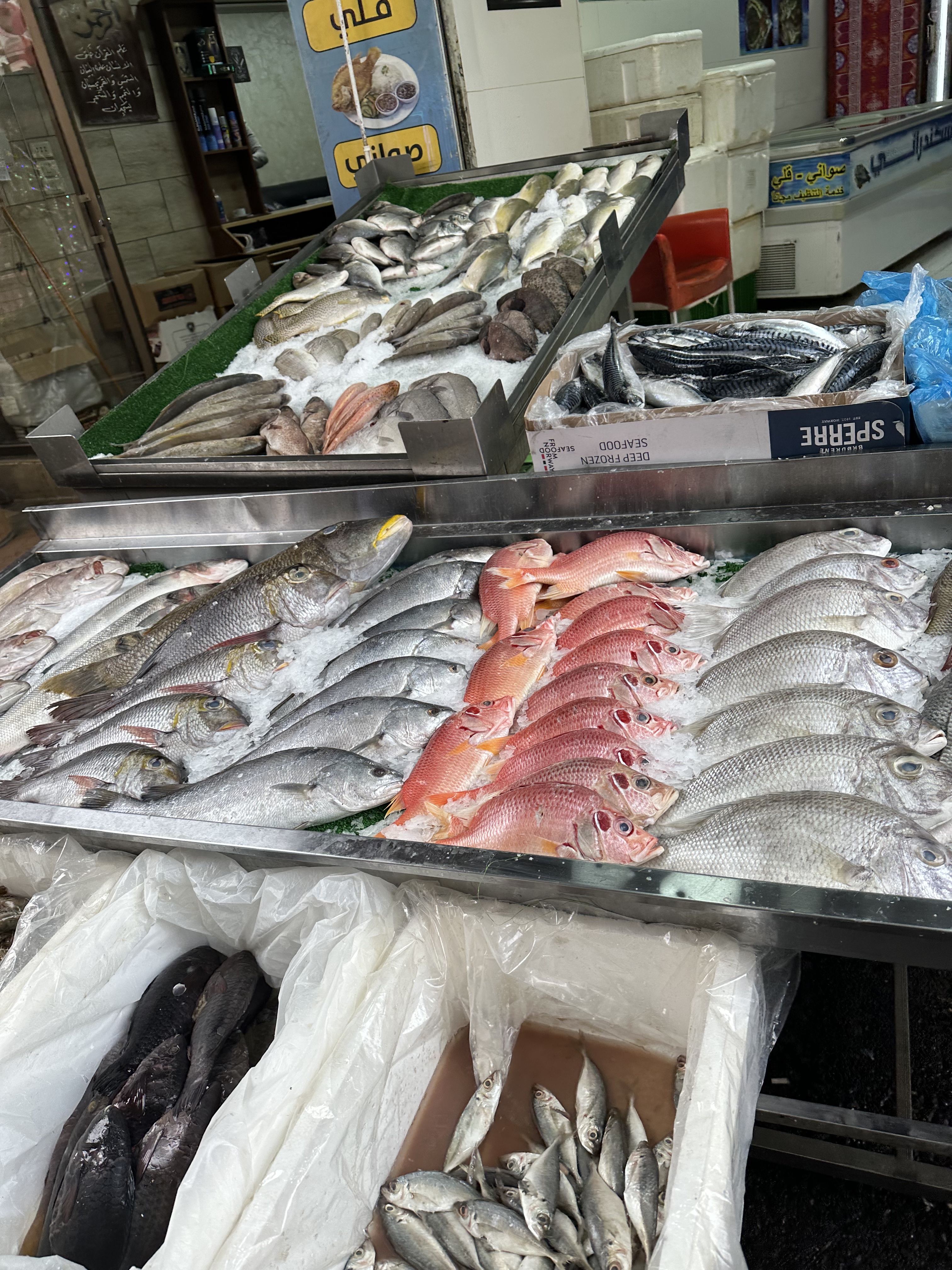
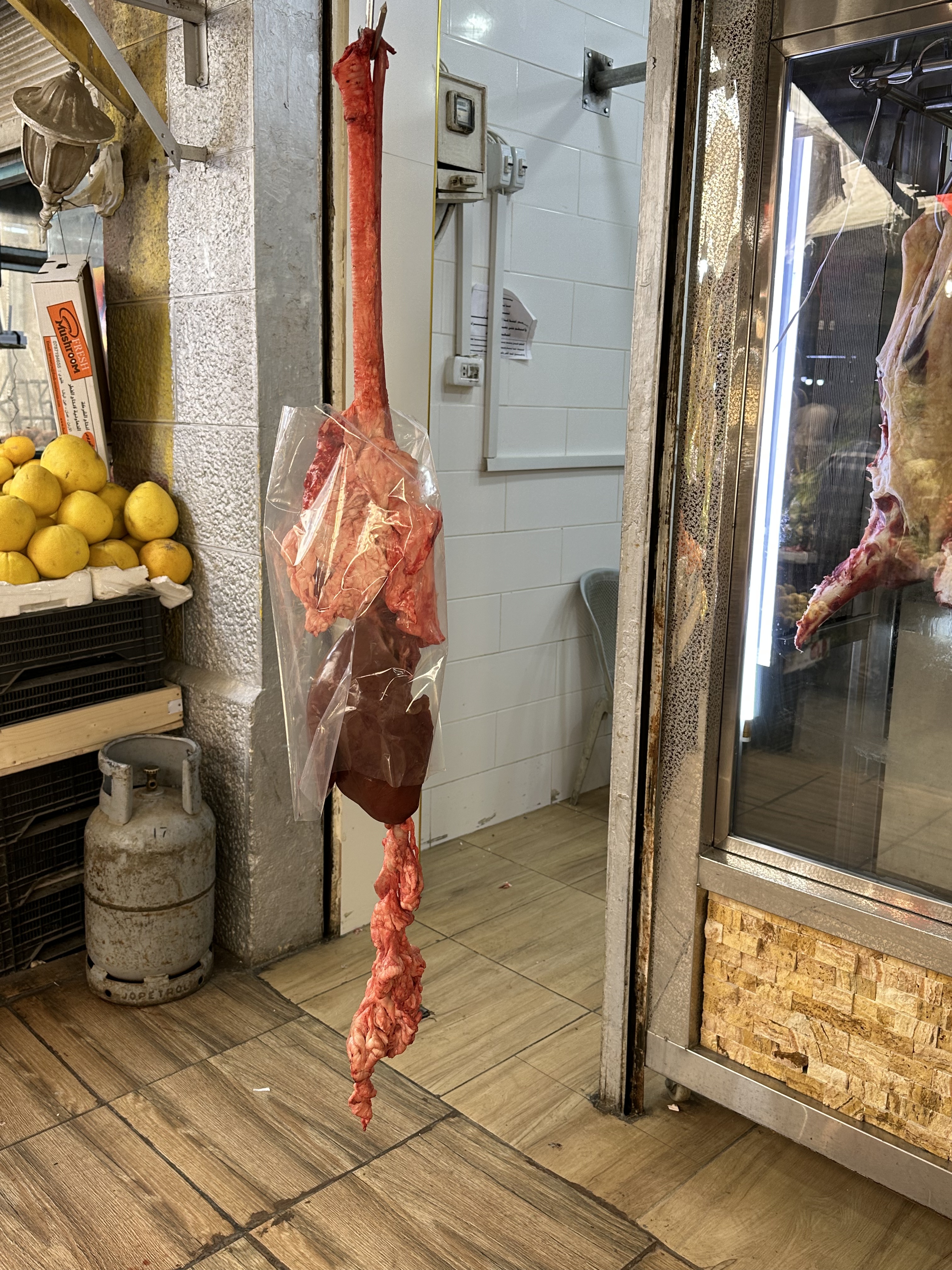
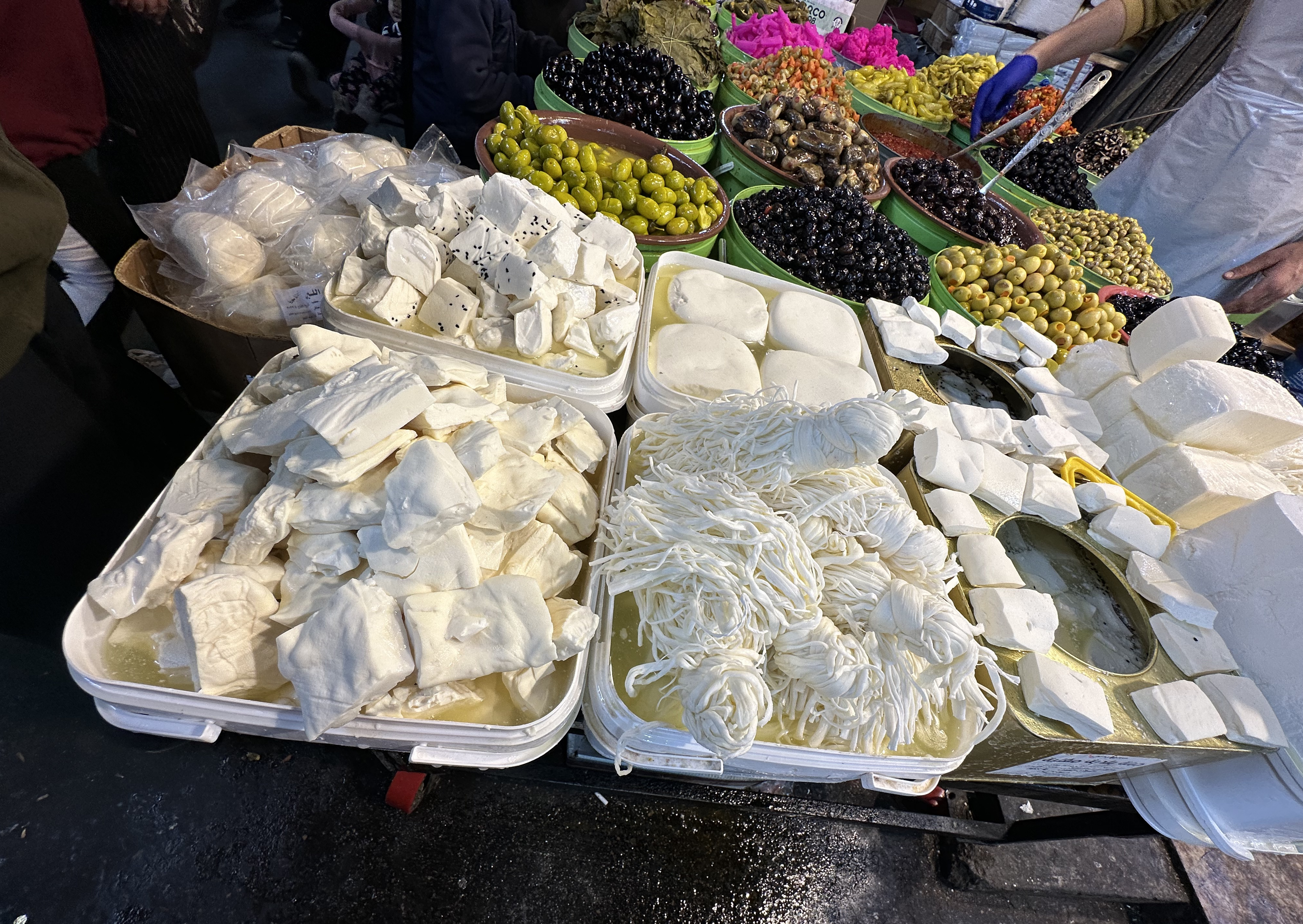

The sweet treat stalls include what I would describe as several variations of baklava. There were also hard candies, gummy candies, and Turkish delights. There were a lot of dried flower, presumably for teas, and dried fruit stalls. The cheese stalls were surprising. I didn’t expect cheese to be at the souq and certainly not as many different kinds as there were. Halloumi is very popular here and there seem to be different varieties or flavors. Loofahs are somewhat common in the souq and they are sold whole. A single loofah may exceed 24 inches in length. There were clothing stalls for men, women, and children offering a blend of traditional and modern items to suit all levels of modesty. A lot of jewelry stalls sold gold and some silver. There were also a lot of craft stalls including wood carvings, soaps, painted art work, and ceramics.


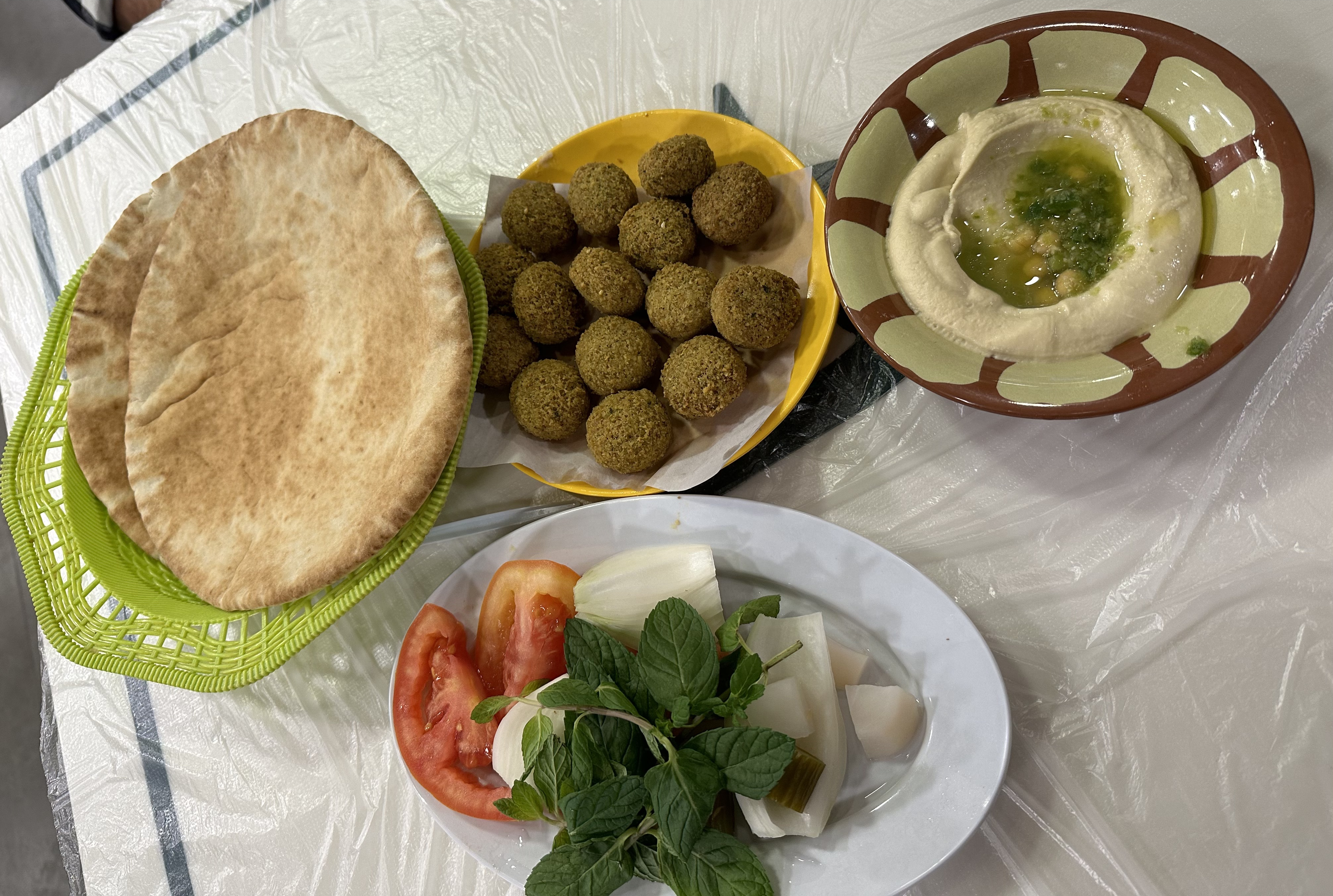
After spending a fair bit of time in the market, I started feeling overwhelmed again and realized that it was past lunch time so we headed for perhaps the most famous eatery in the souq, Hashem Restaurant. Given how hyped Hashem Restaurant was, I expected a super touristy joint with over-priced bad food and I am delighted to say I was wrong. Hashem Restaurant has been in business more than 50 years and remains popular with locals and visitors. It’s worth taking a few minutes to peruse the photos on the wall and see how many people you recognize. The Jordanian royal family features in a few photos and there are other familiar faces to spot as well. The staff and kitchen do a phenomenal job of getting your food fast and turning over tables. Hashem is know for their falafel so we ordered falafel, hummus, and two Coke Zeros. Our food was served with pita bread and a raw vegetable tray with onion, tomato, pickles, and mint. The food was fresh, satisfying without being overly heavy, and, most importantly, good. I was gob smacked when we paid the bill and it was 3 dinar for everything. Three dinar, roughly $5 USD, for falafel, hummus, and two Coke Zeros. Definitely on my list for my return visit.
 Travel with Fleming
Leave a comment