
This morning we left the city and drove north. We stopped to fuel up the car and I learned that all gas stations are full service here. You tell the attendant what type of gas you want (90) and how much (full). They then fill the car up for you and you pay without ever stepping out of the car. While some places in the US still offer full service gas stations, this was the first time I remember experiencing it. I also learned that there are three primary gas station companies; Manaseer and Jo Petrol are Jordanian and Total Energies is Egyptian.
The Jordanian government determines the price of gas and water. This is a country without a plethora of natural resources and is considered one of the most water-impoverished countries in the world due to lack of access to fresh water. Jordanians could be at distinct and substantial disadvantages without standardized and semi-controlled pricing for these resources. Water (including fruit juices, sodas, and bottled water) are all quite inexpensive, compared to the prices I am accustomed to in the US. A 1 liter bottle of Coke Zero in Jordan costs roughly $1 USD. Fuel is more expensive at a rough equivalent of $5 USD per gallon and this is for an equivalent to the mid-grade fuel in the US (90 vs 87). The 90 grade fuel is slightly more refined than the 87 grade. The government also sets the exchange rate which is 0.71 JD to 1 USD.
Much like a “Coke” in the South effectively means soda and you have to specify if you want a Coca-Cola, Pepsi, or other brand, “Visa” in Jordan effectively means a credit card. In fairness, Visa does seem to be the predominantly advertised credit card provider, though I did see signage for American Express and MasterCard as well. Further, virtually every establishment (restaurant, gas station, retail store, etc.) uses the handheld tap-to-pay credit card payment systems. The only stationary card reader payment systems I recall were in the larger grocery stores. I really liked this because my credit card never leaves my sight or physical possession and that gives a small sense of security.
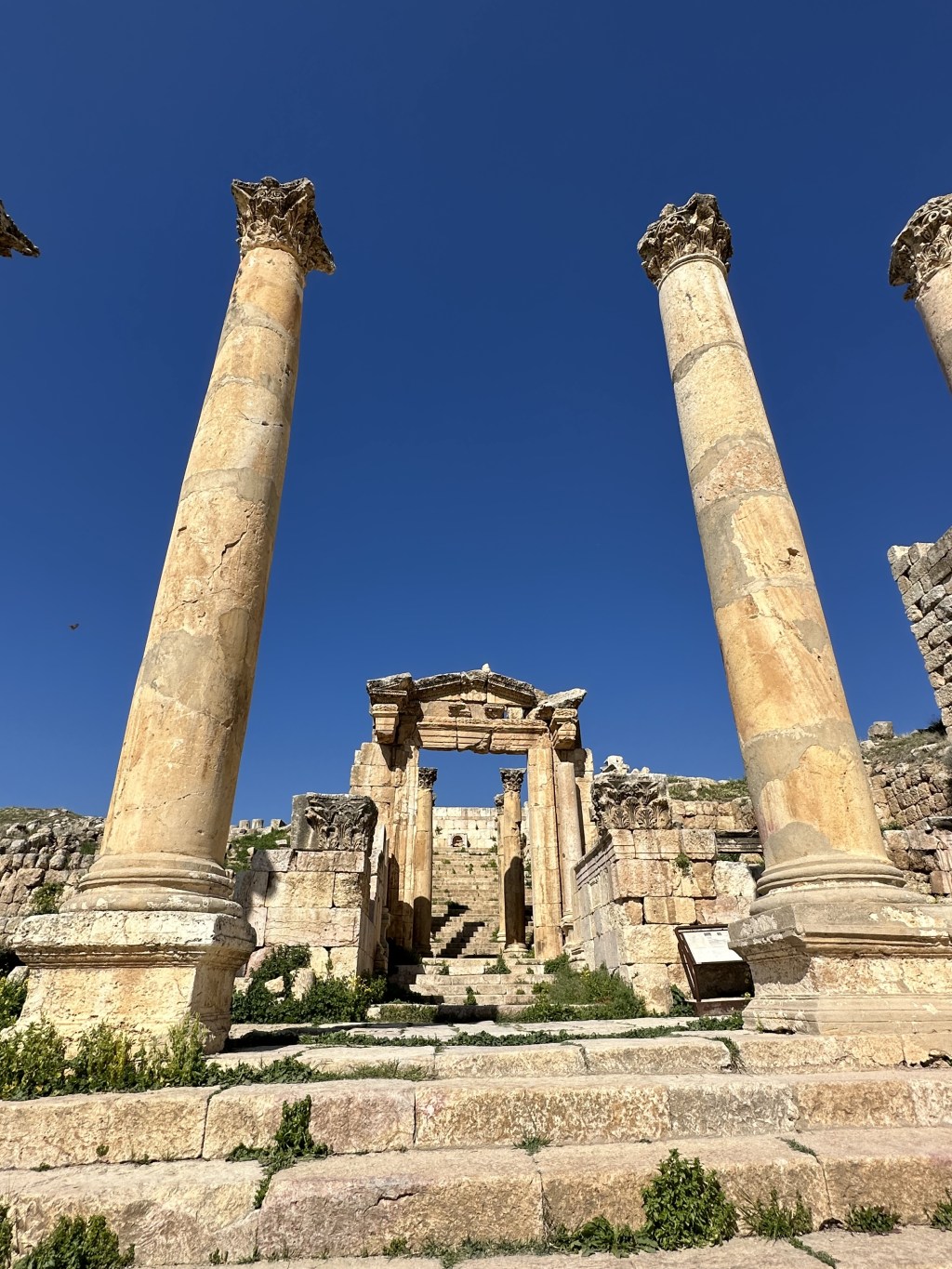
After we fueled up the car and I got a Coke Zero, it was time to get back to the adventure! Jerash is a pleasant 45 minute drive from Amman. Sometimes called the “Rome of the Middle East” or the “Pompeii of Asia”, modern day Jerash is known for its remarkable preservation of a Roman provincial city. You can wander colonnaded streets and admire theatres in one of the best preserved Roman sites in the Middle East. Jerash was settled as a town during the reign of Alexander the Great (333 BCE) and grew in wealth thanks to local agriculture and mining. The city would host emperors and experience expansion until a devastating earthquake in 747 which marked the beginning of the city’s demise. It is believed that the city remained abandoned until 1878 when new inhabitants quickly established the city’s archaeological importance.
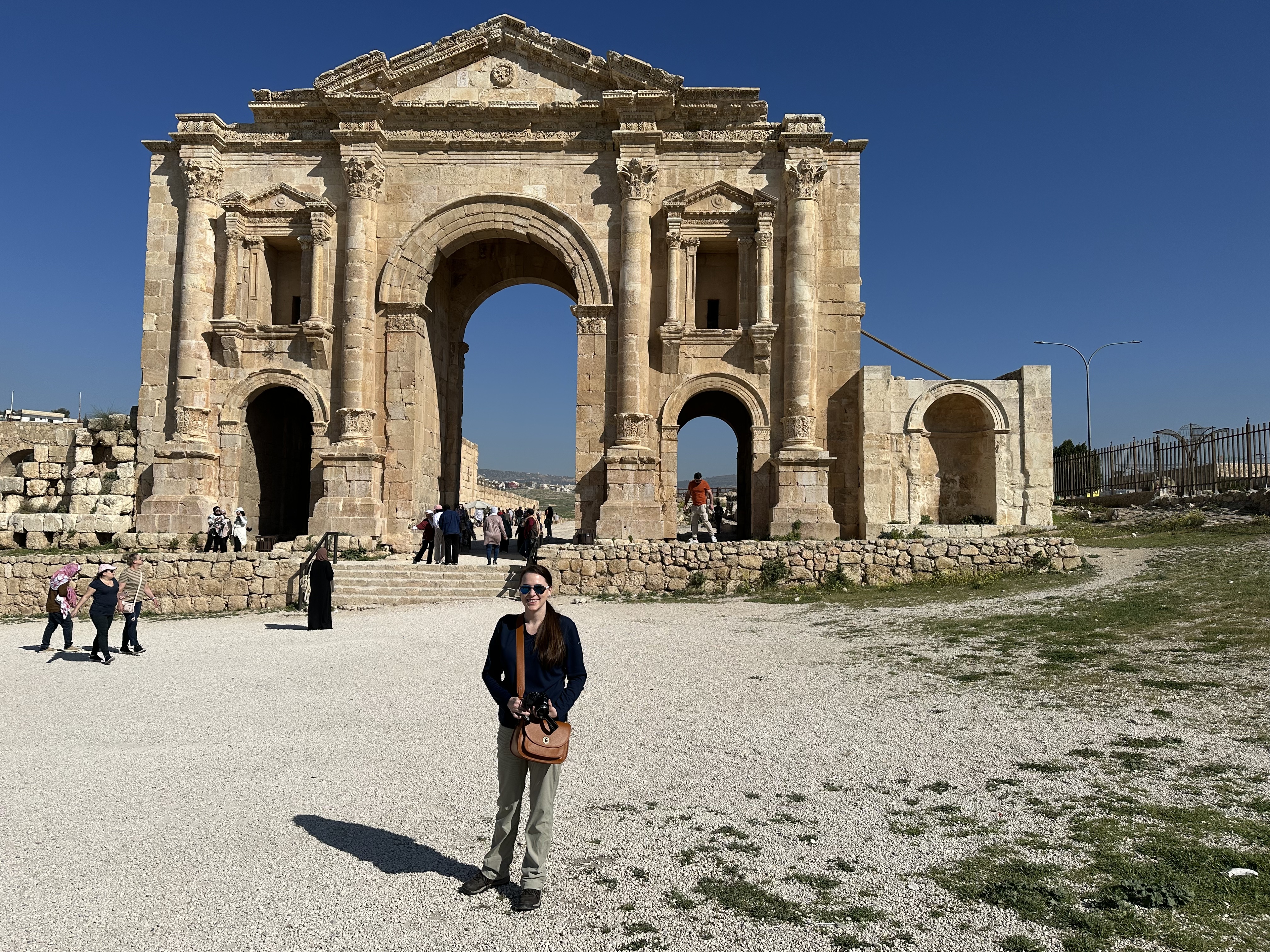
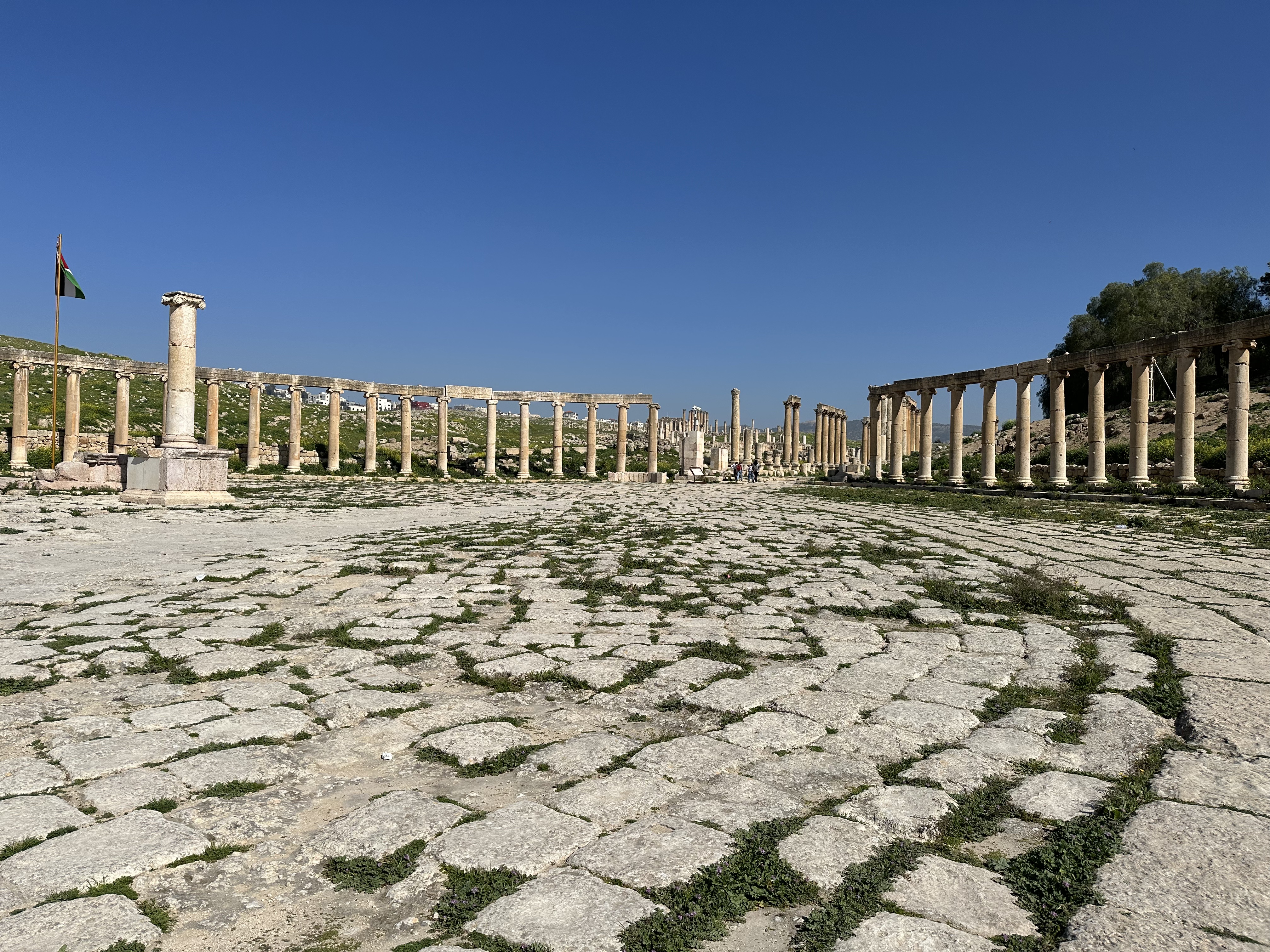
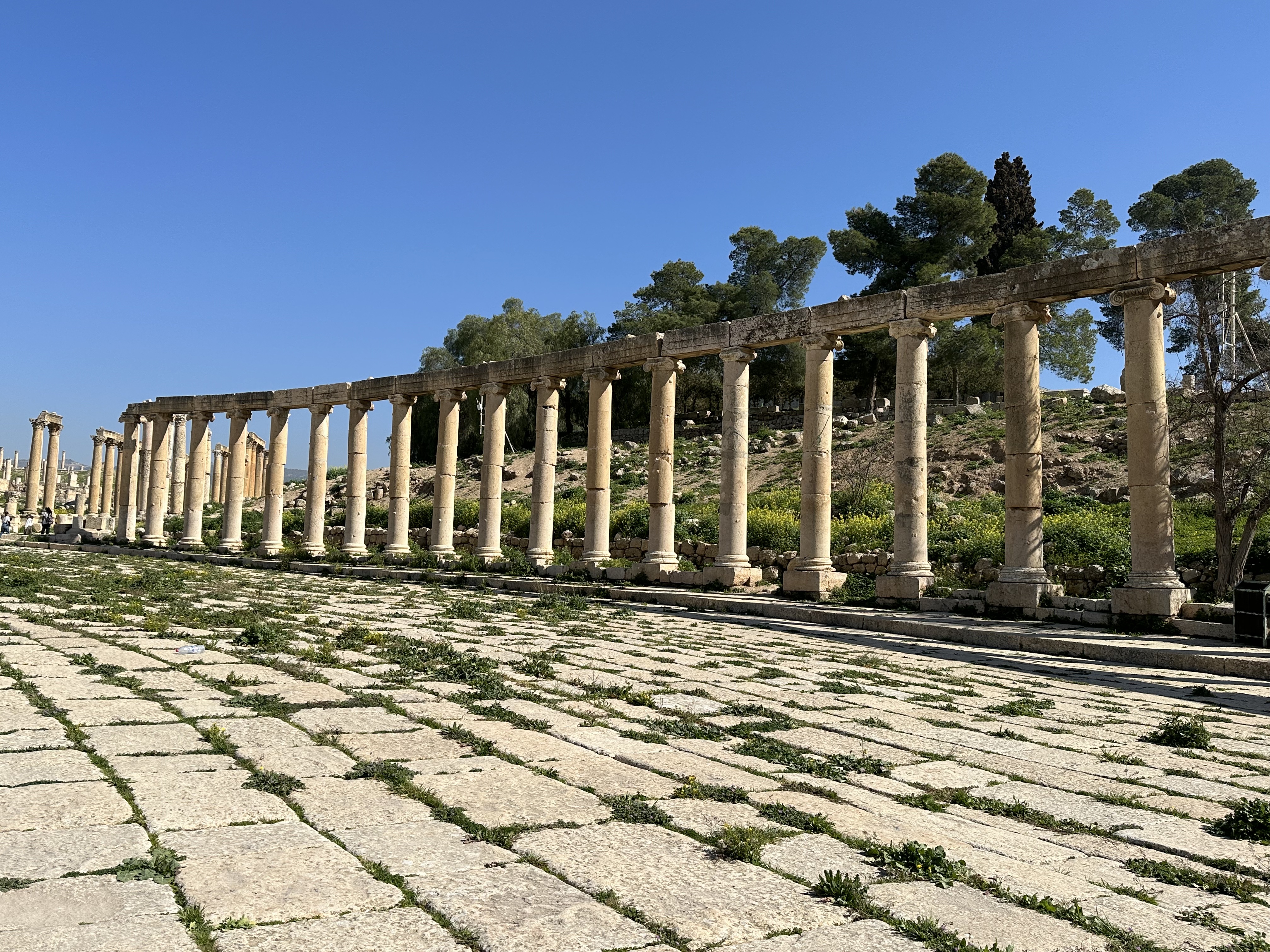
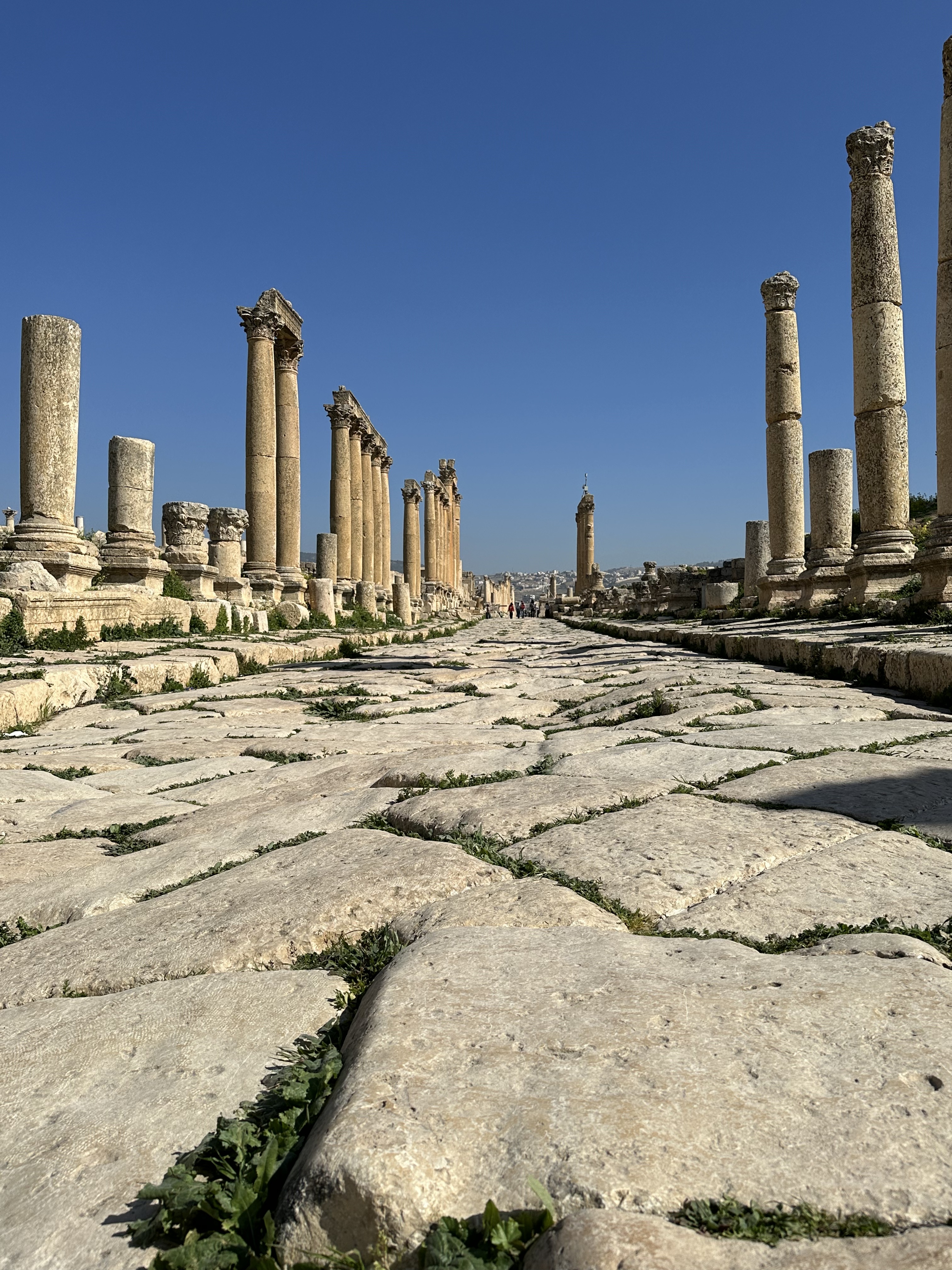
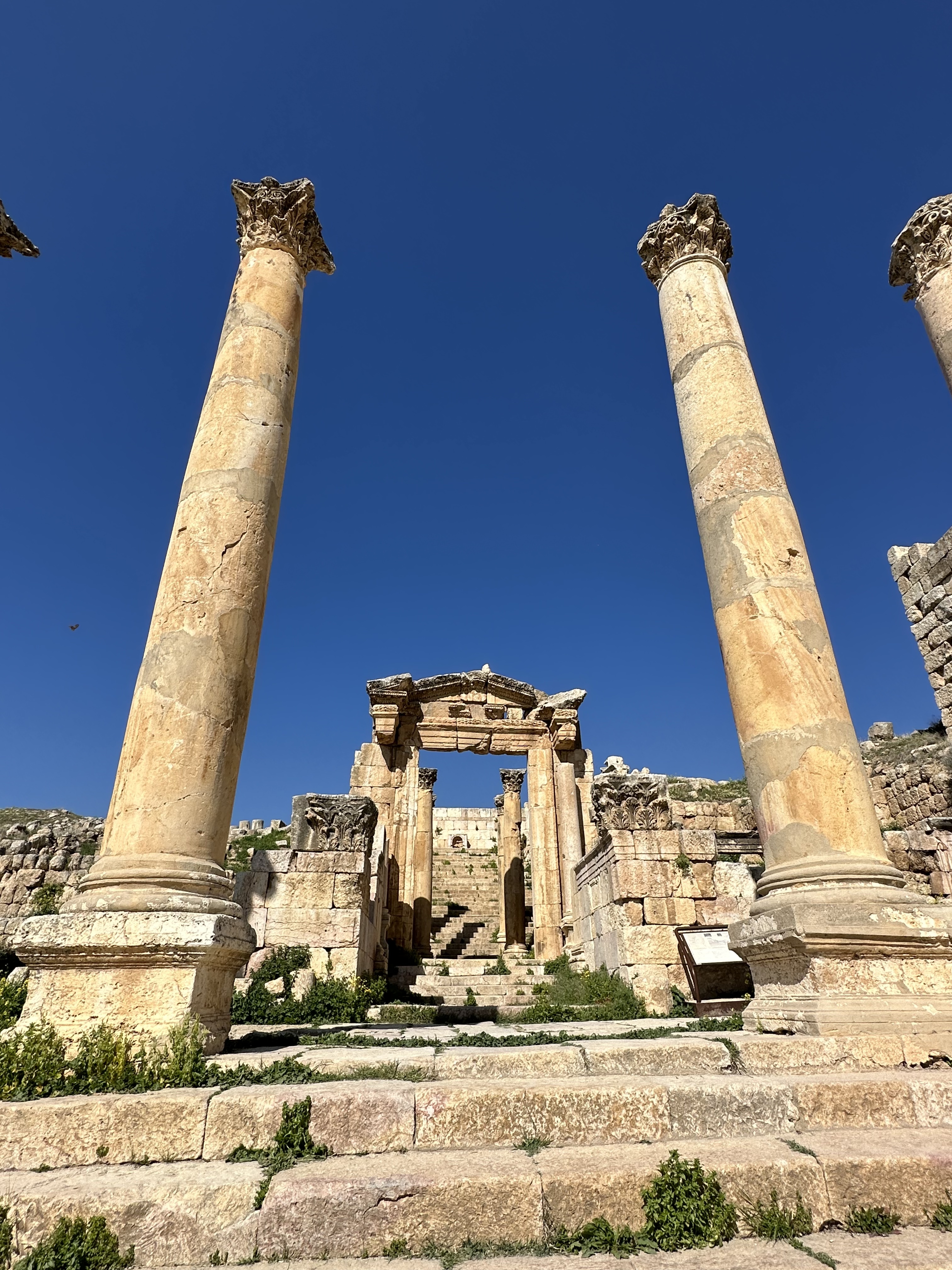

Today’s Jerash is a great area to walk and explore; be sure to wear comfortable, supportive shoes and take sunscreen, a hat, and water. You have to walk through a market area to actually enter the Roman Ruins so be prepared for the stand owners to try to persuade you to view their wares. I found the vendors to be very vocal but not rude or overly pushy. A firm but polite “no” was generally respected and the quips were funny in the few cases where the vendor wanted to have the last word. Enter the ruins by Hadrian’s Arch where you get a sense of the grandeur of ancient Rome. At approximately 42 feet or 4 stories tall, Hadrian’s Arch was built to welcome Emperor Hadrian during a visit to the city. (Still waiting on someone to build a monument to welcome me!) Beyond Hadrian’s Arch is the hippodrome, the ancient sports field. Hosting athletic competitions and chariot races, the hippodrome would have been able to accommodate up to 15,000 people. The amount of seating visible today is a bit misleading as it represents approximately 1/30th of the full capacity but it is still an interesting stop and you can easily imagine the loop chariot racers would follow. Pass through the south gate in route to the forum and cardo maximus. The columns continue to draw visitors in for photos, picnics, or simply a shady spot to take in the view. From the forum, follow the cardo maximus, the main thoroughfare, to the right to take in the nymphaeum, propylaeum, and north gate. Veer off the cardo maximus on the return to see the north theatre, Temple of Artemis, south theatre, and finish with the Temple of Zeus. Each of these is worth at least a few minutes to take in the view and appreciate Roman architecture.
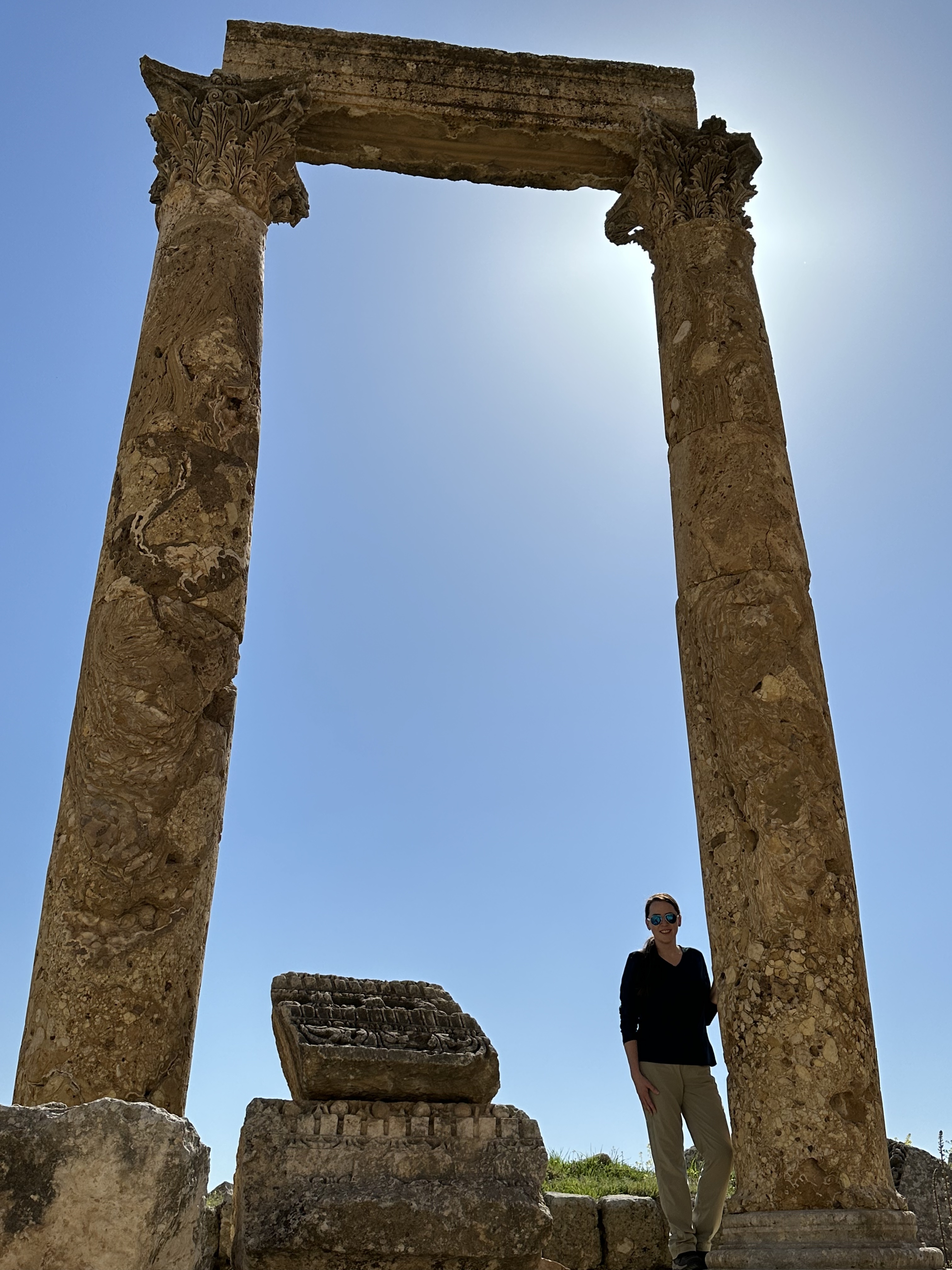
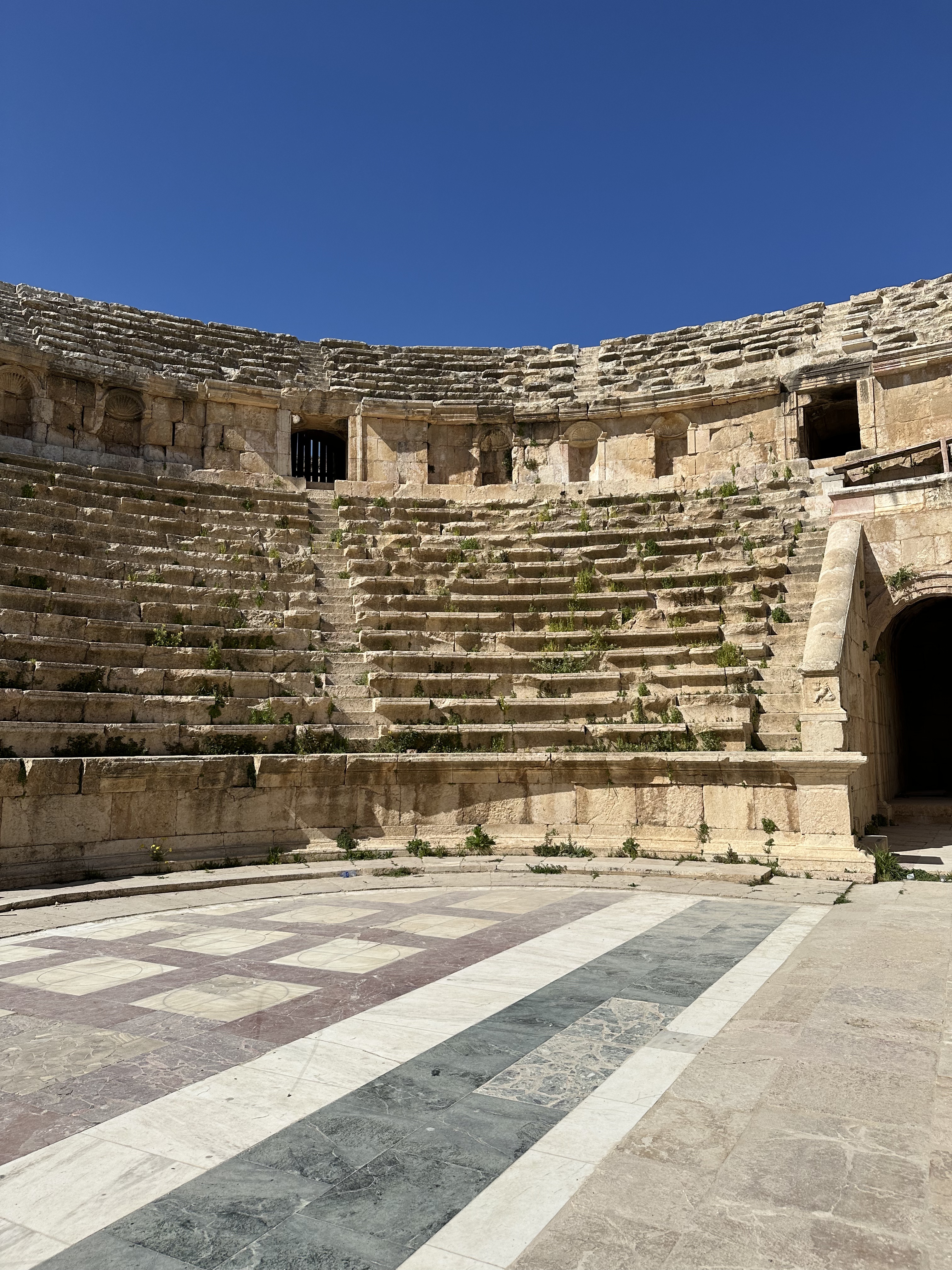
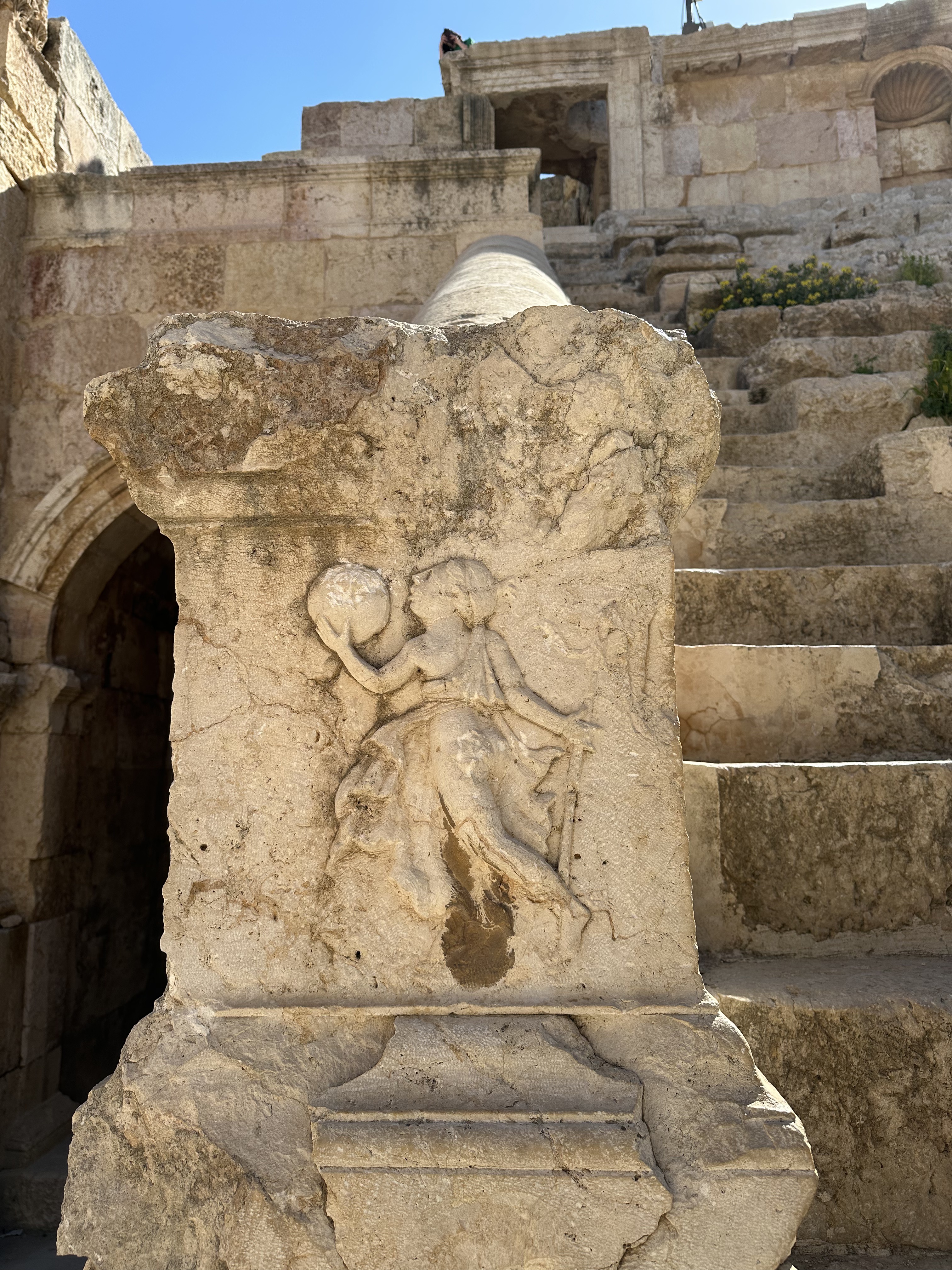
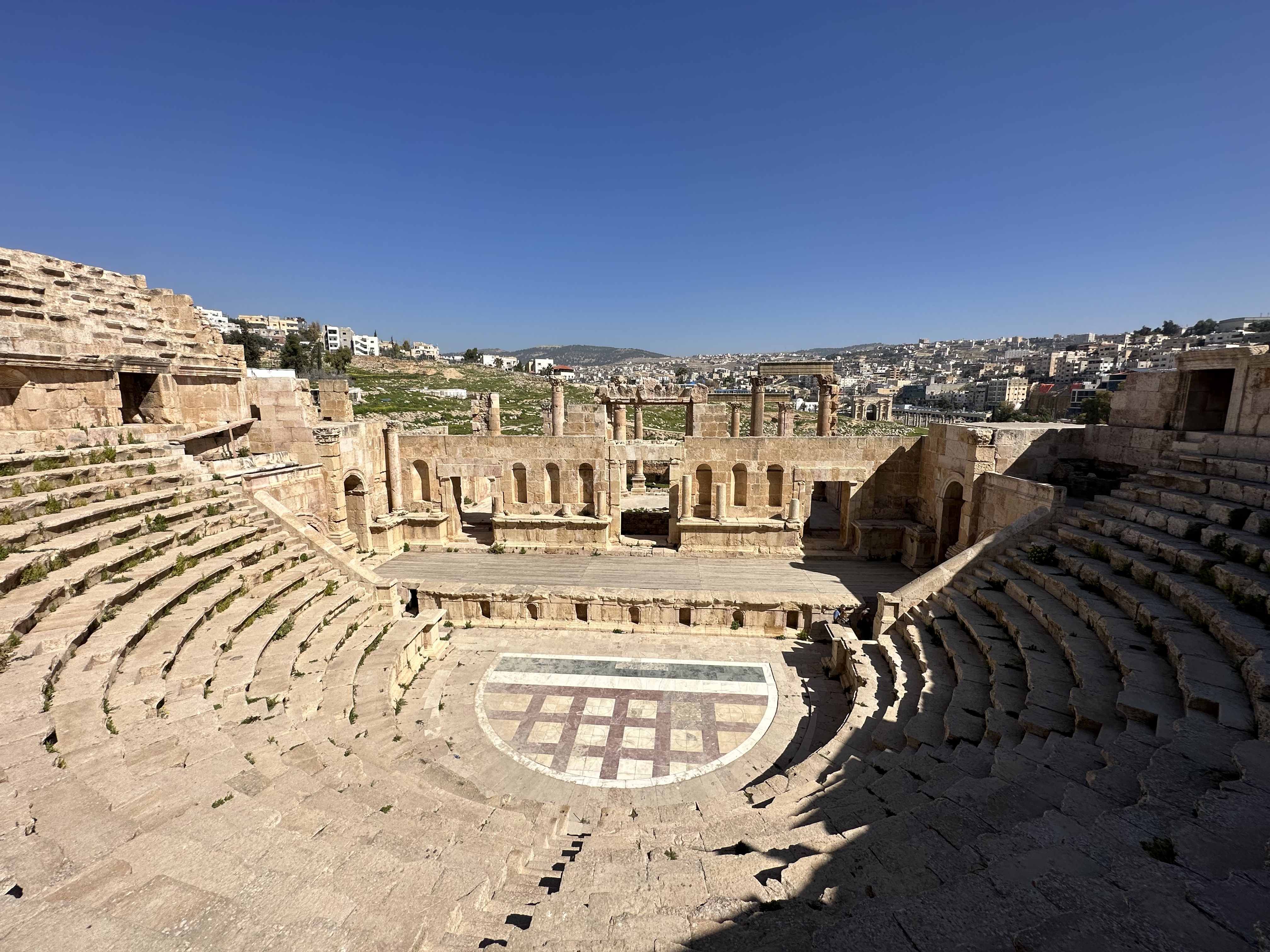
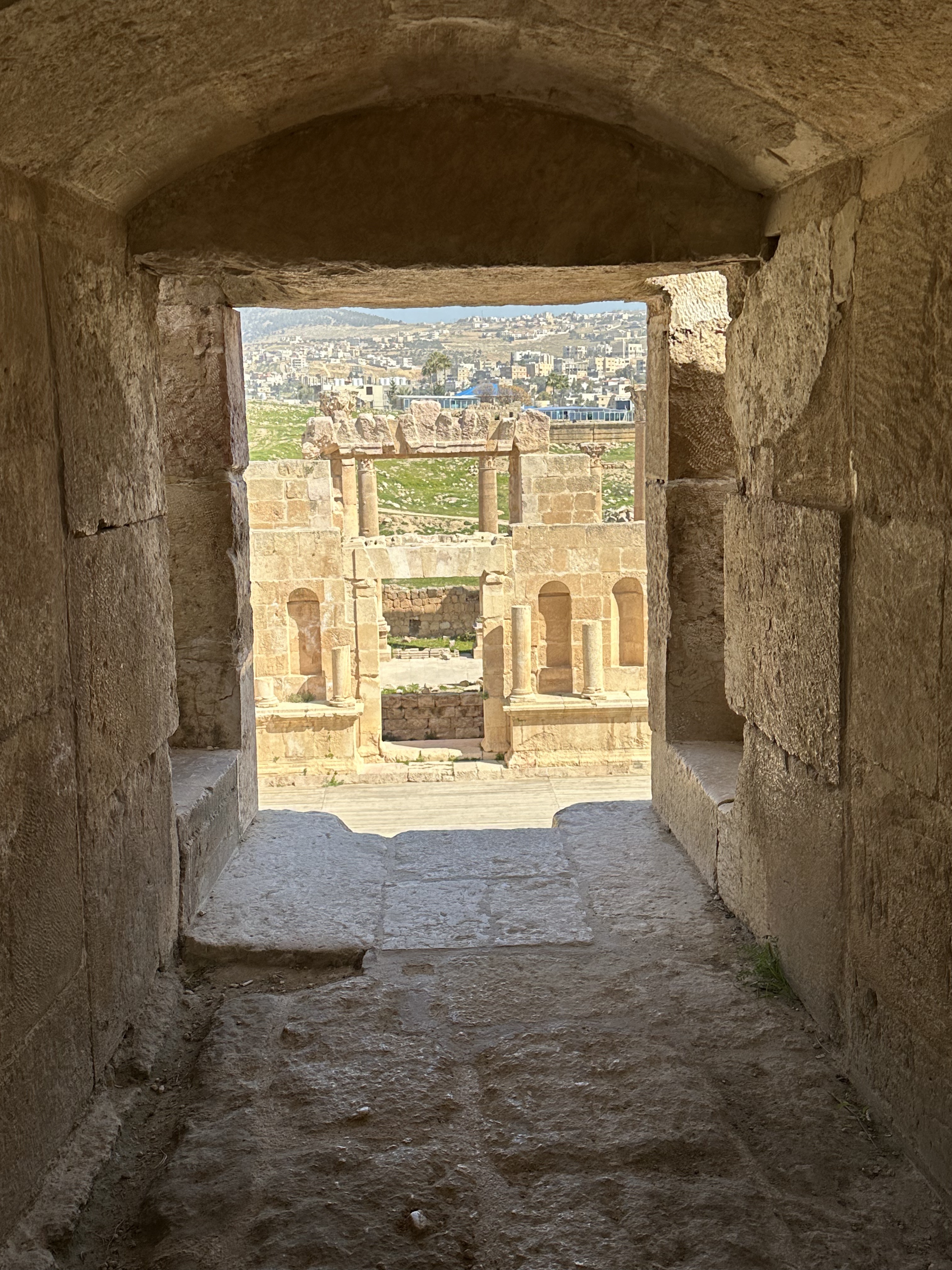
It’s easy to spend half a day at Jerash and the walking is fairly level throughout though you should watch where you are walking and be alert for uneven stairs. Signage and other information at Jerash is very limited; I found the Lonely Planet: Jordan book particularly informative and helpful in addition to my ‘local’ friends. I highly recommend Jerash for your Jordan itinerary. Some of the sites require a little more imagination than others but you can actually walk through and TOUCH the stones, columns, and structures from ancient Rome; from before the common era (BCE). You can literally walk through and touch thousands of years of history!

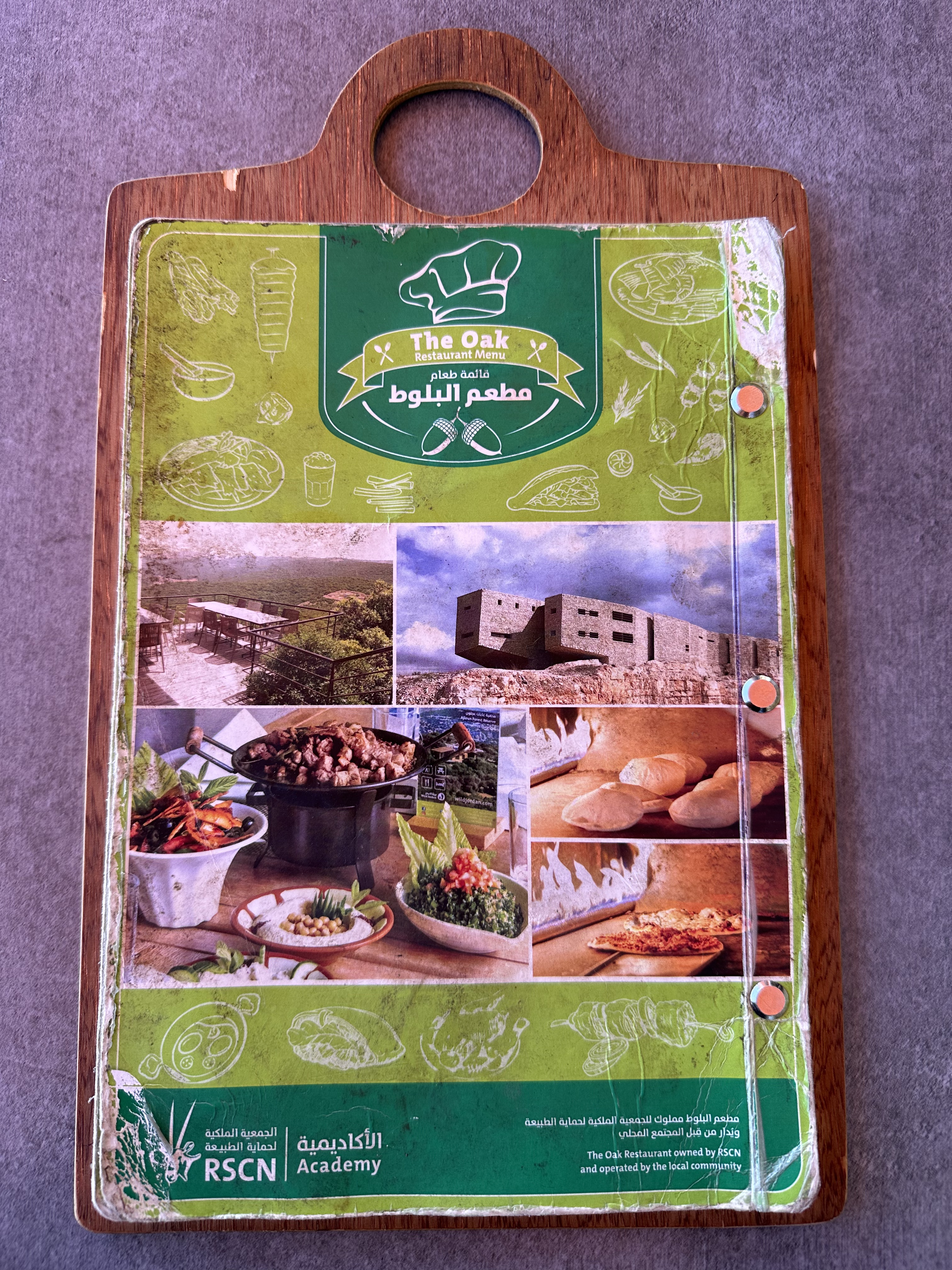
We finished at Jerash and made the short 30 minute drive to Ajloun Forest Reserve. This area includes a zipline, some small shops on site, and a café. We opted for the Wild Jordan Café for a lunch of olives, fried Halloumi cheese, hummus with meat (ground lamb), pita bread, and chicken with vegetables Fukhara. I admit, I was not a fan of the olives … they were hard and the flavor was very different from what I am accustomed to. I also confirmed that I do not enjoy lamb, though the hummus helped mellow out the flavor. The fried Halloumi and chicken and vegetable Fukhara were phenomenal. I would actually describe the Fukhara as being similar to fajitas in concept but with different seasoning/spices. Overall, an enjoyable lunch and the view from the outdoor seating area was great.

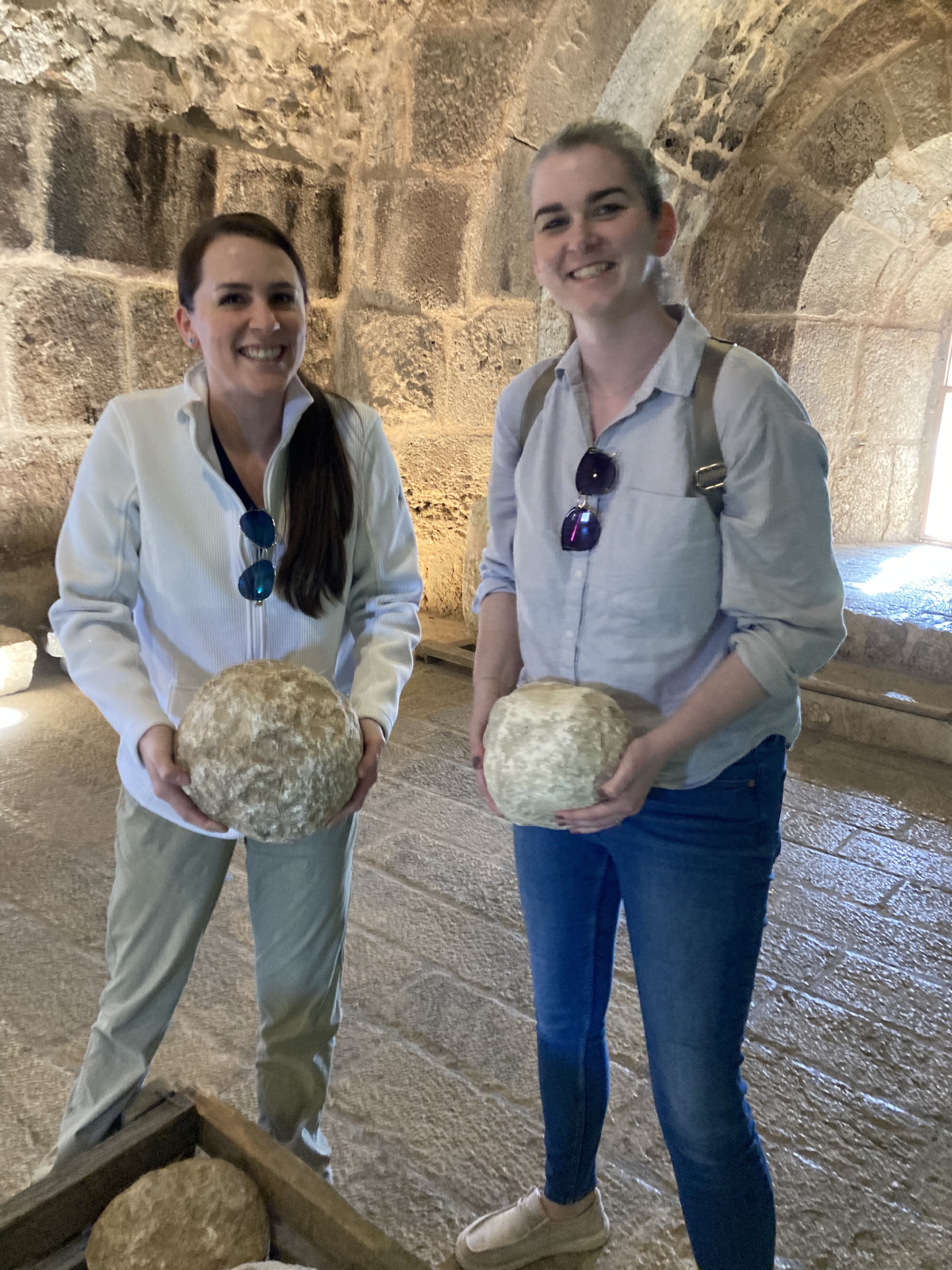
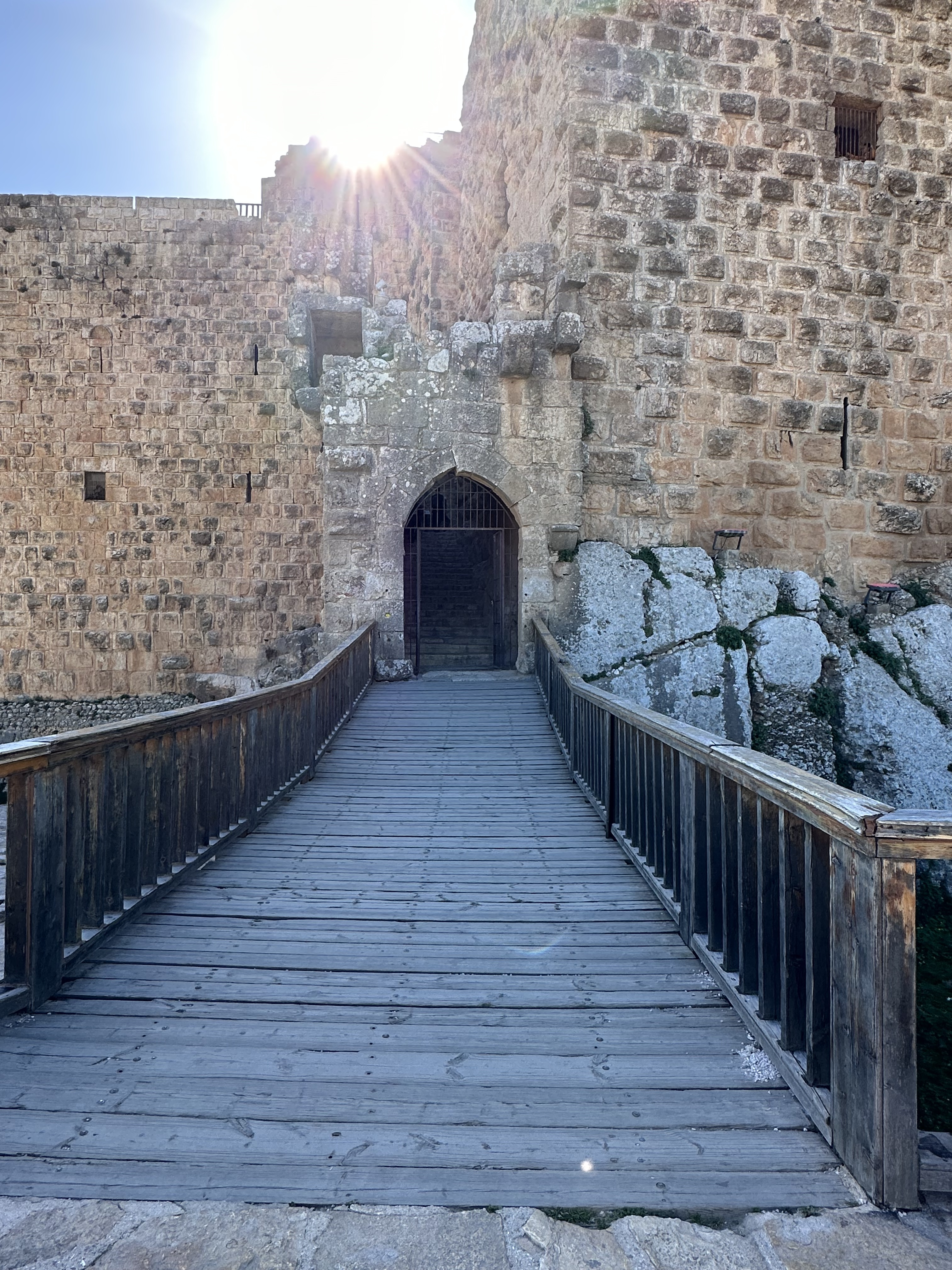
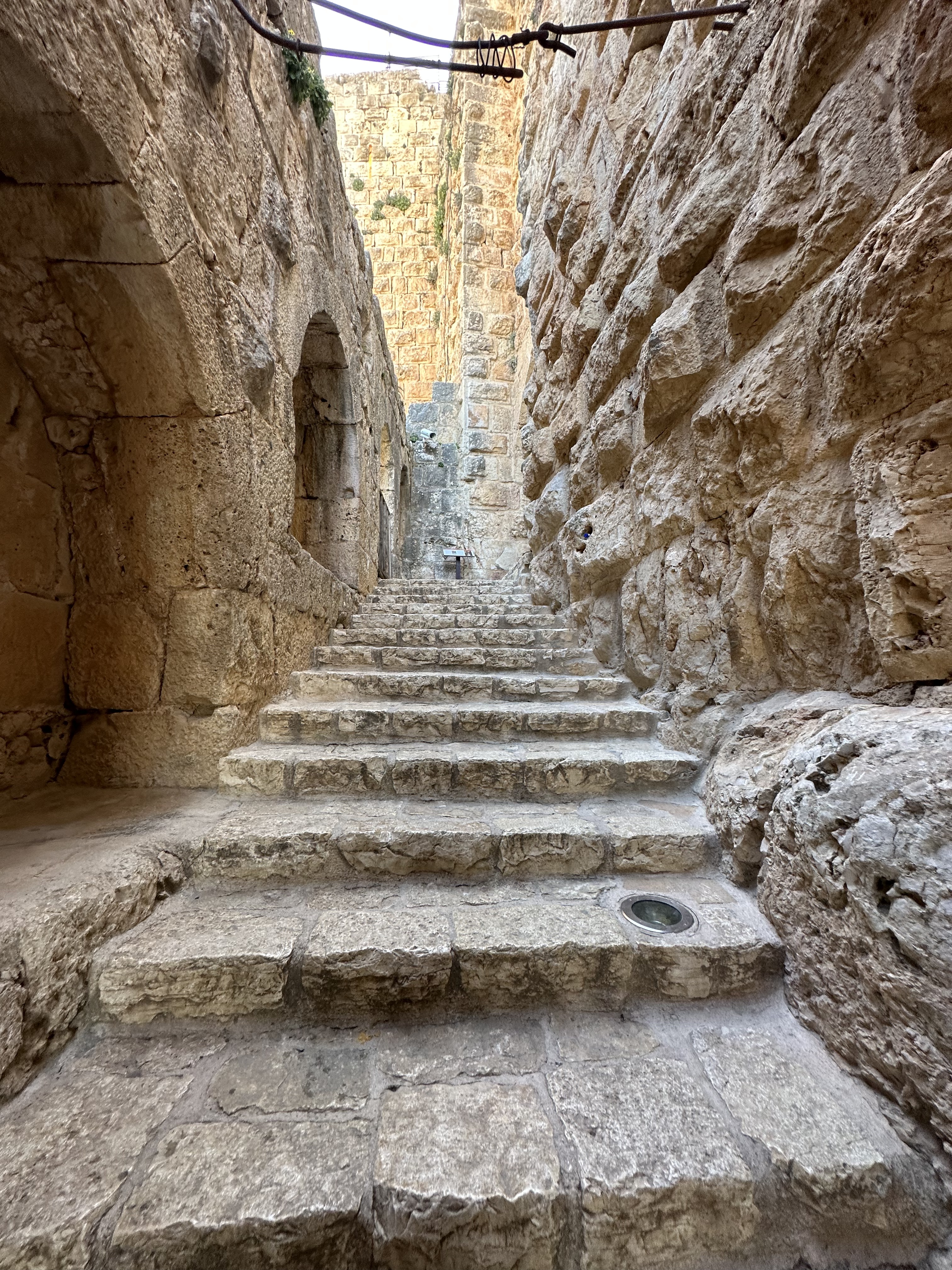
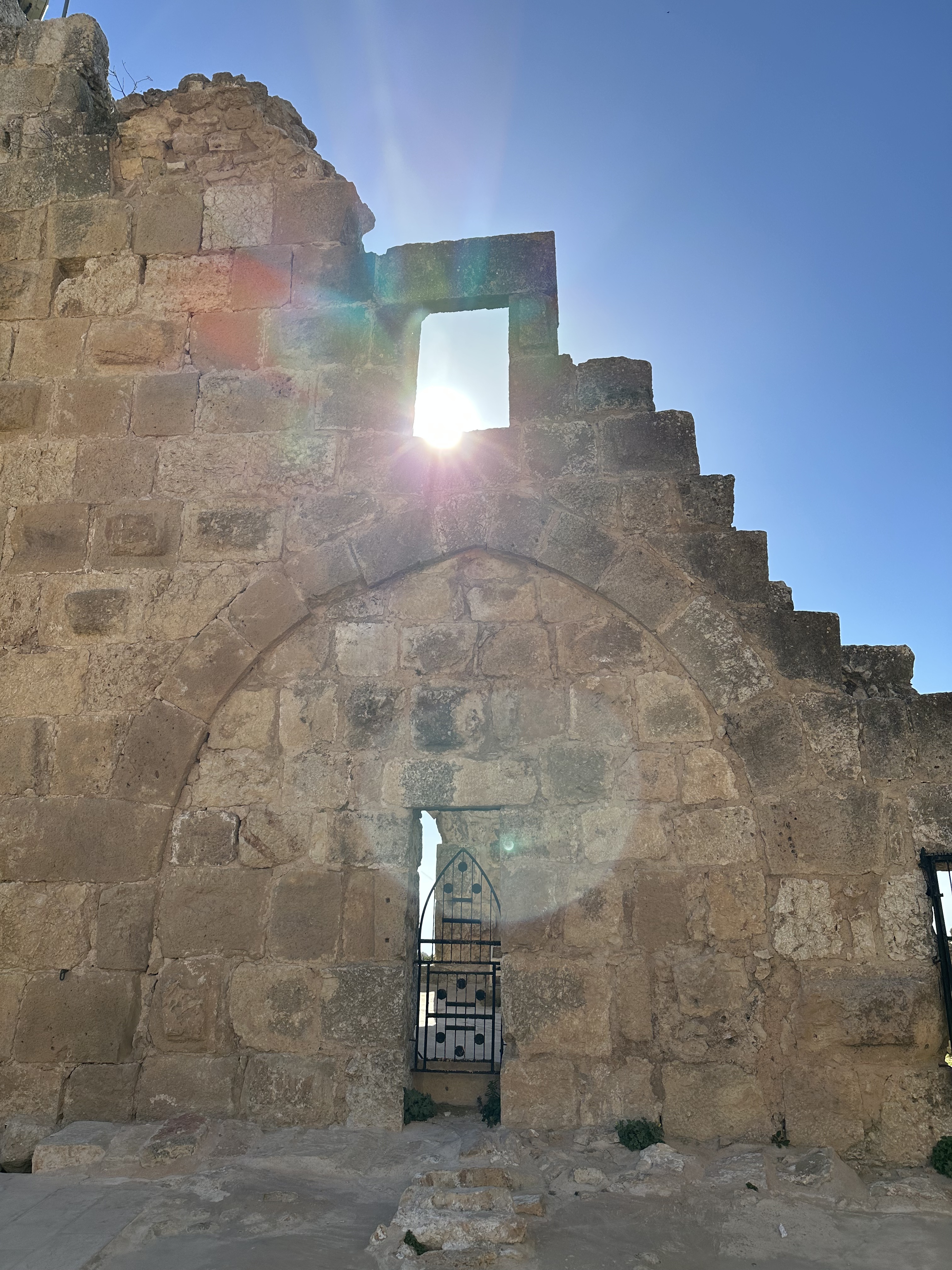
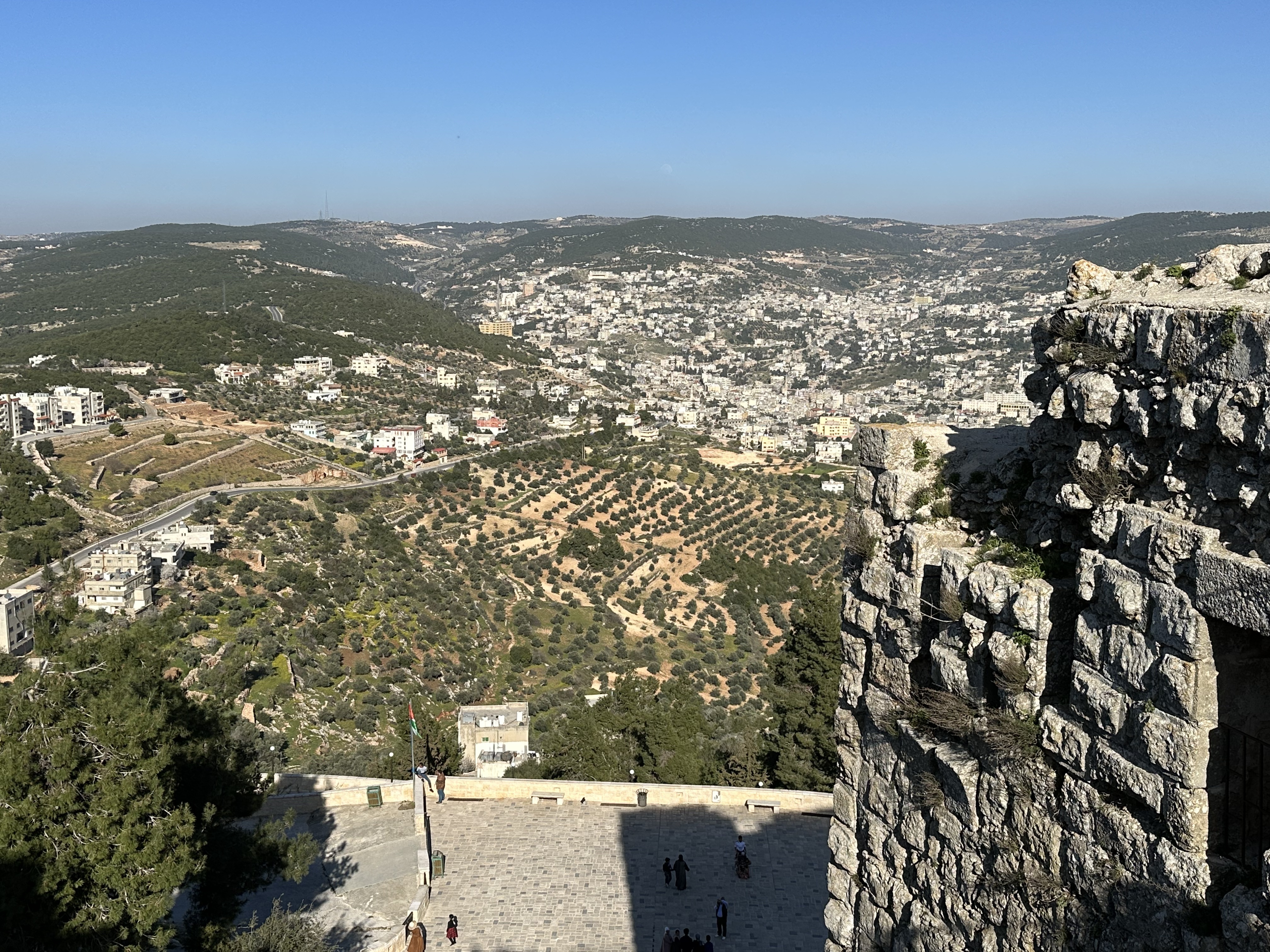
I wasn’t sure what to expect at Ajloun Castle. Built atop Mt. ‘Auf, the castle offers commanding views of the Jordan Valley and the wadis leading into it. The castle has historical ties back to the Crusader times and, even today, the strategic and defensive position is easily understandable. A small museum inside the castle allows visitors the opportunity to view pottery, cannonballs, mosaics, and medieval hand grenades. There isn’t much signage throughout the castle but it really isn’t needed to envision life here. I recommend Ajloun as your Crusader era castle stop. It is one of the most, if not the most, intact Crusader era castle you will find and doesn’t require much imagination to understand.

I’ll post our evening activities tomorrow!
 Travel with Fleming
Leave a comment